
Imagine paying $6.95 for a medication that costs nearly $30 if you buy the brand-name version. That isn’t a hypothetical scenario or a lucky coupon find-it is the daily reality for millions of Americans relying on generic drugs, which are medicines with the same active ingredients as brand-name prescriptions but sold at significantly lower prices. While we often hear about rising healthcare costs, there is a massive, often overlooked engine working to keep those costs down. The numbers are staggering, and they tell a story of immense value mixed with serious sustainability challenges.
The Big Picture: Trillions in Savings
To understand the scale of this impact, we have to look at the national data. According to the 2025 U.S. Generic & Biosimilar Medicines Savings Report, released by the Association for Accessible Medicines (AAM) and The Biosimilars Council, generic and biosimilar medicines saved the U.S. healthcare system $467 billion in 2024 alone. That figure might be hard to visualize, so let’s put it in perspective. Over the past decade (2015-2024), these medications have contributed to a cumulative total of more than $3.4 trillion in savings.
This isn’t just about saving money on individual pills; it is about stabilizing the entire financial structure of American healthcare. John Murphy III, President & CEO of AAM, points out that generic medicines are the only sector in the pharmaceutical industry that consistently results in decreased spending across the ecosystem. In fact, since 2019, the total amount spent on all generic sales in the U.S. has actually dropped by $6.4 billion, even though the volume of prescriptions filled has gone up. This deflationary pressure is unique to generics and stands in stark contrast to the rest of the market.
Prescription Volume vs. Spending Share
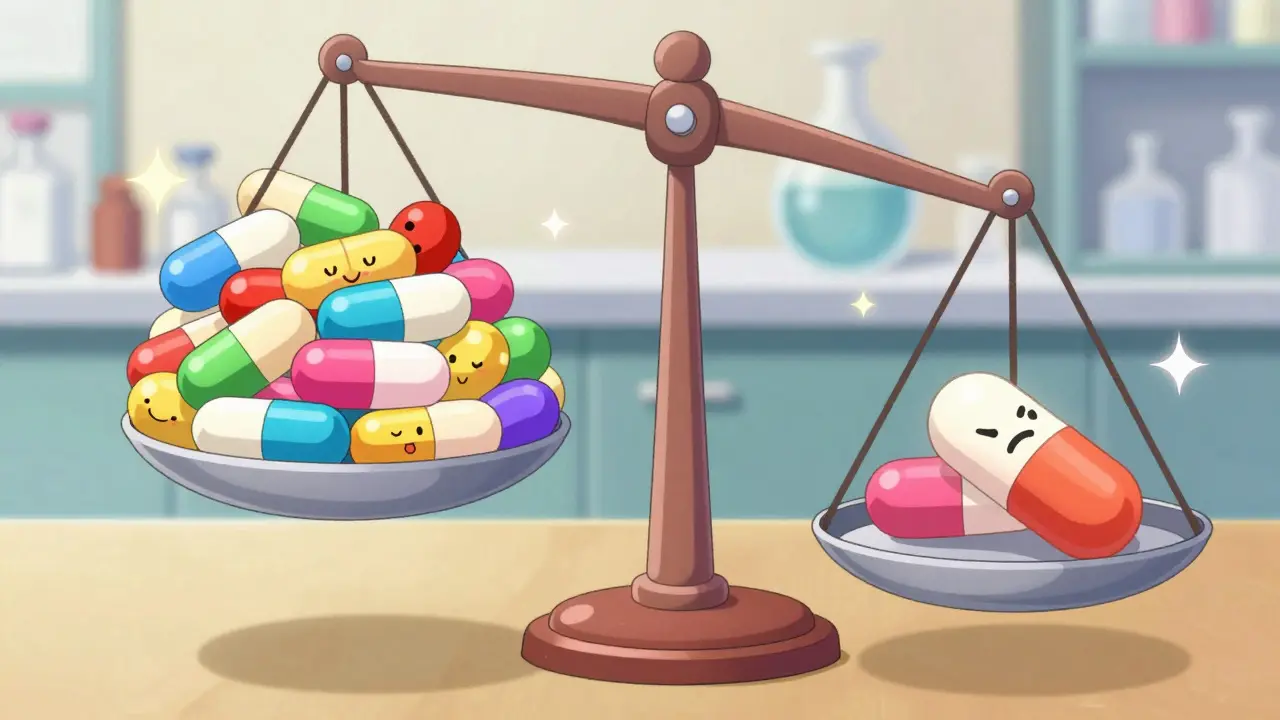
The disparity between how many generic drugs are used versus how much they cost is one of the most telling statistics in healthcare. In 2024, generics and biosimilars comprised 90 percent of all prescriptions filled in the United States-that’s roughly 3.9 billion prescriptions. Yet, they accounted for only 12 percent of total prescription drug spending ($98 billion).
Compare that to brand-name drugs. They represented just 10 percent of prescriptions (435 million) but consumed a whopping 88 percent of drug spending ($700 billion). This trend has been consistent since 2016. While generics have maintained their 90 percent market share in terms of volume, their cost share has plummeted from 27 percent in 2016 to just 12 percent in 2024. This demonstrates the powerful deflationary impact of generic competition. As more manufacturers enter the market to produce the same drug, prices drop, benefiting patients and insurers alike.
| Metric | Generics & Biosimilars | Brand-Name Drugs |
|---|---|---|
| Share of Prescriptions Filled | 90% (3.9 billion) | 10% (435 million) |
| Share of Total Spending | 12% ($98 billion) | 88% ($700 billion) |
| Average Out-of-Pocket Cost | $6.95 | $28.69 |
| Trend Since 2019 | Costs decreased by $2.45 | Costs increased by ~50% |
The Rise of Biosimilars
While traditional generics (like pills and capsules) dominate the volume, a newer category called biosimilars are biologic medical products highly similar to an already approved biologic reference product. is gaining significant traction. Biosimilars are complex drugs made from living cells, unlike generic small-molecule drugs. In 2024, biosimilars generated $20.2 billion in savings, nearly doubling from the previous year. Since entering the market in 2015, they have accumulated $56.2 billion in total savings, with approximately 60 percent of those savings occurring in just the last two years.
The adoption rate is accelerating. These therapies have been administered across nearly 3.3 billion days of patient therapy with no unique clinical challenges reported, according to the Biosimilars Council's 2025 report. For conditions like cancer, rheumatoid arthritis, and diabetes, where biologic treatments are essential, biosimilars offer a critical path to affordability without compromising efficacy or safety.
What It Means for Your Wallet
Let’s talk about what happens when you walk into a pharmacy. The average out-of-pocket cost for a generic prescription was $6.95 in 2024. For a brand-name drug, that number jumps to $28.69-a nearly five-fold difference. But for uninsured Americans, the gap is even wider and more painful.
Since 2019, brand-name drug costs for the uninsured have skyrocketed by approximately 50 percent, reaching $130.18 per prescription. In contrast, generic costs actually decreased by $2.45 (6 percent) during the same period. This divergence highlights a growing crisis: those who can afford brand-name drugs face steep inflation, while those relying on generics benefit from deflation. However, this dynamic is not without risks, as we will explore next.
The Sustainability Crisis Behind the Savings
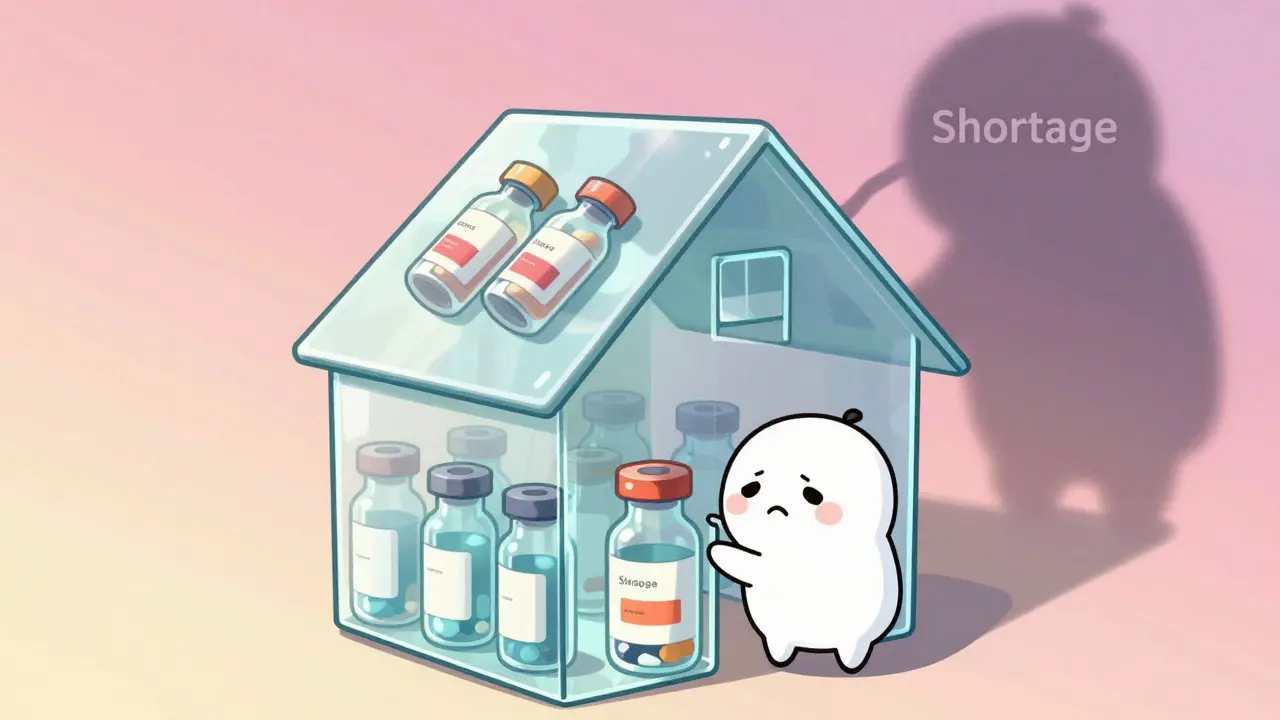
Here is the catch: the very mechanism that drives down generic prices-intense competition leading to razor-thin margins-is threatening the supply chain itself. The Biosimilars Council warns that the significant price deflation of the last 30 years can lead to unsustainable market conditions for generic drug manufacturers. When profits disappear, companies may stop producing certain drugs, leading to shortages.
We are already seeing signs of this fragility. Recent quarterly data from April to July 2025 shows continued generic drug deflation, but it comes at a cost. For example, Vasostrict by Endo Pharmaceuticals experienced a 76 percent list price decrease in just three months. While that sounds great for buyers, such drastic cuts often signal that a manufacturer is exiting the market or struggling to stay viable. If too many manufacturers leave, supply chains break, and patients lose access to essential medications entirely.
Policy Barriers and Future Outlook
Several policy issues are exacerbating these challenges. Patent thicketing, where brand-name companies use multiple patents to delay generic entry, and "product hopping," where brands slightly alter a drug to extend patent protection, hinder competition. The Congressional Budget Office estimates that limiting patent thicketing would yield $1.8 billion in savings over 10 years, while ending product hopping could reduce federal spending by $1.1 billion.
Additionally, "pay-for-delay" settlements, where brand-name companies pay generics to stay off the market, drive up prescription drug costs by nearly $12 billion annually, with $3 billion impacting Medicare. Banning these practices could save $45 billion over a decade, according to a study by the Actuarial Research Corporation cited by Blue Cross Blue Shield in April 2025.
Looking ahead, the Department of Health and Human Services and CMS are implementing Most-Favored-Nation pricing targets to bring down U.S. drug prices, which are often three to five times higher than prices abroad. Meanwhile, specialty drugs are projected to account for 60 percent of total drug spending by 2025, shifting the focus toward high-cost biologics. Generics and biosimilars remain our best defense against runaway costs, but policymakers must streamline FDA processes and curb patent abuse to ensure these life-saving medications remain available.
How much did generic drugs save the US healthcare system in 2024?
Generic and biosimilar medicines saved the U.S. healthcare system $467 billion in 2024 alone. Over the decade from 2015 to 2024, the cumulative savings exceed $3.4 trillion.
What is the difference in out-of-pocket cost between generic and brand-name drugs?
In 2024, the average out-of-pocket cost for a generic prescription was $6.95, compared to $28.69 for brand-name drugs. This represents a nearly five-fold difference in cost for the patient.
Are biosimilars safe and effective?
Yes. Biosimilars have been administered across nearly 3.3 billion days of patient therapy with no unique clinical challenges reported. They are highly similar to approved biologic reference products and offer substantial savings, generating $20.2 billion in savings in 2024.
Why are generic drug prices decreasing while brand-name prices rise?
Generic prices decrease due to intense market competition among multiple manufacturers, creating a deflationary effect. Brand-name prices rise due to lack of competition, patent protections, and annual price increases that often exceed general inflation rates.
What risks do low generic prices pose to the supply chain?
Extremely low prices can make it unsustainable for manufacturers to produce certain drugs, leading to plant closures, reduced production, and potential drug shortages. This threatens patient access despite the initial cost savings.




Josh Atkinson
August 7, 2026Look, I’ve crunched the numbers on this before and frankly, most people just don’t get it because they’re too busy complaining about their copays instead of looking at the macroeconomic deflationary pressure that generics provide to the entire healthcare ecosystem, which is basically the only thing keeping us from total fiscal collapse right now. It’s not rocket science if you actually bother to read the reports from AAM instead of just listening to the doom-mongers on social media who want you to believe everything is getting more expensive for no reason. The fact that spending dropped by $6.4 billion while volume went up is a statistical anomaly that proves competition works, provided you have enough players in the market to keep the margins thin enough to force efficiency but thick enough to keep the lights on at the manufacturing plants. We need to stop treating pharmaceuticals like a moral failing and start treating them like a commodity market where supply and demand dictate price, otherwise we’re just going to keep having these shortages because manufacturers can’t make a profit selling pills for less than the cost of the cardboard box they come in sometimes. :)