
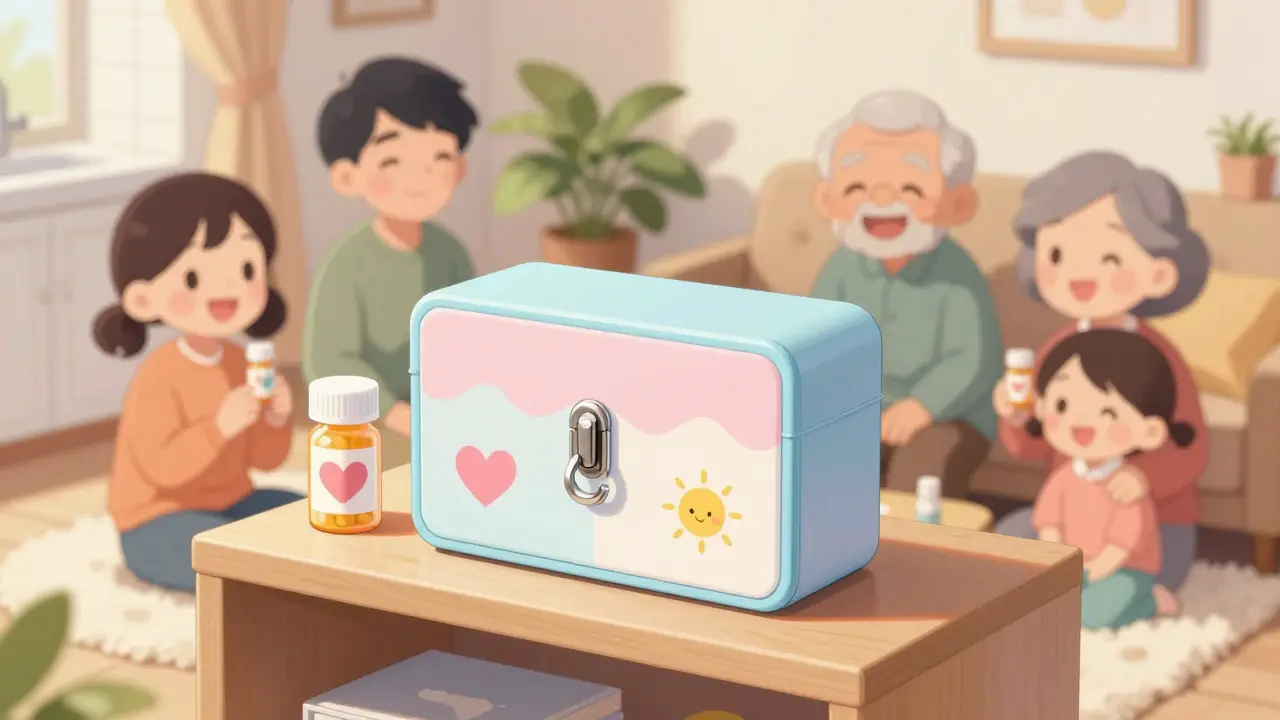
Why Medication Storage in Shared Spaces Is a Hidden Risk
Imagine this: your teenager grabs what they think is cough syrup from the bathroom cabinet. It’s actually your father’s painkiller. Or your roommate leaves their insulin on the kitchen counter because the fridge is full. These aren’t rare accidents-they happen every day in shared living spaces. According to a 2025 survey by SeniorHelpers, 67% of multi-generational households experienced at least one medication-related incident in the past year. Half of those involved children or older adults accidentally taking the wrong pill. The problem isn’t just about mistakes. It’s about safety, legality, and effectiveness.
Medications aren’t just pills in a bottle. They’re chemicals that degrade if stored wrong. Insulin, for example, loses up to 30% of its potency in just 24 hours if exposed to temperatures above 77°F. Antibiotics can become useless. And controlled substances like opioids? If they’re not locked up, they become targets for misuse. The Joint Commission found that 13% of healthcare facilities received citations for improper storage between 2020 and 2021. That’s not just a rulebook issue-it’s a real danger.
What You Need to Know About Storage Rules
There’s no single federal law for homes, but if you live in an assisted living facility or group home, state regulations apply. As of 2025, 47 U.S. states require medications to be stored under lock and key. That means no open drawers, no shelves in common areas, no leaving pills on nightstands. Even if you’re not in a facility, these rules are the gold standard for safety.
For controlled substances-like oxycodone, Adderall, or Xanax-the rules are stricter. They must be kept in a locked cabinet, with access limited to authorized people only. Some places even require a logbook showing who took what and when. This isn’t about distrust-it’s about accountability. One small study found that 22% of care homes had no record of temperature spikes in their refrigerators. That’s a major red flag.
Labeling matters too. The Joint Commission cited 12% of hospitals for unclear or missing labels. If a pill bottle says “Take once daily,” but the label is faded or stuck on sideways, someone might take two. Or worse-give it to the wrong person. Always check labels. If they’re worn, rewrite them in permanent marker or replace the bottle.
Where to Store Medications: Room vs. Cabinet vs. Dedicated Space
Where you store meds makes a huge difference. In professional care homes, 100% of large facilities have a dedicated medication room or cart. In homes? Only 28% of families use locked storage at all.
Here’s what works:
- For shared homes or assisted living: A locked medication cabinet in a central, staff-accessible area is best. It should be away from heat sources, windows, and sinks. Avoid the bathroom-humidity ruins pills. Don’t store meds in the kitchen either. Too many temperature swings.
- For multi-generational households: Put each person’s meds in a locked drawer or box in their own bedroom. This keeps them private, secure, and easy to manage. A simple combination lock or key lock box (like those used for car keys) works fine. You don’t need a safe.
- Avoid: Bathroom cabinets, kitchen counters, coffee tables, nightstands, or any place accessible to kids, visitors, or pets. Even if you think “no one would touch it,” someone will.
One family in Ohio kept all meds in the medicine cabinet above the sink. Their 7-year-old found a bottle of antidepressants and took three pills. She ended up in the ER. The cabinet had no lock. The bottle had no child-resistant cap. That’s preventable.
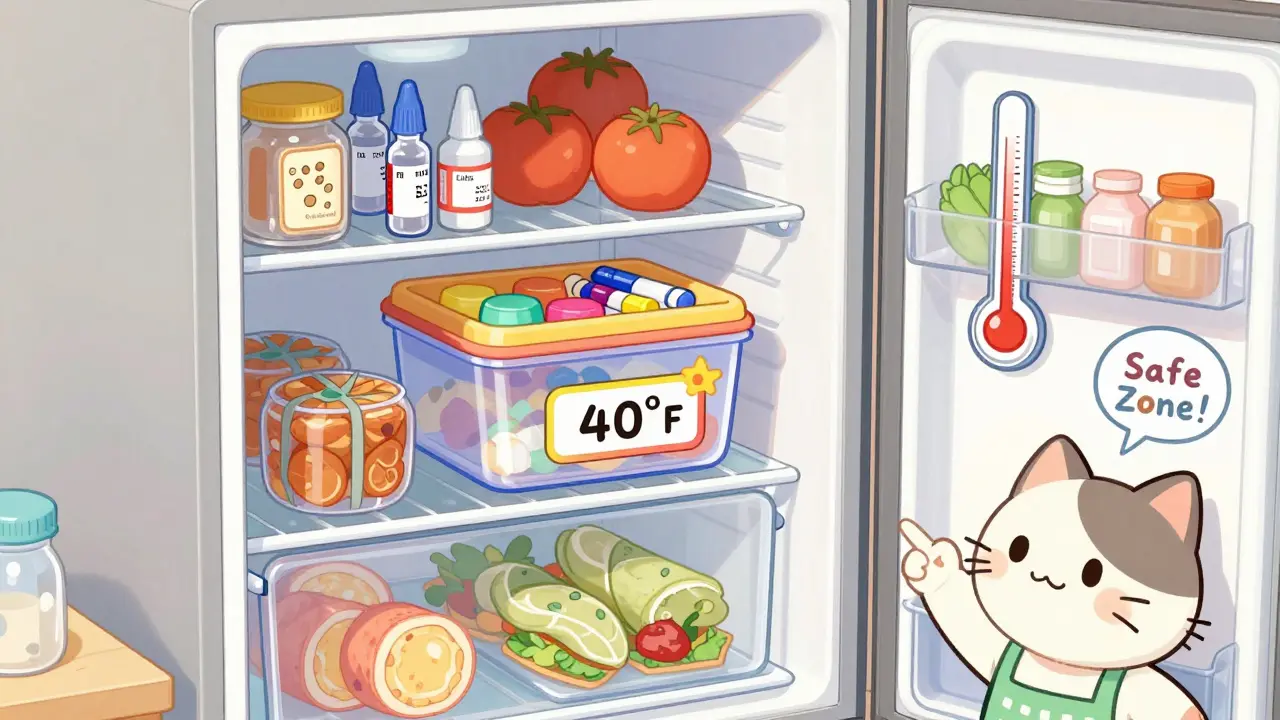
Temperature Control: The Silent Killer
Most people don’t realize that heat and cold can destroy medicine. The FDA says liquid medications like insulin, eye drops, and some antibiotics must be kept between 36°F and 46°F. That’s fridge temperature-but not on the door.
Refrigerator door shelves swing 10-15°F with every opening. The center shelf? Stable. That’s where meds go. If you’re sharing a fridge, use a small, labeled container-like a plastic bin with a lid-and put it on the middle shelf. Never mix meds with food. Cross-contamination is a real risk.
What about room-temperature meds? Keep them in a cool, dry place. Avoid garages, attics, or near the stove. The ideal spot? A closet or drawer inside the house, away from sunlight. A digital thermometer in the storage area helps. If it hits 80°F or higher for more than a few hours, the meds might be compromised.
One father in Texas stored his wife’s insulin on the fridge door for three weeks. Her blood sugar spiked. The pharmacy confirmed the insulin had degraded. He didn’t know the door wasn’t safe. Now he uses a small fridge in their bedroom, dedicated to meds only.
Labeling, Tracking, and Documentation
In care homes, staff use Individualized Medication Administration Records (MARs). Each resident has a chart showing what they take, when, and who gave it. In homes? Most people don’t track anything.
Start simple. Make a list. Paper or phone app-it doesn’t matter. Include:
- Medication name (brand and generic)
- Dosage
- Time to take it
- Purpose (e.g., “for blood pressure”)
- Expiration date
Update it every month. Throw out anything expired. The Joint Commission found 10% of facilities had expired meds on hand. That’s dangerous. Old antibiotics don’t work. Old painkillers can be toxic.
For families, use a shared digital note or a whiteboard on the fridge. For caregivers in group homes, use a printed MAR sheet and sign off after each dose. It’s not bureaucracy-it’s protection.
Dealing with Common Challenges
People resist locked storage. “It’s my medicine, I should be able to reach it.” Fair point. But if someone has dementia, a substance use issue, or a young child in the house, access control isn’t about control-it’s about safety.
Here’s how to handle pushback:
- Space is tight? Use a small, under-bed storage box with a lock. Or a wall-mounted safe that holds 10-15 bottles.
- Someone hates the idea? Explain the risks with real examples. “Your cousin’s kid got into the medicine cabinet and ended up in the hospital-that could be us.”
- Too many pills to track? Use a pill organizer with days of the week. Buy one with alarms. Or ask the pharmacy for blister packs-they’re pre-sorted and sealed.
- Who’s responsible? Assign one person to manage meds. Not everyone. Not the kids. One adult. They check expiration dates, refill prescriptions, and lock everything up.
One family in Minnesota assigned their 22-year-old daughter to manage her grandmother’s meds. She used a free app called Medisafe. It sent reminders and flagged expired pills. No more confusion. No more arguments.
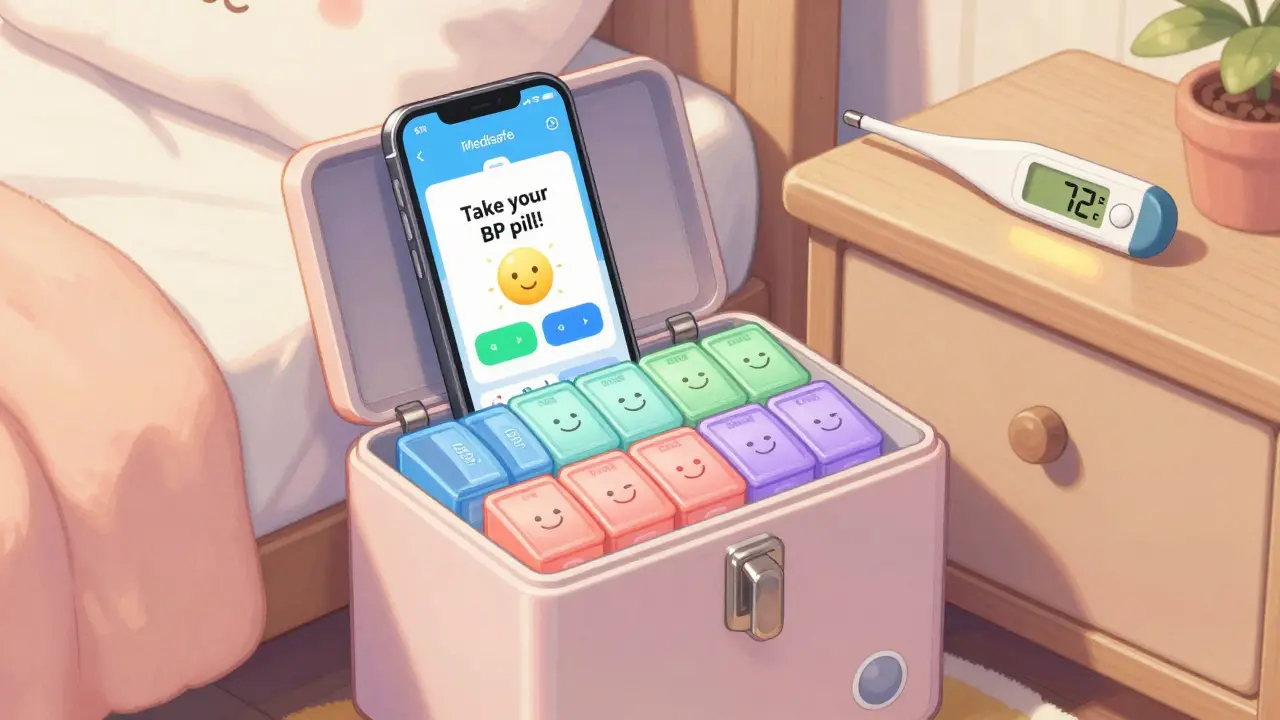
What to Do with Old or Unused Medications
Don’t flush them. Don’t throw them in the trash. Don’t leave them in a drawer “just in case.”
Use a drug take-back program. Many pharmacies, hospitals, and police stations have drop boxes. The FDA has a list of authorized locations. If there’s none nearby, mix pills with coffee grounds or cat litter in a sealed bag before tossing them. This makes them unappealing and unusable.
For sharps like insulin needles, use a hard plastic container (like a laundry detergent bottle) with a tight lid. Label it “SHARPS-DO NOT RECYCLE.” Drop it at a pharmacy that accepts them. Most do.
Tools That Actually Help
You don’t need fancy tech. But some tools make life easier:
- Locking pill boxes (like the MedMinder or Hero) with timers and app alerts.
- Smart medication safes (like DosePacker’s new model) that track access and temperature. Used in over 100 care homes as of mid-2024.
- Temperature loggers ($20 on Amazon) that record fridge temps over time. Great for proving your meds stayed safe.
- Pill organizers with alarms-simple, cheap, effective.
One study showed families using a locked box with a timer had 89% fewer incidents than those storing meds in open cabinets.
What’s Changing in 2026
Technology is catching up. AI-powered systems are being tested in 15 assisted living facilities. They use cameras to spot if a pill bottle was opened at the wrong time. Smart fridges now alert you if meds are too warm.
Home medication storage sales jumped 27% in 2024. More people are buying lockboxes. More pharmacies are offering blister packs. More states are requiring training for caregivers.
The message is clear: managing meds in shared spaces isn’t optional. It’s essential. And it’s easier than you think.




Jodi Harding
January 16, 2026I saw a kid grab my grandma's blood pressure pills thinking they were gummies. She ended up in the ER. No joke. Lock it up. Period.