
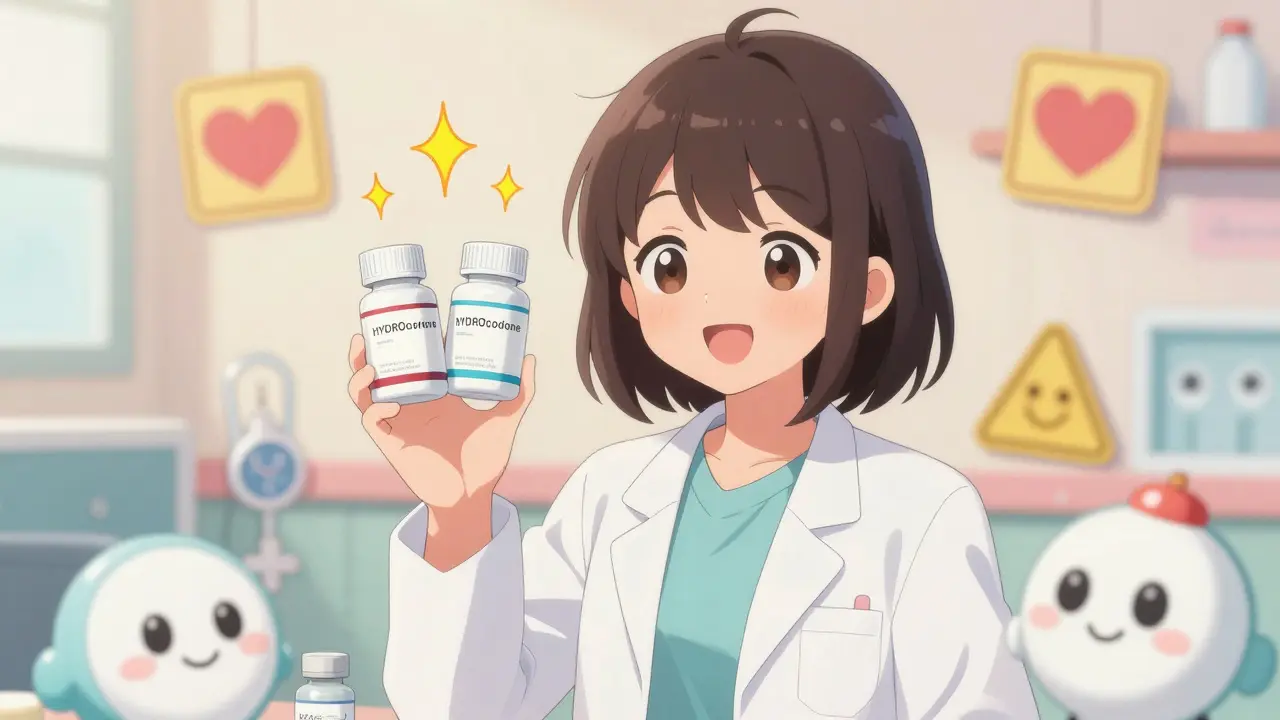
Every year, people in hospitals and pharmacies across the UK and beyond are harmed-not because of a mistake in judgment, but because two drugs look or sound too much alike. A patient meant to get hydromorphone ends up with hydrocodone. Another gets velcade instead of velcade. These aren’t typos. They’re look-alike, sound-alike (LASA) medication errors-and they’re far more common than most people realize.
What Exactly Are LASA Medications?
LASA stands for look-alike, sound-alike. It’s when two or more drugs have names that are visually or phonetically similar enough to cause confusion. This isn’t just about spelling. It’s about how they appear on a label, how they’re said aloud during a handoff, or even how the pills look in a blister pack. Take simvastatin 10 mg and simvastatin 20 mg. Same drug. Different strengths. But in a busy pharmacy, with ten vials on the counter and a rush to fill prescriptions, the difference in numbers can be missed. That’s a LASA error. Or consider doxorubicin and daunorubicin. Both are chemotherapy drugs. Both are red. Both are given intravenously. Mix them up, and you could kill someone. The World Health Organization calls LASA errors a “well-recognized cause of medication errors.” Studies show that up to 25% of all medication errors in the U.S. are due to name confusion. In the UK, NHS reports show similar patterns-especially in oncology, critical care, and elderly care units where multiple high-risk drugs are used daily.How These Errors Happen
There are four main ways LASA errors occur:- Orthographic similarity-the names look too alike. Like clonidine and clonazepam. One treats high blood pressure. The other is for seizures. Mix them up, and you could cause a stroke or a seizure.
- Phonetic similarity-they sound the same when spoken. A nurse hears “insulin” and writes “island” (a real example from a UK hospital report). Or a doctor says “cefaclor” and the pharmacist hears “cefazolin.” Different antibiotics. Different dosing. Different outcomes.
- Packaging similarity-bottles, boxes, or labels look identical. Two different anticoagulants, both in white bottles with blue caps. One is warfarin. The other is rivaroxaban. Same size. Same color. Same font. Easy to grab the wrong one.
- Physical appearance-pills or injections look alike. Two different opioids, both small white tablets. One is oxycodone. The other is oxymorphone. One is 10 times stronger than the other.
High-Risk Drugs That Cause the Most Harm
Not all LASA pairs are equal. Some are deadly. The Institute for Safe Medication Practices (ISMP) maintains a list of high-alert LASA medications-those that can cause serious harm or death if misused. Here are some of the most dangerous pairs:- Hydromorphone vs. Hydrocodone - one is 5-10 times stronger. Giving hydrocodone instead of hydromorphone might not hurt. Giving hydromorphone instead of hydrocodone? That’s a respiratory arrest waiting to happen.
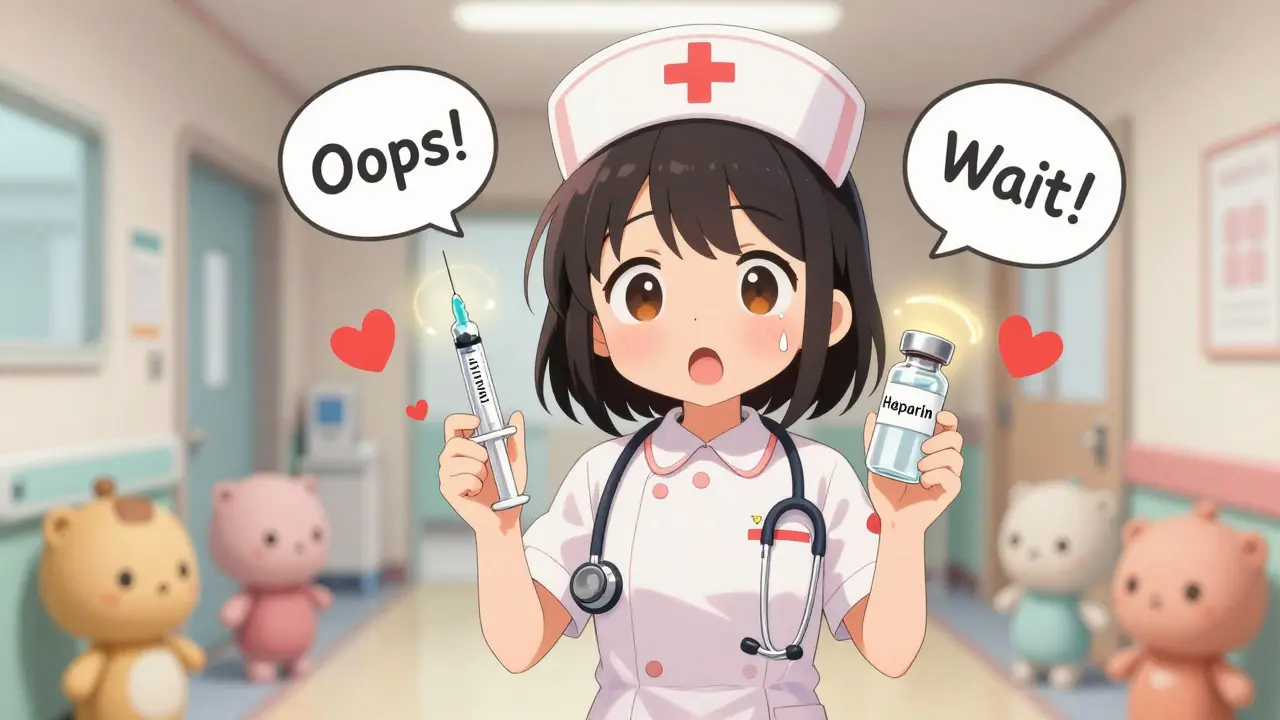
- Insulin vs. heparin - both are given by injection. Both are clear liquids. One lowers blood sugar. The other thins the blood. Mistake one for the other? Death.
- Vecuronium vs. Versed - one paralyzes muscles. The other calms anxiety. Give the wrong one during surgery? The patient wakes up unable to breathe.
- Melphalan vs. Meloxicam - one is chemotherapy. The other is a painkiller. Confusing them in an elderly patient? Organ failure.
Why Tall Man Lettering Isn’t Enough
Since 2001, the FDA has required “tall man lettering” for high-risk drug pairs. That means capitalizing parts of the name to highlight differences: HYDROmorphone vs. hYDROcodone. It sounds smart. But does it work? A 2022 review in the Journal of Pharmacy Practice found that tall man lettering has a “quasi-placebo effect.” Nurses and pharmacists don’t always notice it. If they’re tired, rushed, or distracted, they’ll still grab the wrong bottle. In one UK hospital, staff were trained to look for tall man lettering. After six months, LASA errors dropped by 12%. But when the training stopped, the error rate went right back up. The system alone doesn’t fix the problem. People do.What Actually Works to Stop These Errors
There are proven strategies that reduce LASA errors-not just in theory, but in real hospitals.- Electronic prescribing with built-in alerts - Systems like Epic and Cerner now flag LASA pairs when a prescriber selects a drug. If you type “clonidine,” the system pops up: “Did you mean clonazepam?”
- Standardized packaging - Hospitals are starting to use color-coded labels and different bottle shapes for high-risk drugs. Insulin now comes in distinct orange caps. Heparin is in clear vials with red bands.
- Verbal order protocols - No more saying “insulin.” Now, staff must say “regular insulin 10 units subcutaneous.” No abbreviations. No shortcuts.
- Annual LASA lists - The Joint Commission requires every hospital to create its own list of LASA drugs based on what’s actually used there. A small clinic doesn’t need to worry about chemotherapy drugs. A cancer center does.
- Staff training - Nurses and pharmacists get 2-4 hours of annual training. In oncology and ICU units, they get extra 1-2 hour refreshers every quarter.
The Bigger Picture: Why This Keeps Happening
The problem isn’t just bad names. It’s a broken system. Drug companies get to pick names for new medications. There’s no mandatory test to see if a new name sounds too much like an existing one. In 2022, the FDA rejected 34 new drug names because they were too similar to others. That’s up from 22 in 2018. But thousands of new drugs still get approved every year without this safety check. Dr. Michael Cohen of ISMP says: “We shouldn’t allow new confusing names on the market.” He’s right. We’re fixing the symptom-misreading labels-but not the disease-poor naming standards. Meanwhile, smaller hospitals can’t afford fancy EHR systems. Community pharmacies run on tight budgets. Nurses work double shifts. Pharmacists fill 150 prescriptions a day. In that environment, a small visual cue can be missed.What You Can Do
If you or a loved one is on medication:- Always ask: “What’s the brand name? What’s the strength?” Don’t just accept “the thyroid pill.”
- Check the pill color and shape. If it looks different from last time, ask why.
- When a nurse gives you a shot, ask: “What is this?” Don’t assume they know.
- If you hear a drug name spoken, repeat it back: “You said hydromorphone, right? Not hydrocodone?”
The Future: AI, Design, and Change
New tools are coming. Johns Hopkins is testing AI voice recognition that listens to verbal orders and flags potential LASA mix-ups in real time. Early results show 89% accuracy. The International Pharmaceutical Federation wants all drug names and packaging to follow universal design rules by 2030. That means no more similar-looking bottles. No more confusing names. No more excuses. But change won’t come from technology alone. It comes from people speaking up, systems being redesigned, and regulators refusing to approve dangerous names. As Dr. Donald Berwick wrote in the New England Journal of Medicine: “We can’t eliminate all errors. But we can reduce them by 80% in ten years-if we stop treating this as a human problem and start treating it as a system problem.”What are the most common look-alike, sound-alike medication pairs?
The most frequent LASA pairs include hydromorphone/hydrocodone, insulin/heparin, clonidine/clonazepam, vecuronium/versed, and simvastatin 10 mg/simvastatin 20 mg. Chemotherapy drugs like doxorubicin and daunorubicin are also high-risk due to similar names, appearance, and administration routes. Even minor differences in strength, like 10 mg vs. 20 mg of the same drug, can lead to errors in busy settings.
Why do pharmacies still make these mistakes?
Pharmacists and nurses are human. They work under pressure, often with heavy workloads and short staffing. During shift changes, late nights, or emergency situations, attention to detail slips. Even with tall man lettering or electronic alerts, if someone is distracted or trained poorly, they can still grab the wrong bottle. The system hasn’t been designed to protect against human error-it often expects perfection.
Is tall man lettering effective?
Tall man lettering-like HYDROmorphone vs. hYDROcodone-helps, but it’s not enough. Studies show it only reduces errors by 10-15% when used alone. Many staff don’t notice the capitalization, especially under stress. It works best when combined with other strategies: electronic alerts, standardized packaging, verbal confirmation, and regular training. It’s a tool, not a solution.
Can new drug names be prevented from being confusing?
Yes. The FDA now rejects about 30-35 new drug names per year because they’re too similar to existing ones. But this only applies to new drugs. Over 10,000 older drugs with confusing names are still on the market. Experts like the Institute for Safe Medication Practices say we need mandatory testing for all new names using standardized algorithms, and we need to phase out the most dangerous existing pairs.
How can patients protect themselves?
Always ask: What’s the brand name? What’s the strength? Why am I taking this? If a pill looks different than before, ask if it’s the same drug. When a nurse gives you an injection, say: “Can you read the name back to me?” Don’t be afraid to speak up. You’re not being difficult-you’re helping prevent a mistake. Your life could depend on it.




Melissa Cogswell
February 1, 2026I've worked in hospital pharmacy for 12 years. The biggest issue isn't just the names-it's the pressure. You're juggling 150 scripts, a code blue down the hall, and a nurse yelling about a stat med. Tall man lettering? I see it, but my brain auto-fills the wrong one when I'm exhausted. We need better tech, not just better labels.
One time I almost gave a patient insulin instead of heparin because both were on the same tray, both clear, both labeled with tiny fonts. I caught it because I paused and read the vial backward. That shouldn't be a trick.
Training helps, but only if it's not a checkbox. Real drills. Simulated errors. Role-play with real med bottles. That’s what sticks.