

Every year, millions of people buy sunscreen without really knowing what they’re getting. You see "SPF 50" on the bottle, think you’re covered, and head outside. But here’s the truth: if you’re not using it right, that high number might as well be a marketing trick. OTC sunscreens are one of the most misunderstood products in personal care - and the consequences aren’t just about wrinkles or sunburns. They’re about skin cancer risk.
What SPF Actually Means (And What It Doesn’t)
SPF stands for Sun Protection Factor. It measures how well a sunscreen blocks UVB rays - the ones that cause sunburns and play a big role in skin cancer. But it’s not a measure of time. SPF 30 doesn’t mean you can stay out three times longer than without sunscreen. It’s about how much UVB gets through.
Here’s the math: SPF 15 blocks about 93% of UVB rays. SPF 30 blocks 97%. SPF 50 blocks 98%. That’s it. Going from SPF 30 to SPF 100 only adds 1% more protection. There’s no such thing as "total" protection. And no sunscreen lasts all day. The FDA says any product labeled SPF 50+ must still be reapplied every two hours - same as SPF 15.
What’s worse? Some products claim SPF 100 but fail real-world testing. In 2025, Consumer Reports tested over 100 sunscreens. One popular brand marketed as SPF 100 actually delivered only SPF 28. Another, labeled SPF 50, gave users less protection than SPF 15. The numbers on the bottle aren’t always what you get.
Broad Spectrum Isn’t Just a Buzzword
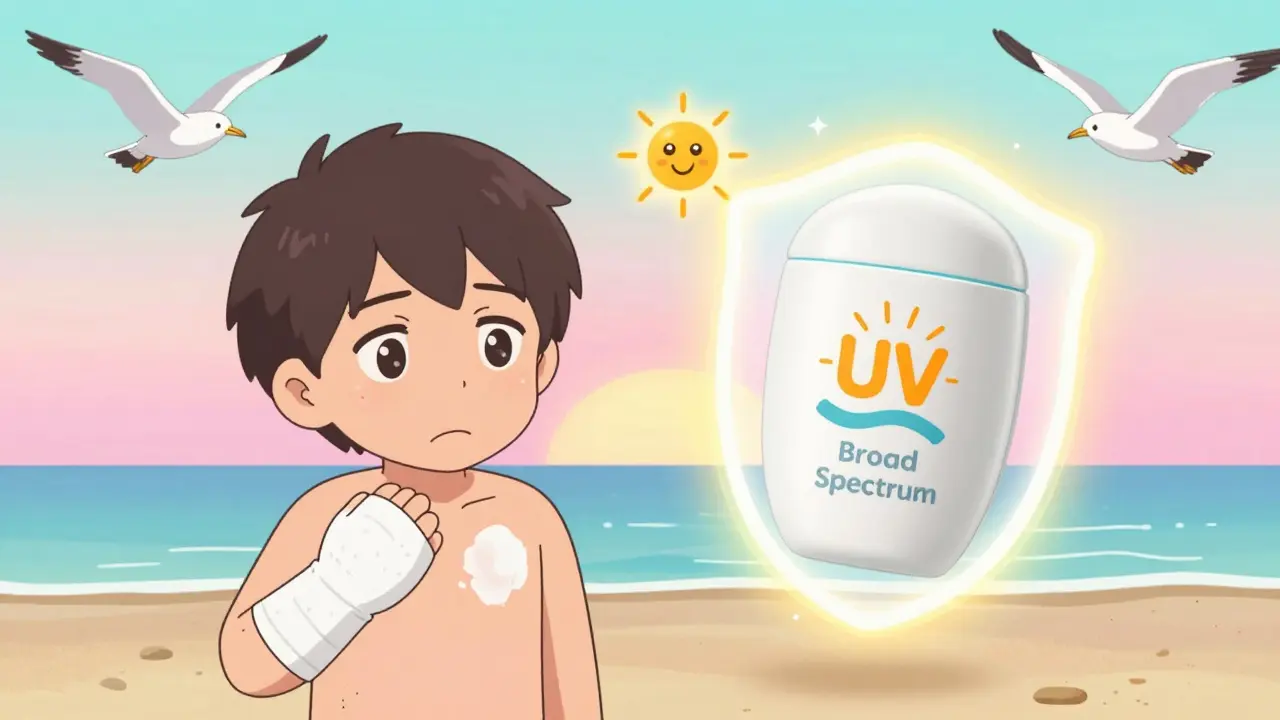
UVB causes burns. UVA causes aging - and also skin cancer. UVA rays go deeper, damage collagen, and don’t make you turn red. That’s why "broad spectrum" matters. It means the product protects against both types of UV radiation.
The FDA requires sunscreens to pass a "critical wavelength" test to earn that label. It needs to block UVA rays up to 370 nanometers. That’s not easy. Many mineral sunscreens, especially cheaper ones, fail this test. In 2024, a study found that 4 out of 10 mineral sunscreens labeled "broad spectrum" didn’t meet the standard. That’s why you can’t just assume a zinc oxide product is enough.
Chemical filters like avobenzone and ecamsule are better at blocking UVA. But they need stabilizers. If a product has avobenzone without octocrylene or Mexoryl, it can break down in sunlight and lose protection within an hour. That’s why some sunscreens that look great on the shelf perform poorly in real life.
Mineral vs. Chemical: What’s Really Better?
You’ve heard mineral sunscreens are "gentler." And they are - for some people. Zinc oxide and titanium dioxide sit on top of the skin and reflect UV light. They work immediately. No waiting. That’s great for sensitive skin, rosacea, or melasma. Dermatologists like EltaMD UV Clear SPF 46 because it contains 9% zinc oxide and niacinamide, which calms inflammation.
But here’s the catch: mineral sunscreens often don’t spread evenly. They leave white casts. And when they do, they’re not covering you properly. Consumer Reports found that mineral sunscreens scored an average of 34 out of 100 in protection - while top chemical sunscreens scored 92. That’s not a small difference. That’s the difference between getting burned and staying safe.
Chemical sunscreens absorb UV rays. They’re more cosmetically elegant. Products like La Roche-Posay Anthelios Melt-in Milk SPF 60 or Supergoop! Unseen Sunscreen SPF 40 disappear on the skin. No white cast. No greasy feel. But they need 20 minutes to bind to skin before sun exposure. And some ingredients like oxybenzone are banned in Hawaii and Key West because they harm coral reefs. If you swim in oceans, avoid those.
How Much Should You Use? (Spoiler: You’re Probably Using Too Little)
Most people apply only 25-50% of the amount needed. That cuts protection dramatically. If you use half the recommended amount of SPF 30, you’re getting the protection of SPF 5 - not SPF 15.
The FDA says you need 2 milligrams of sunscreen per square centimeter of skin. For your face and neck? That’s about a quarter teaspoon. Think of it as five pea-sized dots: one for each cheek, one for the forehead, one for the chin, and one for the nose and neck together. Rub it in. Don’t just smear it on.
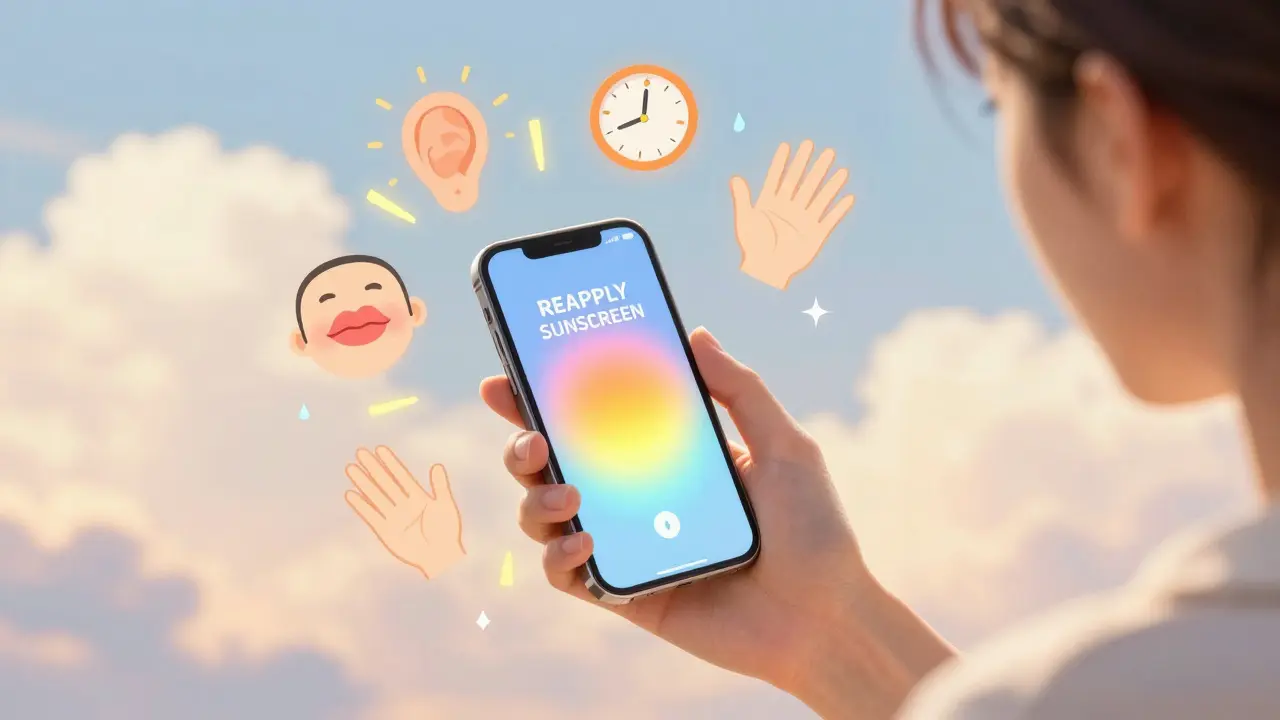
And don’t forget your ears, lips (use a lip balm with SPF 30+), scalp (if you have thinning hair), and the backs of your hands. UV damage adds up. You can’t just protect your face and call it good.
Reapplication: The Most Ignored Rule
Reapplying every two hours isn’t a suggestion. It’s a requirement. Sweat, water, and rubbing your skin with a towel remove sunscreen. Even "water-resistant" products only last 40 or 80 minutes in water. And "water-resistant" doesn’t mean waterproof. That label is gone from new packaging since 2023.
Studies show only 14% of people reapply sunscreen at the beach. That’s why sunburn rates stay high. If you’re outside all day - hiking, gardening, playing with kids - you need to reapply every two hours. Even if it’s cloudy. UV rays penetrate clouds. Up to 80% can get through.
And don’t wait until you’re burned. That’s too late. Sun damage accumulates. A 2023 study in the Journal of the American Academy of Dermatology found that daily sunscreen use cuts melanoma risk by 50%. That’s not a small win. That’s life-changing.
What’s Changing in 2025 and Beyond
The FDA is finalizing new rules this year. By 2025, all OTC sunscreens must meet stricter UVA protection standards - closer to what Europe already requires. That means some products will be pulled from shelves. And the FDA is considering banning 12 chemical filters, including oxybenzone and octinoxate, unless manufacturers prove they’re safe for human absorption.
Meanwhile, innovation is happening. New sunscreens are being developed with antioxidants like vitamin C and E to fight free radicals. Some brands are adding UV sensors - like Shade Smart, a wearable patch launching in Q2 2025 that glows when you need to reapply. And apps are popping up that use your phone’s camera to show you where you missed spots.
But the biggest change? Awareness. People are starting to understand that sunscreen isn’t just for the beach. It’s for walking the dog. It’s for driving. It’s for sitting by a window. Daily use is the new normal.
What to Look For (And What to Avoid)
- Look for: SPF 30+, broad spectrum, water-resistant (40 or 80 minutes), zinc oxide or avobenzone as active ingredients.
- Avoid: Products with PABA, trolamine salicylate, or oxybenzone if you swim in oceans. Skip anything without an expiration date. Sunscreen loses effectiveness after three years.
- For sensitive skin: Stick with mineral sunscreens that list zinc oxide as the first ingredient. Avoid fragrances and alcohol.
- For dark skin tones: Look for tinted formulas or sheer chemical sunscreens. Many mineral sunscreens leave a gray or purple cast on deeper skin tones.
Price doesn’t always equal quality. CVS Health SPF 50 spray costs under $3. La Roche-Posay costs $35. But in testing, both performed similarly. The real value isn’t in the brand - it’s in how you use it.
Common Mistakes (And How to Fix Them)
- Mistake: Applying sunscreen only once in the morning.
- Fix: Set a phone reminder. Every two hours, even if you’re just in the yard.
- Mistake: Relying on makeup with SPF.
- Fix: Makeup doesn’t give enough coverage. Apply sunscreen first. Let it sit 15 minutes. Then apply makeup.
- Mistake: Thinking dark skin doesn’t need sunscreen.
- Fix: Melanoma is rarer in darker skin - but deadlier when it happens. UVA damage still causes aging and cancer.
The bottom line? Sunscreen works - if you use it right. You don’t need the fanciest bottle. You need consistency. You need enough. And you need to reapply.
Is SPF 100 better than SPF 30?
No. SPF 100 blocks 99% of UVB rays. SPF 30 blocks 97%. That’s only a 2% difference. No sunscreen lasts longer than two hours, regardless of SPF. Higher numbers can give a false sense of security. The FDA says SPF 50+ labels are misleading because they don’t mean better or longer protection.
Do I need sunscreen on cloudy days?
Yes. Up to 80% of UV rays penetrate clouds. You can get sunburned on overcast days, especially at high altitudes or near reflective surfaces like water or snow. Daily sunscreen use is recommended even if you’re not planning to be outside long.
Can I use last year’s sunscreen?
Most sunscreens expire after three years. Check the bottle. If there’s no expiration date, assume it’s good for three years from when you opened it. If the texture changed - separated, lumpy, or smells off - throw it out. Expired sunscreen won’t protect you.
Is mineral sunscreen safer for the environment?
Mineral sunscreens with zinc oxide or titanium dioxide are less harmful to coral reefs than chemical filters like oxybenzone and octinoxate. These chemicals have been linked to coral bleaching. Hawaii and other locations ban them. If you swim in oceans, choose reef-safe formulas - but make sure they still offer broad-spectrum protection.
Why does my sunscreen pill under makeup?
Pilling happens when sunscreen doesn’t absorb fully or when it’s layered with incompatible products. Wait 15-20 minutes after applying sunscreen before putting on makeup. Use lightweight, non-comedogenic formulas. Avoid silicon-heavy moisturizers underneath. Some sunscreens, like Supergoop! Unseen, are specifically designed to layer well with makeup.







Jacob den Hollander
February 7, 2026Okay, I’ll admit it-I’ve been using sunscreen like it’s a suggestion, not a law. SPF 50? Yeah, I thought that meant I could chill all day. Nope. I just learned I’m basically wearing SPF 5 after smearing it on like I’m buttering toast. That visual of five pea-sized dots? I’m stealing that. And I never thought about my ears. My poor ears. They’re gonna get their own little bottle now. Also-cloudy days? I’m done. I’m putting it on like I’m brushing my teeth. Twice a day. No excuses.