
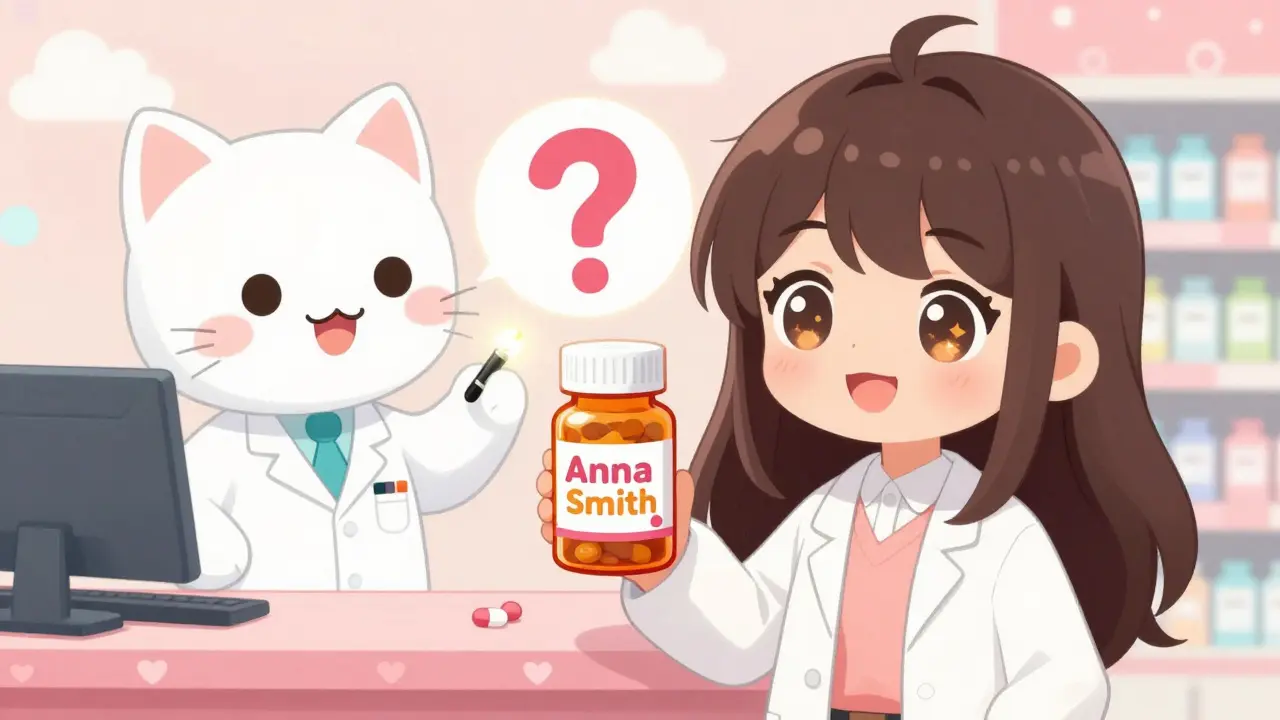
Every time you pick up a prescription, you’re holding a document that could save your life-or hurt you if you miss something small. Prescription labels aren’t just stickers with names and numbers. They’re your first and last line of defense against dangerous mistakes. And yet, most people glance at them, shove them in a bag, and forget about them. That’s risky. In the U.S., over 1.3 million medication errors happen every year, and nearly a quarter of them come from misunderstandings on the label itself. You don’t need to be a pharmacist to catch these errors. You just need to ask the right questions before you walk out the door.
Is this the right medicine for me?
It sounds obvious, but mistakes happen. A patient named Anna Smith gets her blood pressure pill, but the label says Anna Smithson. Or worse-she gets someone else’s medication entirely. Pharmacies fill thousands of prescriptions daily. Mix-ups happen more often than you think. Always verify the name on the label matches your ID. Then check the drug name. Is it the brand name your doctor wrote? Or the generic? Some labels list both. If your doctor prescribed metformin but the label says Glucophage, that’s fine-they’re the same thing. But if you were expecting metformin and see lisinopril, stop. Ask why. Never assume. Even if the pill looks familiar, colors and shapes change between manufacturers. Ask the pharmacist: “Is this the exact medicine my doctor ordered?”
What’s the correct dose and how often do I take it?
“Take one by mouth daily” sounds simple. But what does “daily” mean? Morning? Night? With food? On an empty stomach? The label might say “QD,” “BID,” or “TID”-those are Latin abbreviations for once, twice, or three times a day. Not everyone knows them. Ask the pharmacist to explain in plain English. Also, check the strength. Is it 5 mg or 50 mg? A tenfold error can be deadly. For example, taking 50 mg of a blood thinner instead of 5 mg can cause internal bleeding. One woman in Ohio took a 50 mg opioid pill thinking it was 5 mg. She went to the ER. Don’t let that be you. Read the directions out loud to the pharmacist. Then repeat them back. If they nod and say “yes, that’s right,” you’re safer.
When does this expire?
Expiration dates aren’t just for show. The FDA requires that medications stay effective until that date-if stored properly. But many people don’t check. A 2023 survey found that 1 in 5 patients kept expired meds in their cabinets. Some drugs lose potency fast. Antibiotics, insulin, and epinephrine auto-injectors can become useless or even dangerous after expiration. If your label doesn’t show an expiration date, ask for it. Pharmacies are required to print it. If they say “it’s on the box,” ask them to write it on the label too. And don’t forget: even if the pill looks fine, if it’s past the date, don’t use it.
How should I store this?
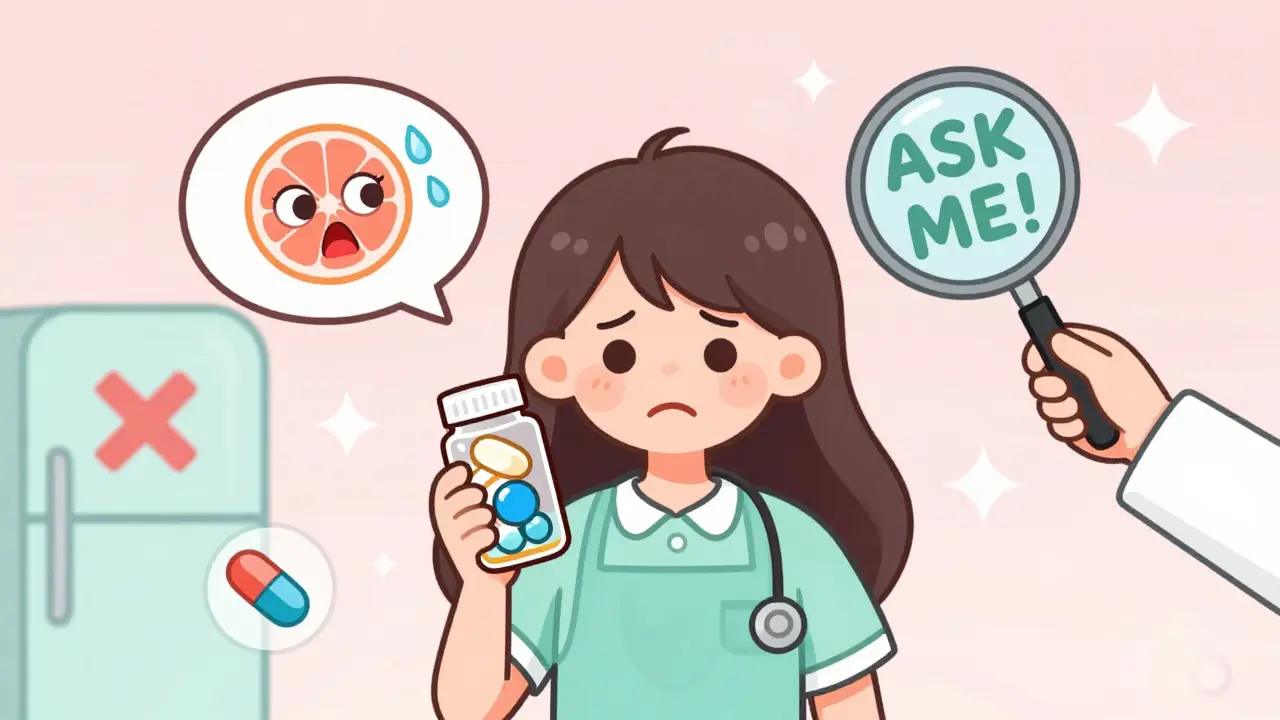
Most people think all pills go in the bathroom cabinet. Big mistake. Heat, moisture, and light can ruin medicine. About 78% of prescriptions need room temperature storage (68-77°F). But 15% need refrigeration-like insulin, some antibiotics, and certain biologics. One patient in Florida kept her insulin in the kitchen for two weeks because the label’s storage note was printed in tiny font on the back. The drug degraded. Her blood sugar spiked. Ask: “Does this need to be kept cold?” If yes, ask if it needs to stay in the original container or if it’s okay to transfer to a pill organizer. Some meds can’t be moved. Also, keep medicines away from sinks, windows, and hot appliances. A drawer in the bedroom is often safer than the bathroom.
Can I take this with my other pills or food?
Drug interactions are silent killers. A 2022 study found that 67% of medication errors happen because patients didn’t know how their new drug reacted with something else. If you take blood pressure meds, ask if your new prescription interacts with it. If you’re on blood thinners like warfarin, avoid grapefruit juice. If you’re on antibiotics like tetracycline, don’t take them with dairy-calcium blocks absorption. Ask: “Are there any foods, drinks, or other medicines I should avoid?” Also, mention all supplements you take. People forget that fish oil, St. John’s wort, and even vitamin E can interfere. A pharmacist once caught a patient mixing a new antidepressant with St. John’s wort-both raise serotonin. That combo can cause serotonin syndrome, a life-threatening condition. Don’t leave that to chance.
How many refills do I have left?
Running out of meds mid-treatment is dangerous. Missing doses of antibiotics can cause resistant infections. Skipping heart or diabetes meds can lead to hospitalization. The label should say how many refills are left. But sometimes it’s unclear. Ask: “How many times can I refill this?” and “Do I need a new prescription after the last refill?” Some states require pharmacies to print refill info in bold. Others don’t. Also, check if your insurance allows refills early. If you’re traveling, ask if you can get an early refill or a travel supply. Many pharmacies now let you set refill reminders via text or app. Ask if they offer that.
Is there a Medication Guide I should read?
Not every drug comes with one-but the FDA requires it for 107 high-risk medications. These include opioids, blood thinners, birth control pills, and drugs for mental health or autoimmune conditions. The guide explains serious side effects in plain language. For example, isotretinoin (for acne) can cause birth defects. If you’re pregnant or planning to be, you need to know. The guide also tells you what symptoms to watch for and when to call your doctor. If the pharmacist doesn’t hand you one, ask: “Is there a Medication Guide for this?” If they say no, double-check with your doctor. Don’t assume it’s not important.
Can you explain this label in simpler terms?
Eighty million American adults struggle to understand medical writing. That’s not because they’re not smart-it’s because the language is confusing. Words like “adverse reaction,” “contraindicated,” or “bioavailability” are useless to most people. If the label feels like a legal document, ask the pharmacist to translate it. Say: “I’m not sure I understand this. Can you explain it like I’m 12?” Most pharmacists will. Many pharmacies now offer large-print labels, audio instructions, or QR codes that link to video explanations. In 2023, Walgreens and CVS started testing augmented reality labels that show dosage instructions on your phone when you point the camera at the bottle. Ask if your pharmacy offers these tools. If you have vision problems, ask for a magnifying card. If English isn’t your first language, ask for a translator. By law, pharmacies receiving federal funds must provide free interpretation services.
What side effects should I watch for?
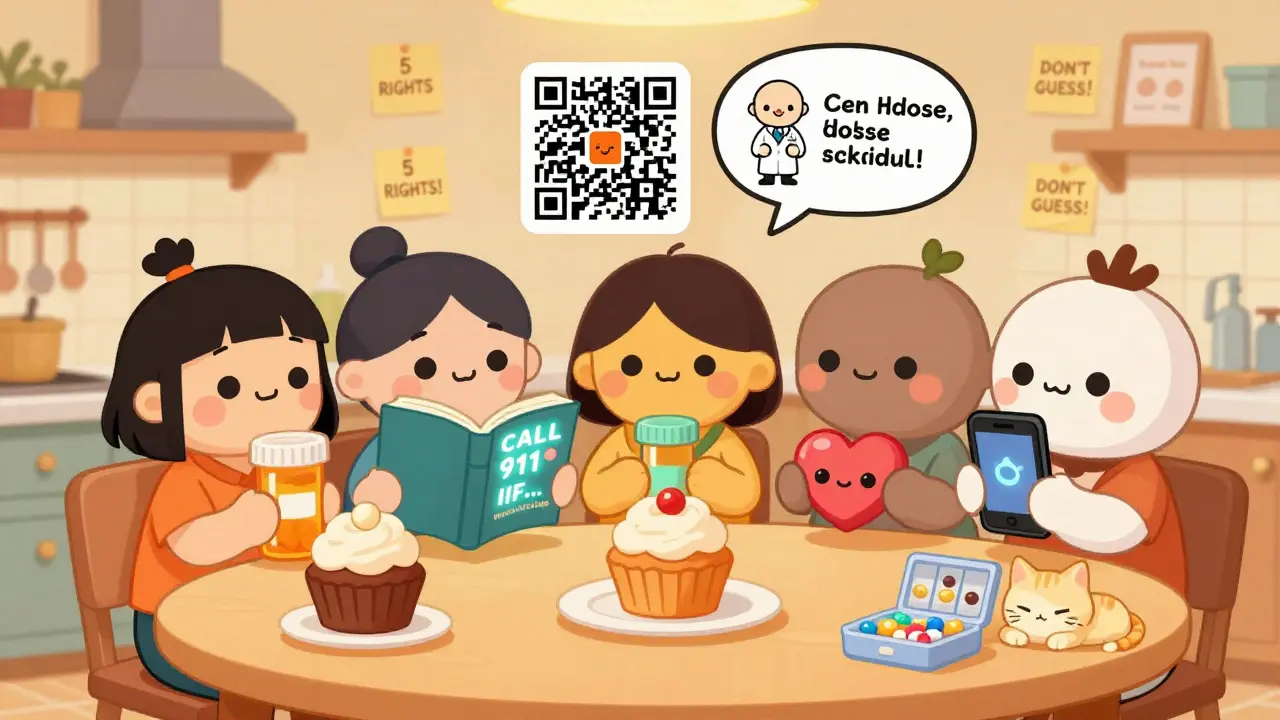
Most labels list side effects in tiny print. But not all are equal. Some are common and harmless-like mild nausea. Others are red flags. Ask: “What are the signs I need to call 911 or go to the ER?” For example, if you’re on a statin for cholesterol, muscle pain could mean rhabdomyolysis-a rare but deadly condition. If you’re on an antidepressant, sudden mood swings or suicidal thoughts need immediate attention. Don’t wait until the side effect list becomes overwhelming. Get the pharmacist to highlight the top three warning signs. Write them down. Put them on your fridge. Share them with a family member. The Institute for Safe Medication Practices says patients who ask this question reduce serious adverse events by 47%.
What if I miss a dose?
Life happens. You forget. You oversleep. You’re traveling. What then? The label might say “take as soon as you remember,” but that’s not always safe. For example, if you miss a blood thinner dose, doubling up later can cause bleeding. If you miss a birth control pill, the instructions vary by brand. Some say take it right away. Others say skip it and continue. Ask: “If I miss a dose, what’s the safest thing to do?” Then ask: “Should I call my doctor if I miss more than one?” Keep this info handy. Set phone alarms. Use pill boxes with compartments. But never guess.
Why does this look different from last time?
Have you ever opened a bottle and thought, “This isn’t the same pill”? That’s because pharmacies often switch generic manufacturers. A pill that was white and oval last month might now be blue and round. That’s normal. But it’s also confusing. Ask: “Is this the same medicine, just made by a different company?” If the shape, color, or size changed dramatically, double-check the name and strength. If you’re unsure, don’t take it. Call your doctor. A 2023 Reddit thread had over 200 comments from people who took the wrong pill because they didn’t ask this question. One man took a muscle relaxant thinking it was his anxiety med. He ended up in the ER. Don’t be that person.
Can I get a printed copy of the label?
Pharmacies often give you a paper receipt with basic info. But the full label? That’s usually printed on the bottle. If you’re elderly, have trouble reading small print, or want to share the info with a caregiver, ask for a printed copy. Most pharmacies will print a full label on a sheet of paper-sometimes even in larger font. Some offer it in multiple languages. Ask: “Can I get a copy of the full label for my records?” Keep it in a folder with your other medical documents. It’s your right. And if you ever need to prove what you were prescribed-like when visiting a new doctor or going to the ER-you’ll be glad you did.
Final tip: Use the 5 Rights every time
There’s a simple system used by nurses and pharmacists called the “5 Rights.” Use it every single time you take a pill:
- Right Patient - Is the name on the label yours?
- Right Medicine - Is this the drug your doctor prescribed?
- Right Dose - Does the strength match what you were told?
- Right Way - Are you taking it by mouth, as a shot, or as a patch?
- Right Time - Are you taking it at the correct time of day?
Spending two minutes asking these questions saves lives. It’s not about trusting the system. It’s about protecting yourself. The pharmacy is there to help-but they’re not mind readers. You’re the only one who knows your body, your history, and your concerns. Don’t be shy. Ask. And if they seem annoyed, find a different pharmacy. Your health isn’t negotiable.




Jay Clarke
January 17, 2026Bro. I once took someone else’s blood pressure med because I didn’t check the name. Thought it was mine. Woke up feeling like I’d been hit by a bus. Turned out it was a beta-blocker for a 70-year-old woman. I was 28. My heart felt like it was trying to escape my chest. Never again. Always check the name. Always. I’m still traumatized.