

Bone Medication & Calcium Timing Planner
Your Optimized Morning Routine
Quick Absorption Rules:
- Use plain water only. No juice, coffee, or mineral water.
- Stay upright (sitting or standing) for the duration of the wait.
- Keep calcium supplements at least 2 hours away from your dose.
Imagine taking a medication for years to protect your bones, only to find out that a simple daily vitamin is cancelling out most of the benefits. It sounds unlikely, but for people taking bisphosphonates is a class of synthetic compounds used to treat osteoporosis by stopping bone loss , this is a very real risk. If you take your calcium supplement too close to your bone medication, you might be wasting your dose.
The problem is a matter of chemistry. When these two substances meet in your stomach, they bind together and create a complex that your body simply cannot absorb. Research shows that taking calcium carbonate at the same time as alendronate can slash the medication's absorption by a staggering 94%. Essentially, the calcium acts like a shield, preventing the medicine from ever entering your bloodstream.
The High Stakes of Timing
Why does this matter so much? Because oral bisphosphonates are already incredibly difficult for the body to absorb. In a perfect scenario, only about 1% of the dose you swallow actually makes it into your system. When you add calcium or food into the mix, that tiny percentage drops even further. This isn't just about a slightly less effective pill; it's the difference between preventing a hip fracture and suffering one.
According to data from the Fracture Intervention Trial, patients who follow strict administration rules see a significantly higher reduction in vertebral fractures. On the flip side, those who struggle with the timing often experience treatment failure. Experts, including former leaders of the National Osteoporosis Foundation, point out that improper administration is the single most common reason these drugs fail to work.
How to Manage Your Morning Routine
If you are taking an oral version of these drugs-such as alendronate (Fosamax) or risedronate-your morning routine needs a specific structure. You can't just pop the pill and have your morning coffee. Coffee, tea, and juice can reduce absorption by 50% to 60%.
Follow these steps to ensure the medication actually works:
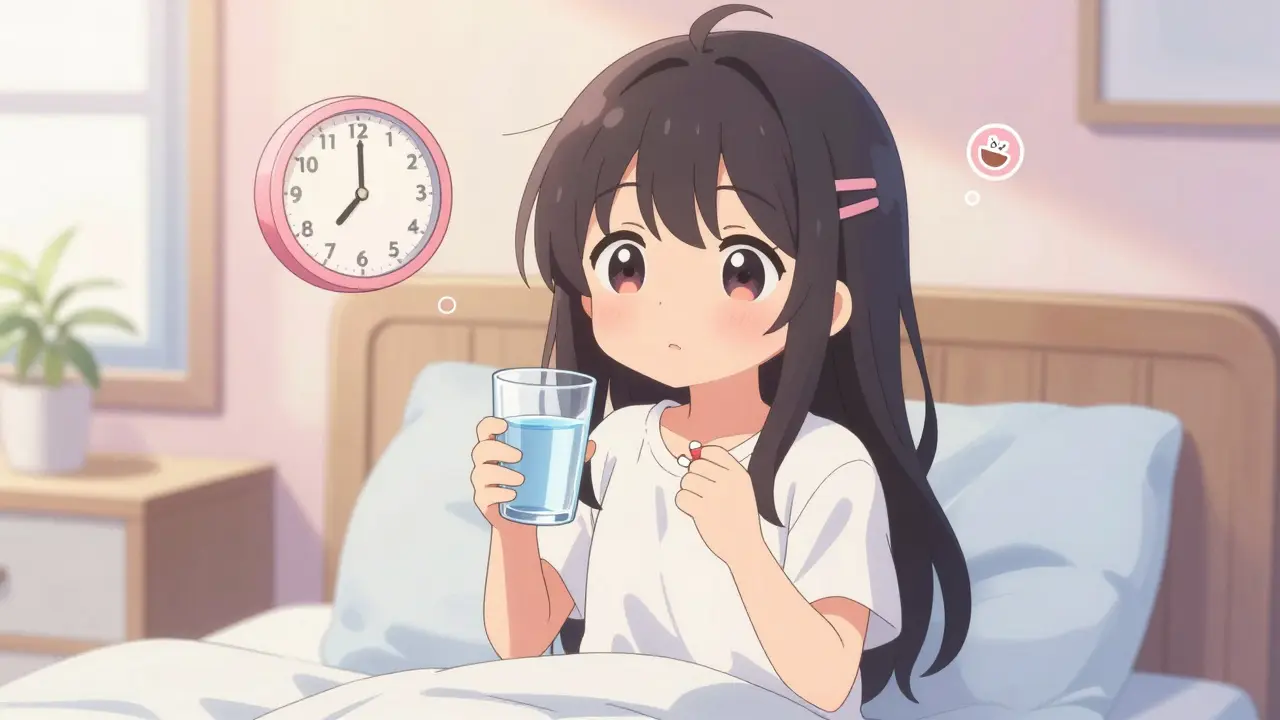
- Wake up and fast: Take your medication immediately after an overnight fast.
- Use plain water only: Do not use mineral water, juice, or milk. Stick to a full glass of plain water.
- Wait it out: You must wait at least 30 to 60 minutes before eating or drinking anything else. Alendronate generally requires 30 minutes, while risedronate needs a full hour.
- Stay upright: Do not lie down. Sit up straight or stand. Lying down can cause the medication to irritate your esophagus, which is why many people experience heartburn or nausea.
Scheduling Your Calcium and Vitamin D
You still need calcium and Vitamin D to build strong bones, but the timing is everything. The goal is to keep your calcium supplements as far away from your bisphosphonate dose as possible.
A good rule of thumb is to take your calcium supplements at least 2 hours after your bone medication. Most patients find it easiest to shift their supplement routine to the evening. Taking Vitamin D with your dinner is often recommended because it is a fat-soluble vitamin and absorbs better with a meal.
| Calcium Type | Absorption Reduction | Best Time to Take |
|---|---|---|
| Calcium Carbonate | ~94% Decrease | Evening/With Meal |
| Calcium Citrate | ~88% Decrease | Evening/With Meal |
| Dietary Calcium (Milk) | Significant | At least 2 hours post-dose |

Alternative Options for Difficult Regimens
Let's be honest: waking up an hour early to take a pill and stand still isn't easy. Many people, especially those with GERD or other stomach issues, find this regimen impossible. If you find yourself consistently missing the window or forgetting the rules, you have other options.
Zoledronic acid (Reclast) is an intravenous (IV) option administered once a year. Because it bypasses the digestive tract entirely, the calcium absorption problem disappears. You don't have to worry about what you ate for breakfast. However, IV options can sometimes cause flu-like symptoms after the first dose and require that your baseline calcium levels are healthy before the infusion.
There are also newer medications like denosumab (Prolia) that are delivered via injection. These are becoming more popular for patients who cannot tolerate the strict timing or the gastrointestinal side effects of oral bisphosphonates.
Practical Tips for Staying on Track
Consistency is where most people trip up. The "morning coffee" trap is the most common mistake. To avoid this, try these concrete strategies:
- Use a split organizer: Use a pill box specifically labeled "Morning Bone Med" and "Evening Calcium."
- Set two alarms: One for the medication and another for when it is finally safe to eat.
- Prep your water: Have a glass of plain water on your nightstand so you can take the pill the moment you wake up.
- Track your levels: Get your serum calcium and Vitamin D levels checked every six months. This ensures you are getting enough nutrients without interfering with your medication.
Can I take my calcium supplement in the morning if I wait two hours?
Yes, waiting at least two hours is generally recommended to ensure the bisphosphonate has been absorbed. However, taking calcium in the evening with a meal is often more convenient and reduces the risk of accidental overlap.
What happens if I accidentally take them together?
If you take them together, the calcium will likely bind to the medication in your gut, meaning very little of the drug will reach your bones. While it's not dangerous, it makes that specific dose of medication largely ineffective. Don't double your dose next time; just get back on your correct schedule.
Why can't I take my bone medication with orange juice?
Juices, like orange or apple juice, often contain minerals or acids that can interfere with the absorption of the drug. Plain water is the only liquid that does not interact with the chemical structure of bisphosphonates.
Is calcium citrate better than calcium carbonate for this?
While calcium citrate is generally easier for some people to digest, both types significantly hinder the absorption of oral bisphosphonates. Neither is a "safe" substitute to take at the same time as your medication.
Do I need to stay upright if I take the IV version?
No. The requirement to stay upright is specifically to prevent the oral pill from irritating the lining of the esophagus. Since the IV version goes directly into the vein, this is not necessary.