

Medication Titration Schedule Calculator
Create Your Titration Plan
Your Titration Schedule
Your personalized schedule will help you gradually reach your target dose while minimizing side effects.
Why Dose Titration Matters More Than You Think
Ever started a new medication and felt like you were being turned into a different person? Nausea, dizziness, brain fog, or worse - all because the doctor gave you the full dose on day one? You’re not alone. Dose titration isn’t just medical jargon. It’s the difference between tolerating your medicine and actually benefiting from it. For many drugs - especially those used for ADHD, depression, epilepsy, or heart conditions - starting low and going slow isn’t a suggestion. It’s a safety rule built into FDA guidelines. The goal? Find the smallest dose that works, without wrecking your day.
What Exactly Is Dose Titration?
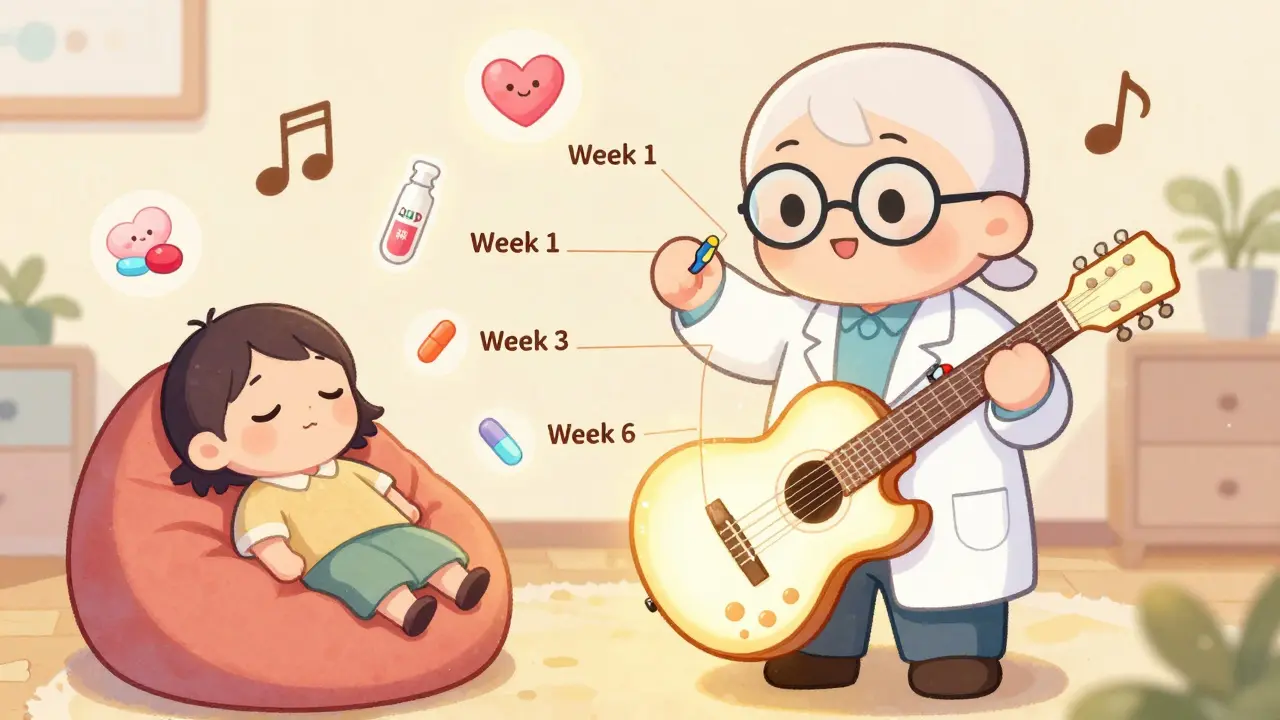
Dose titration means slowly adjusting how much of a drug you take until you hit the sweet spot: enough to help, not so much that it hurts. It’s not guessing. It’s a planned, step-by-step process. Think of it like tuning a guitar - you don’t crank all the strings at once. You tweak one at a time until the sound is right.
Some medications have what’s called a narrow therapeutic index. That means the line between a helpful dose and a harmful one is razor-thin. Warfarin, for example, needs your blood tested weekly to make sure you’re not bleeding internally or forming clots. Lamotrigine for seizures? Skip the slow ramp-up, and you risk a life-threatening skin reaction called Stevens-Johnson syndrome. These aren’t hypothetical risks. They’re documented, preventable outcomes - and titration stops them.
How Titration Works in Real Life
There’s no one-size-fits-all schedule. It depends on the drug, how fast it works, and your body’s response. Here’s how it breaks down:
- Stimulants for ADHD (like Adderall or Vyvanse): Start at 5-10mg once daily. Increase by 5-10mg every 3-7 days. Most people reach their target dose in 4-6 weeks. A 2022 study in ADDitude Magazine found that 78% of ADHD patients needed at least one adjustment during this phase.
- Non-stimulants (like atomoxetine): These take longer. You might start at 40mg/day and increase by 20mg every week. Full effect can take 8-12 weeks. Patience is part of the treatment.
- Antidepressants (like sertraline or fluoxetine): Often begin at 25-50mg/day. Increases happen every 1-2 weeks. Many patients quit because they feel worse before they feel better - but if you stick with the plan, side effects drop by 40-60% compared to jumping to full dose.
- Heart failure drugs (like carvedilol or bisoprolol): The American Heart Association says slow titration cuts dropout rates from 45% to just 18%. Why? Because dizziness and fatigue fade as your body adjusts.
- Cancer meds (like venetoclax): This one’s tightly controlled. Week 1: 20mg. Week 2: 50mg. Week 3: 100mg. Week 4: 200mg. Week 5: 400mg. Skip a step, and you risk tumor lysis syndrome - a dangerous flood of toxins from dying cancer cells.
These aren’t random numbers. They’re based on years of clinical trials. The FDA now requires titration schedules on the labels of 92% of new central nervous system drugs approved since 2018.
Why Skipping Titration Backfires
Some doctors skip titration to save time. Some patients beg for the full dose because they’re desperate to feel better. But the data doesn’t lie.
- In a 2021 study, 32% of patients stopped their meds because side effects hit too hard - often because they were started too fast.
- On Reddit’s r/ADHD community, 68% of medication posts mentioned titration. One user wrote: “Started at 10mg Adderall. Panic attacks, insomnia, heart palpitations. I quit for two years.” Another said: “I started at 5mg. Felt fine. Now I’m on 20mg and actually functioning.”
- A survey of 1,200 ADHD patients found that 74% who followed titration reported manageable side effects. Only 41% of those who didn’t did.
Side effects aren’t always the drug’s fault. Sometimes, they’re just your body screaming, “Too much, too fast!” Titration gives your liver, brain, and nervous system time to adapt.
What You Can Do to Make Titration Work
Titration isn’t something your doctor does alone. You’re a key player. Here’s how to help:
- Keep a side effect journal. Write down how you feel each day - energy, sleep, mood, nausea, headaches. Use a scale of 1-10. This isn’t fluff. It’s data. Seventy-eight percent of patients who kept logs said it helped their doctor adjust doses faster and more accurately.
- Take meds at the same time every day. Even a 2-hour shift can throw off how your body processes the drug. Set an alarm.
- Eat with your meds if advised. Many ADHD and antidepressant drugs cause stomach upset. Taking them with food cuts that risk by 65%, according to user reports on Drugs.com.
- Don’t rush the timeline. Waiting 1-2 weeks between dose changes lets your body stabilize. Jumping ahead because you “feel fine” can backfire. Side effects often show up after a few days of a new dose.
- Ask for the manufacturer’s titration guide. Vyvanse’s guide is 12 pages long. Methylphenidate? Barely any. If your doctor doesn’t have one, ask for it. You deserve to know the plan.
When Titration Isn’t Enough
Titration isn’t magic. It won’t fix everything. Some people still have side effects even with perfect dosing. That’s when alternatives come in.
- Switching meds: If you can’t tolerate sertraline, maybe escitalopram works better. Not all SSRIs are the same.
- Pharmacogenetic testing: Already available for 28 medications, this blood test checks your genes to predict how you’ll metabolize a drug. It’s not mainstream yet - but by 2030, experts predict it’ll be standard for 75% of high-risk meds.
- Digital tools: The FDA cleared the TitrationTracker app in January 2023. It uses AI to analyze your daily logs and suggests optimal next doses. In a 2023 trial, it cut side effects by 32% compared to traditional methods.
And sometimes, the issue isn’t the dose - it’s the drug itself. If you’ve tried everything and still feel awful, talk about non-medication options. Therapy, lifestyle changes, or other treatments might be just as effective - and without the side effects.

The Bigger Picture: Why This Matters
The global market for therapeutic drug monitoring - the lab tests and tools that support titration - is projected to hit $4.1 billion by 2027. Why? Because we’re moving away from one-size-fits-all medicine. We’re entering an era where your body’s unique biology guides your treatment.
But access isn’t equal. In low-income countries, only 22% have standardized titration protocols for essential meds, according to the WHO. In the U.S., 87% of doctors now follow formal schedules. That gap isn’t just unfair - it’s dangerous.
Dose titration isn’t about being slow. It’s about being smart. It’s about respecting your body’s limits. It’s about giving a drug a fair chance - not forcing it to work before you’re ready.
Frequently Asked Questions
How long does dose titration usually take?
It varies by medication. Stimulants like Adderall often take 4-6 weeks. Non-stimulants like atomoxetine can take 8-12 weeks. Antidepressants usually require 6-10 weeks. Cancer drugs like venetoclax follow strict weekly schedules. The key is patience - rushing increases side effects.
Can I adjust my dose myself if I feel worse?
No. Never change your dose without talking to your doctor. Side effects can be signs of toxicity, not just discomfort. What feels like "too much" might be your body adjusting - or it could be something serious. Always consult your provider before making changes.
Why do some doctors skip titration?
Some do it to save time, or because they think the patient is "desperate enough" to handle full doses. Others don’t have access to guidelines or don’t know the latest protocols. But research shows this leads to higher dropout rates and worse outcomes. Ask your doctor if they follow FDA-recommended titration schedules.
Is titration only for psychiatric meds?
No. Titration is used for heart medications (beta-blockers), epilepsy drugs (lamotrigine, perampanel), cancer treatments (venetoclax), thyroid hormones (levothyroxine), and even blood thinners like warfarin. Any drug with a narrow therapeutic window needs careful dosing.
What if I miss a dose during titration?
Don’t double up. If you miss one dose, take it as soon as you remember - unless it’s close to your next dose. Then skip it. Resume your schedule the next day. If you miss multiple doses, contact your doctor. They may need to reset your titration plan to avoid side effects.
Will I always need to titrate if I switch medications?
Yes - even if you’ve taken a similar drug before. Every medication is metabolized differently. Switching from Adderall to Vyvanse, for example, still requires a new titration. Your body doesn’t automatically know how to handle a new chemical, even if it’s "similar."
What’s Next?
If you’re currently on a medication that requires titration, don’t rush it. Use your journal. Track your sleep, mood, and energy. Talk to your doctor about the manufacturer’s guidelines. Ask if pharmacogenetic testing is an option. And if you’re feeling overwhelmed - that’s normal. Titration is hard work. But it’s worth it. The right dose doesn’t just reduce side effects. It gives you your life back.






Rachel Wermager
January 5, 2026Dose titration isn't just a clinical nicety-it's a pharmacokinetic imperative, especially for CNS-active agents with narrow therapeutic indices. The CYP450 polymorphism variance alone necessitates individualized ramp-up protocols; failing to account for CYP2D6 ultra-rapid metabolizers can lead to toxic accumulation even at "standard" doses. The FDA's 92% labeling requirement since 2018 isn't arbitrary-it's evidence-based risk mitigation. Ignoring titration curves is tantamount to therapeutic negligence.