
Opioid-Induced Low Testosterone Symptom Checker
This tool helps identify potential opioid-induced androgen deficiency (OPIAD) based on symptoms. If you've been on long-term opioids for chronic pain and experience multiple symptoms, you should consult your doctor for proper testing.
Note: This is not a medical diagnosis. Always seek professional medical advice.
Next Steps: If you're experiencing multiple symptoms, consult your doctor for a testosterone blood test (done between 7-10 a.m.).
When you’re on long-term opioid therapy for chronic pain, the last thing you might think about is your testosterone levels. But if you’ve noticed a drop in libido, persistent fatigue, or unexplained weight gain, there’s a good chance your body is responding to the opioids in a way that’s not being talked about enough: opioid-induced androgen deficiency (OPIAD).
What Is Opioid-Induced Androgen Deficiency?
OPIAD isn’t a side effect you can ignore-it’s a real hormonal disruption caused by opioids interfering with your body’s natural hormone production. When you take opioids regularly, they bind to receptors in your brain’s hypothalamus, which controls the hypothalamic-pituitary-gonadal (HPG) axis. This axis is responsible for telling your testes to make testosterone. Opioids slow down or even stop the signals that trigger testosterone production.
Studies show that 50% to 90% of men on long-term opioid therapy develop low testosterone. That’s not rare-it’s common. And it’s not just about feeling tired. Low testosterone affects your muscles, bones, mood, and even your heart. The longer you’re on opioids, the worse it gets. People using methadone for more than a year often have testosterone levels 50% to 75% below normal. Even buprenorphine, often seen as a safer option, still lowers testosterone significantly compared to people not using opioids.
How Do You Know If You Have Low Testosterone From Opioids?
The symptoms don’t show up overnight. They creep in over weeks or months. You might think you’re just getting older, stressed, or that your pain is getting worse. But here’s what to watch for:
- Low sex drive (reported in 68% to 85% of affected men)
- Erectile dysfunction (60% to 75% of cases)
- Constant fatigue-even after sleeping enough
- Mood swings, irritability, or depression
- Loss of muscle mass and increased belly fat
- Bone weakness or fractures without major injury
- Anemia (low red blood cell count)
- Difficulty concentrating or brain fog
These aren’t just "in your head." Blood tests confirm it. Men on long-term opioids average total testosterone levels around 245 ng/dL-well below the normal range of 300 to 1,000 ng/dL. Some drop below 200 ng/dL. That’s not just low-it’s clinically deficient.
Why It’s Often Missed
Doctors don’t routinely check testosterone levels in patients on opioids. Why? Because it’s not always on the radar. Many assume fatigue or low libido is just part of chronic pain or aging. But research from the Pain Physician journal clearly states: "Screening for hypogonadism should be considered whenever long-term opioid prescribing is undertaken."
Even worse, some patients don’t mention sexual or mood changes because they’re embarrassed-or they think it’s unrelated. But if you’ve been on opioids for more than 90 days and have two or more of these symptoms, you should ask for a blood test. Testosterone levels fluctuate during the day, so the test must be done in the morning, between 7 and 10 a.m., for accuracy. Two low readings are needed to confirm diagnosis.
How Testosterone Replacement Therapy Helps
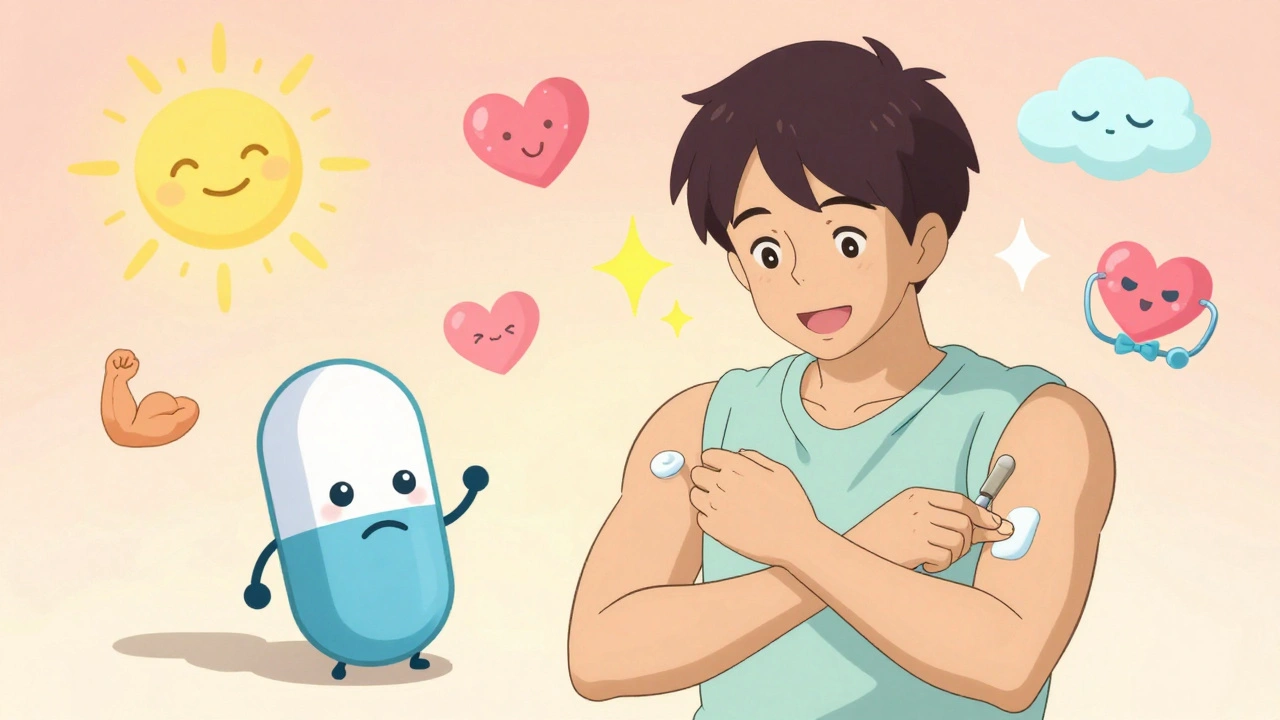
If your levels are low and symptoms are affecting your life, testosterone replacement therapy (TRT) can make a real difference. It doesn’t cure the opioid dependence, but it fixes the hormone imbalance caused by it.
TRT comes in several forms:
- Injections: Testosterone cypionate or enanthate, given every 1 to 2 weeks
- Gels: Applied daily to skin (50-100 mg per day)
- Patches: Worn on skin, delivering 5-7.5 mg daily
- Buccal tablets: Placed between gum and cheek, twice daily
Studies show that after six months of TRT, men on opioids see:
- Improved sexual function (IIEF scores jump from 12.5 to nearly 20)
- 30% reduction in pain sensitivity
- Gain of 3.2 kg of lean muscle mass
- Loss of 2.1 kg of body fat
And it’s not just about feeling better. A major study in JAMA Network Open found that men on TRT had:
- 49% lower risk of dying from any cause
- 42% lower risk of heart attack or stroke
- 35% lower risk of hip or femur fractures
- 26% lower risk of anemia
These aren’t small improvements. They’re life-changing-and potentially life-saving.
The Risks and Downsides of TRT
TRT isn’t risk-free. The FDA requires black box warnings on testosterone products because of potential dangers:
- Polycythemia: Thickened blood from too many red blood cells (15-20% of users)
- Lower HDL ("good") cholesterol: Drops by 10-15 mg/dL
- Acne: Especially with gels or patches
- Increased risk of blood clots: 1.4 to 2 times higher
- Higher stroke risk: 1.3 to 1.8 times higher
TRT is also contraindicated if you have or are at risk for prostate or breast cancer. Before starting, your doctor must check your prostate-specific antigen (PSA) levels and do a digital rectal exam-especially if you’re over 50.
And here’s the catch: once you start TRT, your body stops making its own testosterone. You may need it for life. That’s why it’s not a decision to make lightly.
Non-Drug Ways to Support Testosterone
If you’re not ready for TRT-or your doctor advises against it-there are natural ways to help your body produce more testosterone, even while on opioids:
- Maintain a healthy weight: BMI under 25 is linked to 20-30% higher testosterone levels
- Do resistance training: Three strength sessions per week can boost testosterone by 15-25%
- Sleep 7-9 hours: Poor sleep cuts testosterone by up to 20%
- Avoid smoking: Smokers have 15-20% lower testosterone
- Limit alcohol: More than 14 drinks a week drops levels by 25%
- Manage blood sugar: Diabetes cuts testosterone by 25-35%
These aren’t magic fixes, but they help. Combine them with opioid tapering (if possible), and you give your body the best shot at recovery.
What About Women?
Women on long-term opioids can also develop low sex hormones, though it’s less studied. Instead of testosterone, they may benefit from DHEA supplementation, a precursor hormone. But evidence is limited, and treatment should only happen under endocrine supervision.
What Should You Do Next?
If you’re on opioids and experiencing symptoms of low testosterone:
- Write down your symptoms: libido, energy, mood, muscle strength, sleep
- Ask your doctor for a morning testosterone blood test (total and free)
- Request an Androgen Deficiency in Aging Males (ADAM) questionnaire-3 or more "yes" answers mean testing is needed
- If levels are low and symptoms are real, discuss TRT options with your doctor and an endocrinologist
- If TRT isn’t right for you, start lifestyle changes now: exercise, sleep, weight, alcohol
Don’t wait until you’re in deep fatigue or have a fracture. OPIAD is treatable. But only if you know it’s there.
Frequently Asked Questions
Can opioid-induced low testosterone be reversed after stopping opioids?
Yes, in many cases. After stopping opioids, testosterone levels can recover within 3 to 6 months, especially if the person was on shorter-acting opioids and didn’t use them for over two years. But recovery isn’t guaranteed. Long-term users, especially those on methadone, may need ongoing testosterone therapy. Lifestyle changes and medical supervision improve the chances of natural recovery.
Is testosterone replacement therapy safe for older men on opioids?
It can be, but only with careful monitoring. Men over 50 need regular PSA tests and prostate exams before and during TRT. The benefits-like lower fracture and heart attack risk-often outweigh the risks if you’re otherwise healthy. But if you have a history of prostate cancer, heart disease, or blood clots, TRT may not be safe. Always get a full medical evaluation before starting.
Do all opioids cause low testosterone equally?
No. Long-acting opioids like methadone cause the most suppression, with average testosterone levels dropping to 245 ng/dL. Buprenorphine is less suppressive, averaging around 387 ng/dL. Shorter-acting opioids like oxycodone or hydrocodone still lower testosterone, but the effect may be less severe if taken intermittently. Daily, long-term use of any opioid carries risk.
Can I use natural supplements like ashwagandha or zinc to raise testosterone while on opioids?
Supplements like zinc and ashwagandha may help slightly in healthy men, but there’s no strong evidence they work in people on long-term opioids. The suppression from opioids is too strong for supplements alone to reverse. They can support overall health, but they’re not a substitute for medical treatment if your testosterone is clinically low.
Why don’t more doctors test for low testosterone in opioid patients?
Many doctors aren’t trained to look for it. Pain management focuses on pain control, not endocrine health. Also, testosterone testing isn’t always covered by insurance unless symptoms are severe. But guidelines from the Pain Physician and the Endocrine Society clearly recommend screening. If your doctor won’t test, ask for a referral to an endocrinologist.




Sean McCarthy
December 2, 2025Long term opioids kill your testosterone. No surprise. Blood test it. If low, get TRT. Done.