
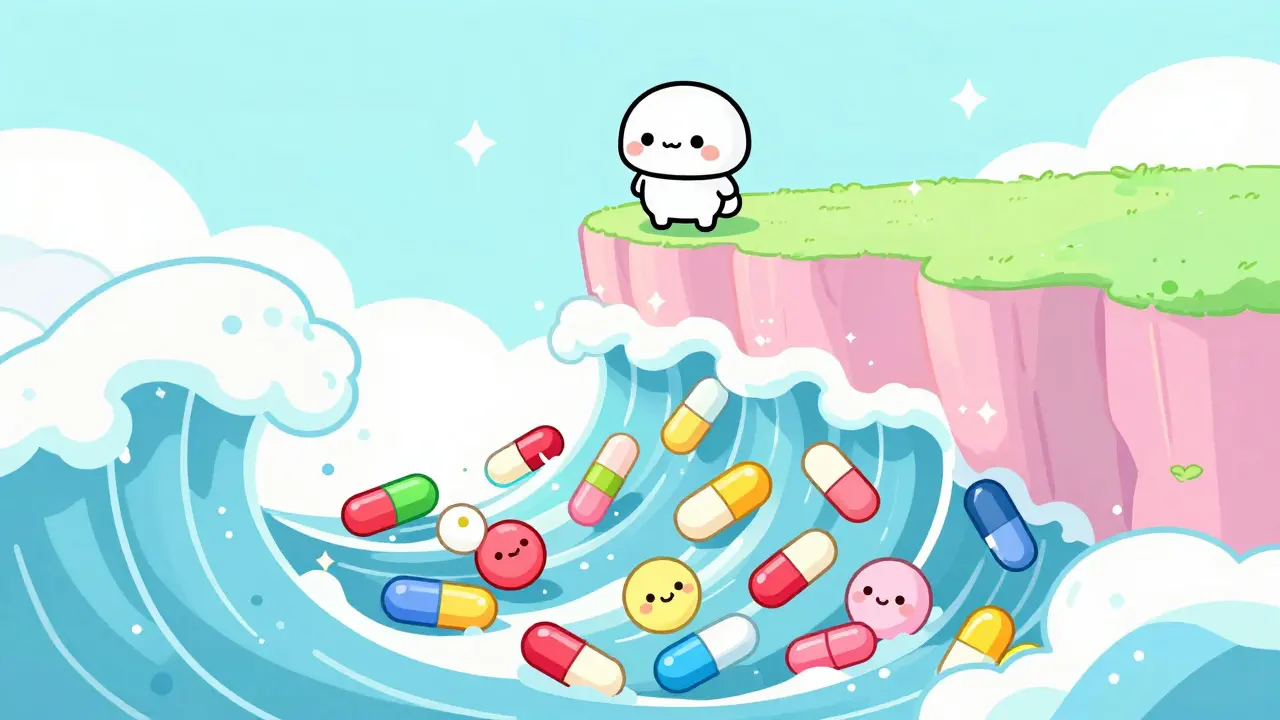
Imagine a world where a life-saving medication costs $1,000 a month, and then suddenly, it drops to $20. That's the power of a patent expiration. Right now, we are entering one of the most volatile and opportunistic eras in pharmaceutical history. With billions of dollars in branded drug revenue set to vanish as patents expire, the generic drug markets are bracing for a massive surge. But it's not just about making cheaper versions of old pills; the entire economic landscape of how we produce and buy medicine is shifting.
The Big Picture: Market Value and Growth Projections
If you look at the numbers, the generic drug sector is essentially a giant safety valve for global healthcare budgets. Analysts are slightly divided on the exact trajectory, but the trend is overwhelmingly upward. For instance, Strategic Market Research projected the market to hit $643.8 billion by 2030. Other firms, like Mordor Intelligence, are a bit more cautious, eyeing a $530.32 billion mark for the same period. Why the gap? It usually comes down to how they calculate the "patent cliff"-the moment when a blockbuster drug loses its legal protection.
Regardless of which number you trust, the momentum is clear. We've seen consistent growth for over a decade. Back between 2011 and 2016, the market was growing at nearly 10% annually. While that pace might settle slightly as the market matures, the sheer volume of drugs coming off patent keeps the engine running. We are moving from a market of "simple generics" to one dominated by high-tech, complex replacements.
| Analysis Firm | Projected Market Value | Estimated CAGR |
|---|---|---|
| Strategic Market Research | $643.8 Billion | 6.8% |
| Mordor Intelligence | $530.32 Billion | 4.23% |
| DrugPatentWatch | $700 - $800 Billion | 5% - 8% |
| European Pharmaceutical Review | $574.63 Billion | N/A |
The "Patent Cliff" and the Biosimilar Boom
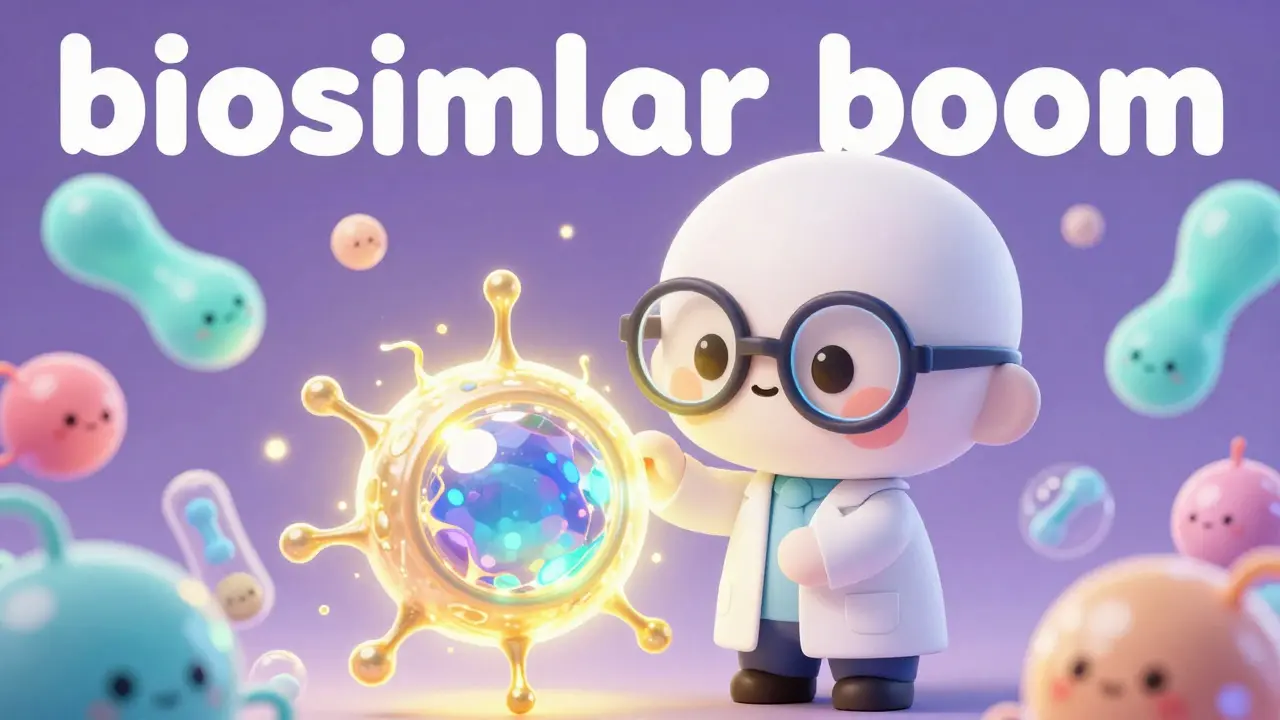
The most exciting part of the current economy is the shift toward Biosimilars. Unlike traditional generics, which are simple chemical copies, biosimilars are nearly identical versions of complex biological medicines made from living cells. Think of it as the difference between copying a recipe for a cake (traditional generic) and trying to grow a genetically similar fruit (biosimilar). It's much harder, but the payoff is huge.
Between 2025 and 2030, branded drugs generating upwards of $230 billion in annual sales are losing their exclusivity. Specifically, the "biologic patent cliff" hitting between 2025 and 2027 is a game-changer. We're seeing high-revenue monoclonal antibodies used in oncology and immunology start to open up. This is expected to unlock a $25 billion opportunity by 2029. Because they are harder to make, biosimilars are actually growing faster than traditional generics, with a projected CAGR of 8.20% through 2030.
Where the Growth is Happening: Regional Powerhouses
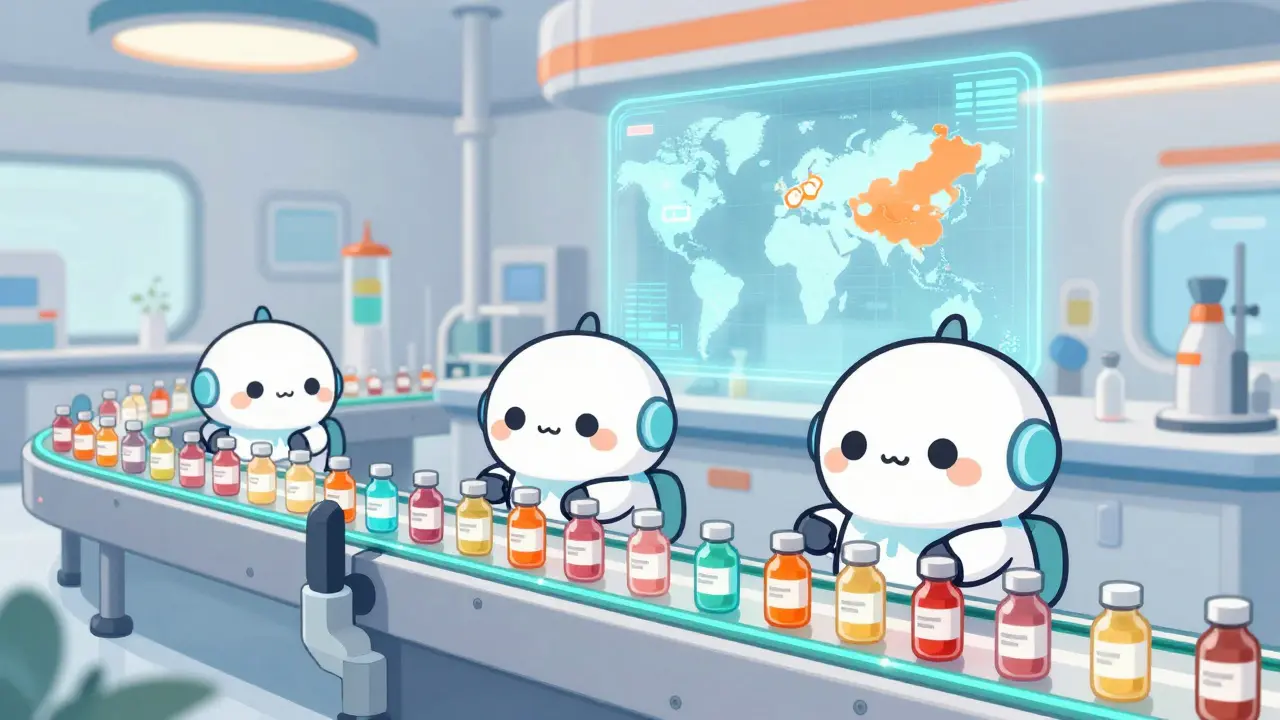
The map of pharmaceutical production is being redrawn. While the US and Europe are the biggest spenders, the manufacturing muscle has shifted East. India has effectively become the world's pharmacy, supplying about 20% of the global generics volume and a staggering 60% of the world's vaccines. This isn't just about low labor costs; it's about an incredibly efficient infrastructure for mass production.
Then there's China. Their approach is different-they use "volume-based procurement." Essentially, the government says, "We will buy massive quantities of this drug, but only if you drop the price to this level." This has created a race to the bottom on pricing, which forces manufacturers to be incredibly lean. While this puts pressure on profit margins, it drives the global benchmark price down, making medicine more affordable for people in developing regions like Latin America and Africa.
Therapeutic Shifts: Who Needs the Meds?
The demand for generics follows the diseases of the era. We are seeing a massive spike in needs for treatments targeting diabetes, hypertension, and obesity. For example, the meteoric rise of GLP-1 agents (the ingredients in drugs like Ozempic) has created a gold rush for "complex generics." Companies are racing to be the first to launch a generic version of these metabolic drugs because the "cash-pay" segment-people who pay out of pocket-is huge.
Oncology is also a massive driver. It's expected to remain the most valuable therapy area through 2030. As the patents for cutting-edge cancer treatments expire, the shift toward generic oncology drugs will be a primary way healthcare systems prevent their budgets from collapsing under the weight of expensive specialized care.
The Tech Edge: Automation and AI in Production
You can't compete in the generic market today if you're still doing everything by hand. To survive the pricing wars, companies are turning to Robotic Process Automation (RPA). Automating the bottling, labeling, and quality control phases allows firms to shave cents off the cost per pill-and in a market where you're selling billions of units, those cents add up to millions in profit.
We're also seeing a shift in how drugs are delivered. Data-driven tools that track patient adherence and tech-enabled medication synchronization are helping pharmacies ensure patients refill their prescriptions on time. This doesn't just help the patient; it creates a predictable, steady revenue stream for the generic manufacturers supplying those refills.
Risks and Roadblocks for the Future
It's not all smooth sailing. The biggest risk to this growth is the increasing complexity of the drugs. When a simple aspirin goes generic, it's easy. When a complex fusion protein or a viral vector therapy goes generic, the barrier to entry is high. Only companies with serious R&D budgets can compete. This could lead to a "winner-take-all" scenario where a few giant firms dominate the complex generics space, potentially limiting the price competition that makes generics so attractive.
Additionally, legal battles remain a thorn in the side of the industry. "At-risk sales"-drugs that are being challenged in court before their patents officially expire-are expected to reach $100 billion by 2028. This creates a high-stakes gamble: companies invest millions to be first to market, only to potentially be sued for patent infringement if the court rules against them.
What exactly is a "patent cliff"?
A patent cliff happens when the legal protection for a branded drug expires. Once the patent is gone, other companies can use the same formula to create generic versions, which typically leads to a sharp drop in the original manufacturer's sales and a significant decrease in the price for consumers.
How do biosimilars differ from traditional generics?
Traditional generics are chemical copies of small-molecule drugs, which are easy to replicate exactly. Biosimilars are versions of large, complex proteins made in living cells. Because they are biological, they can't be identical copies, only "highly similar," which makes them more expensive and difficult to produce.
Why is India so dominant in the generic market?
India has invested heavily in pharmaceutical infrastructure, resulting in high-volume manufacturing capabilities and a workforce skilled in chemical synthesis. This allows them to produce vaccines and generics at a scale and cost that few other countries can match, supplying 20% of the world's generic volume.
Will the rise of complex generics make medicine more expensive?
Initially, complex generics (like biosimilars) are more expensive than simple generics because the R&D and manufacturing costs are higher. However, they are still significantly cheaper than the original branded biologics, so they still provide a net saving for healthcare systems.
What is volume-based procurement (VBP)?
VBP is a purchasing strategy, most famously used in China, where the government guarantees a huge volume of sales to a manufacturer in exchange for a deep discount on the unit price. It effectively uses the government's buying power to force prices down.
Next Steps for Industry Players
If you're a manufacturer or an investor, the move is clear: stop focusing on simple small-molecule generics and start pivoting toward complex biologics. The "low-hanging fruit" of simple generics has already been picked, and the margins are disappearing. The real money is now in securing dual-source manufacturing sites-especially in Southeast Asia-to win regional government tenders.
For healthcare providers, the focus should be on pharmacovigilance and monitoring. As more biosimilars enter the market, ensuring that the transition from a branded drug to a biosimilar is seamless for the patient will be the key to maintaining high adherence rates and positive health outcomes.



Mark Koepsell
April 30, 2026The shift toward RPA in bottling and packaging is already well underway in the mid-tier labs. Most of these savings aren't actually passed to the consumer but are absorbed by the distributors to maintain their margins.