Have you ever picked up a prescription that looked slightly different from the brand-name box your doctor prescribed, but the pill inside was identical? You might be holding an authorized generic. These drugs sit in a confusing middle ground between expensive brand-name medications and standard off-patent generics. They offer lower prices than brands but aren't quite the same as the traditional generics most of us know. Identifying them correctly matters because it affects how pharmacies handle inventory, how insurance claims are processed, and how patients understand what they are taking.
What Exactly Is an Authorized Generic?
To spot an authorized generic, you first need to know what makes it unique. An authorized generic is a drug product that is therapeutically equivalent to the brand-name drug but marketed by a different company under a license from the brand manufacturer. Unlike traditional generics, which are made by third-party companies after patents expire, authorized generics are produced by the original brand-name manufacturer (or a subsidiary) using the exact same facility, equipment, and processes.
The key difference lies in the regulatory pathway. Traditional generics are approved through an Abbreviated New Drug Application (ANDA), where the manufacturer must prove their version is bioequivalent to the brand. Authorized generics, however, are marketed under the original New Drug Application (NDA) of the brand-name drug. This means they contain the identical active ingredient, inactive ingredients, strength, dosage form, and route of administration as the brand-name product. The only things that change are the packaging, the labeler code, and often the price.
This distinction was formalized in the Medicare Prescription Drug, Improvement, and Modernization Act of 2003. Since then, the Food and Drug Administration (FDA) has maintained a specific list of these products. As of late 2023, there were 147 active authorized generic products on the market. Understanding this definition is crucial because it explains why the packaging looks so similar to the brand-it literally comes from the same source.
Visual Cues: How Packaging Differs from Brand-Name Drugs
If you hold a brand-name drug box and an authorized generic box side-by-side, the similarities can be startling. However, there are specific visual cues that distinguish them. The most obvious difference is the absence of the brand name. While the brand box will prominently display the trademarked name (like Lyrica or Prilosec), the authorized generic box will typically feature the generic chemical name (pregabalin or omeprazole) in large print.
Look closely at the manufacturer information. On a brand-name box, you will see the name of the major pharmaceutical company (e.g., Pfizer or AstraZeneca). On an authorized generic box, you will usually see a different entity name, often a subsidiary or a specialized distribution arm. For example, when Pfizer marketed an authorized generic of Lyrica, the packaging listed "Greenstone LLC" as the distributor rather than Pfizer directly. This doesn't mean the drug is different; it simply reflects the legal structure used to sell the product at a lower price point without cannibalizing the brand's sales entirely.
The physical appearance of the pills themselves may also vary. Trademark laws often prevent generic versions-even authorized ones-from looking exactly like the brand-name pill if the brand holds a design patent. So, while the chemical composition is identical, the color, shape, or imprint code on the tablet might differ. However, unlike traditional generics, which might use completely different inactive ingredients (fillers, dyes, binders), authorized generics use the exact same formulation as the brand. This consistency is why many patients tolerate authorized generics better than traditional generics.
The Gold Standard: Reading the National Drug Code (NDC)
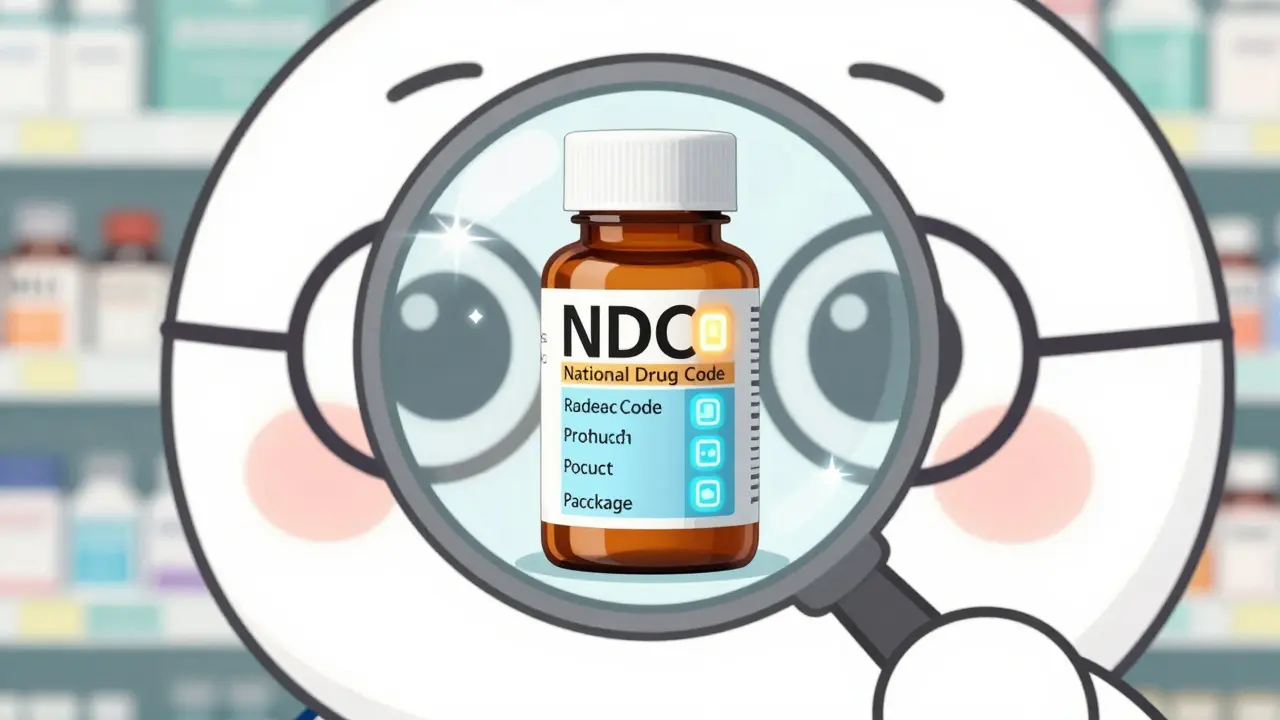
Visual inspection can be misleading. The most reliable way to identify an authorized generic is by examining the National Drug Code (NDC). Every drug package in the United States has a unique 10-digit or 11-digit number printed on the box and the bottle label. This code consists of three segments: the labeler code, the product code, and the package size code.
- Labeler Code: Identifies the firm that manufactured or distributed the drug. For an authorized generic, this number will be different from the brand-name drug's labeler code. It belongs to the licensee distributing the authorized generic.
- Product Code: Identifies the specific drug, strength, and dosage form. For an authorized generic, this segment is identical to the brand-name drug's product code.
- Package Size: Identifies the package size. This segment is also identical to the brand-name drug's package code.
Let’s look at a real-world example. Consider Protonix (pantoprazole). The brand-name version manufactured by Wyeth has a specific NDC. When Dr. Reddy’s Laboratories distributed an authorized generic version of Protonix, the product code and package size codes remained exactly the same as the brand. Only the labeler code changed (from 00071 for the brand to 55111 for the authorized generic). If you see a drug with a different labeler code but matching product and package codes to a known brand, you are likely looking at an authorized generic.
In contrast, a traditional generic will have a completely different NDC across all three segments because it is a distinct product approved via an ANDA. This NDC pattern is the definitive fingerprint of an authorized generic.

Checking Regulatory Resources: FDA Lists and the Orange Book
You don’t have to memorize NDC codes. The FDA provides public resources to help you verify status. The most direct tool is the FDA Quarterly Authorized Generic List. This document is updated four times a year (January, April, July, October) and lists every active authorized generic product currently on the market. It includes the brand name, the generic name, the applicant (brand holder), and the authorized generic marketer.
A common misconception is that you can find authorized generics in the FDA Orange Book. The Orange Book lists approved drug products with therapeutic equivalence evaluations. However, because authorized generics are marketed under the original NDA, they do not appear as separate entries in the Orange Book. You will only see the reference listed drug (the brand) there. If you are searching for an authorized generic in the Orange Book, you won’t find it. This is a critical distinction for pharmacists and researchers who rely on the Orange Book for substitution decisions.
For quick verification, pharmacy software systems like First Databank and Medi-Span have integrated authorized generic identifiers into their databases. When you enter the NDC into these systems, they should flag the product as an "Authorized Generic" if it matches the FDA’s criteria. If your pharmacy management system does not provide this clarity, cross-referencing the NDC with the FDA’s quarterly list is the safest manual method.
Why Identification Matters for Patients and Pharmacists
So, why does it matter if you can tell an authorized generic apart from a traditional one? For patients, the primary benefit is cost. Authorized generics are typically priced 15-25% below the brand-name drug, offering savings without the potential variability of traditional generics. Some patients who experience side effects from traditional generics due to different fillers or binders may find that authorized generics work perfectly because the formulation is identical to the brand.
For pharmacists, accurate identification prevents dispensing errors and billing issues. Misidentifying an authorized generic as a counterfeit or a traditional generic can lead to unnecessary delays. In 2021, surveys indicated that nearly 37% of pharmacists incorrectly identified authorized generics due to packaging similarities. Proper identification ensures that insurance claims are processed correctly, as some payers have specific rules about substituting authorized generics versus traditional generics.
Furthermore, understanding the source helps build trust. When a patient sees a different name on the box, they might worry they received a knock-off. Knowing that the drug is an authorized generic-produced by the brand manufacturer itself-can reassure them that they are receiving high-quality medication at a reduced price.
Is an authorized generic the same as a traditional generic?
No, they are not the same. A traditional generic is manufactured by a third-party company and must prove bioequivalence to the brand-name drug. It may have different inactive ingredients. An authorized generic is produced by the brand-name manufacturer (or its licensee) using the exact same facility and process. It contains identical active and inactive ingredients to the brand-name drug and is marketed under the original NDA.
Where can I find a list of authorized generics?
The FDA publishes a "List of Authorized Generic Drugs" on its website. This list is updated quarterly (in January, April, July, and October). It provides the most authoritative and up-to-date information on which products are currently being marketed as authorized generics in the United States.
Do authorized generics appear in the FDA Orange Book?
No. The FDA Orange Book lists drugs approved via the ANDA pathway (traditional generics). Since authorized generics are marketed under the original brand-name NDA, they are not listed separately in the Orange Book. You will only see the reference listed drug (the brand) entry.
How can I tell an authorized generic apart from the brand-name drug by looking at the box?
Look for the absence of the brand-name trademark. The authorized generic box will display the generic chemical name instead. Check the manufacturer/distributor name; it will likely be a subsidiary or different entity than the brand manufacturer. Finally, check the NDC code: the product and package codes will match the brand, but the labeler code will be different.
Are authorized generics cheaper than brand-name drugs?
Yes. Authorized generics are typically priced 15% to 25% lower than the corresponding brand-name drug. They are usually more expensive than traditional generics, which compete more aggressively on price, but they offer a middle-ground option for patients who want brand-quality formulation at a discount.