
Statins and Grapefruit Interaction Checker
We need more information to determine your risk level.
WARNING: GRAPEFRUIT INTERACTION RISK
Grapefruit can increase your statin levels by up to 16x, causing dangerous muscle damage or kidney failure. Avoid grapefruit completely.
SAFE WITH GRAPEFRUIT
You can safely eat grapefruit or drink grapefruit juice while taking this statin. No interaction occurs.
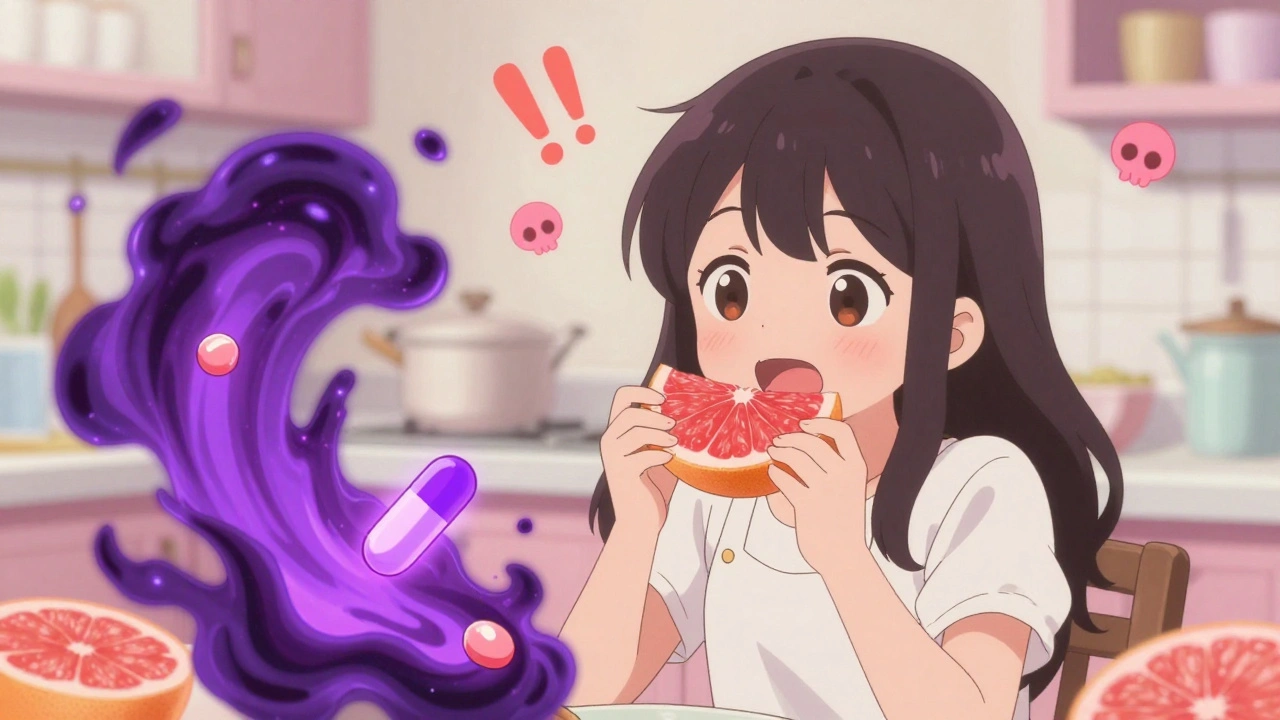
If you're taking a statin to lower your cholesterol, and you love grapefruit for breakfast, you could be putting yourself at risk-without even realizing it. This isn't just a myth or a vague warning. It's a well-documented, potentially life-threatening interaction that affects millions of people worldwide. The problem isn't grapefruit itself. It's what grapefruit does to your body when it meets certain statins. And the consequences can be serious.
Why Grapefruit and Statins Don't Mix
Grapefruit contains natural chemicals called furanocoumarins. These aren't toxins in the traditional sense-they're part of what gives grapefruit its bitter edge. But when they meet your digestive system, they trigger a chain reaction that can turn a safe medication into a dangerous one. Most statins are broken down in your gut by an enzyme called CYP3A4. This enzyme acts like a gatekeeper, controlling how much of the drug enters your bloodstream. Furanocoumarins in grapefruit shut down this enzyme-permanently. Not temporarily. Not until you finish your juice. Once inhibited, CYP3A4 stays offline for up to 72 hours. That means if you drink grapefruit juice on Monday, your body is still unable to properly process your statin on Wednesday. The result? Your blood levels of the statin skyrocket. One study showed that just 200 mL of grapefruit juice-about one small glass-could increase the concentration of simvastatin in the blood by up to 16 times. That’s not a little extra. That’s the equivalent of taking four or five pills instead of one.Which Statins Are at Risk?
Not all statins react the same way. The danger depends entirely on how your body metabolizes the drug. High-risk statins:- Simvastatin (Zocor) - The most dangerous combo. Even small amounts of grapefruit can push levels into toxic range.
- Lovastatin (Mevacor) - Similar to simvastatin. Avoid grapefruit completely.
- Atorvastatin (Lipitor) - Less risky than the others, but still dangerous with regular or large amounts of grapefruit.
- Pravastatin (Pravachol) - Metabolized differently. No significant interaction.
- Rosuvastatin (Crestor) - Minimal CYP3A4 involvement. Safe with grapefruit.
- Fluvastatin (Lescol) - Uses a different enzyme pathway.
- Pitavastatin (Livalo) - Also low risk.
What Happens When Levels Get Too High?
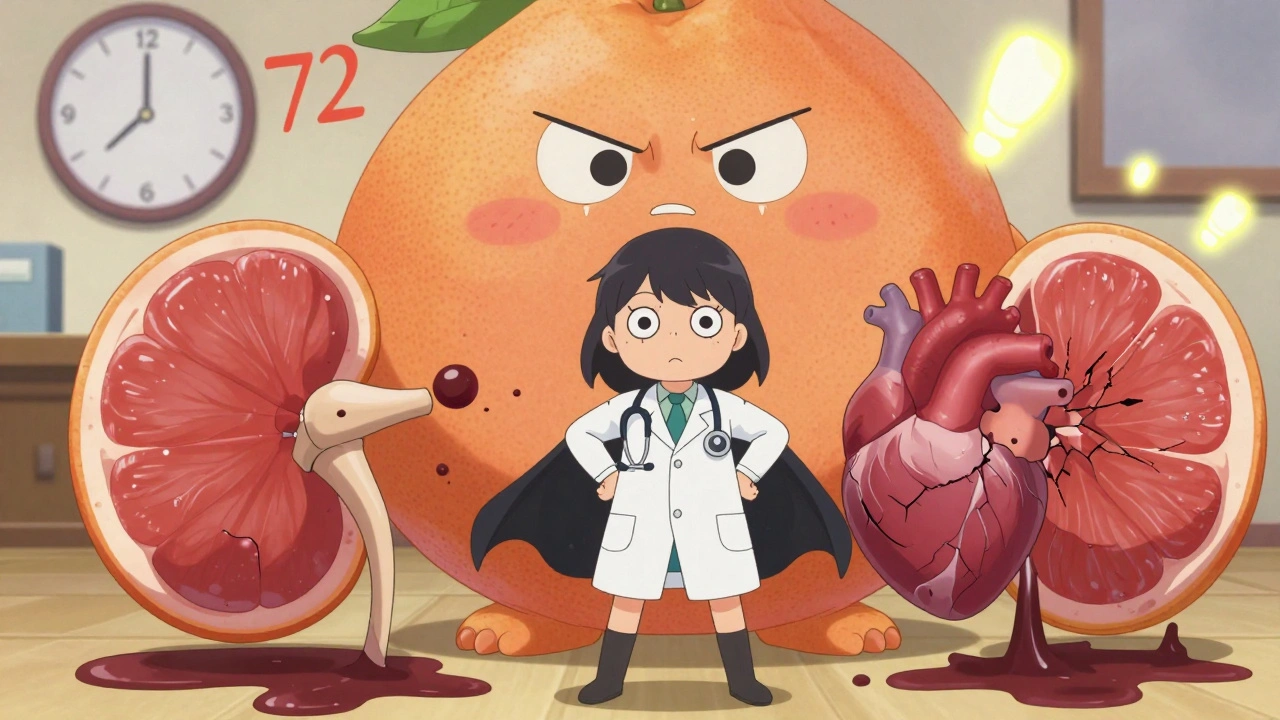
The most common side effect is muscle pain. About 5-10% of people taking high-risk statins with grapefruit report unexplained aches, stiffness, or weakness. Many assume it’s just aging, overexertion, or the flu. But it could be the first sign of something much worse. The real danger is rhabdomyolysis. This is when muscle tissue breaks down and spills its contents-especially myoglobin-into your bloodstream. Your kidneys try to filter it out, but myoglobin clogs them. This can lead to acute kidney failure, which requires emergency dialysis. In extreme cases, it’s fatal. One documented case involved a 40-year-old woman who ate grapefruit daily for 10 days while taking simvastatin. She developed severe muscle pain and dark, tea-colored urine. By the time she reached the hospital, her creatine kinase (CK) levels-markers of muscle damage-were over 100 times the normal range. She survived, but only after intensive treatment. Rhabdomyolysis is rare overall-less than 1 in 10,000 statin users per year. But with grapefruit, the risk jumps. And it doesn’t take much. A single glass of juice, consumed regularly, is enough to tip the scales.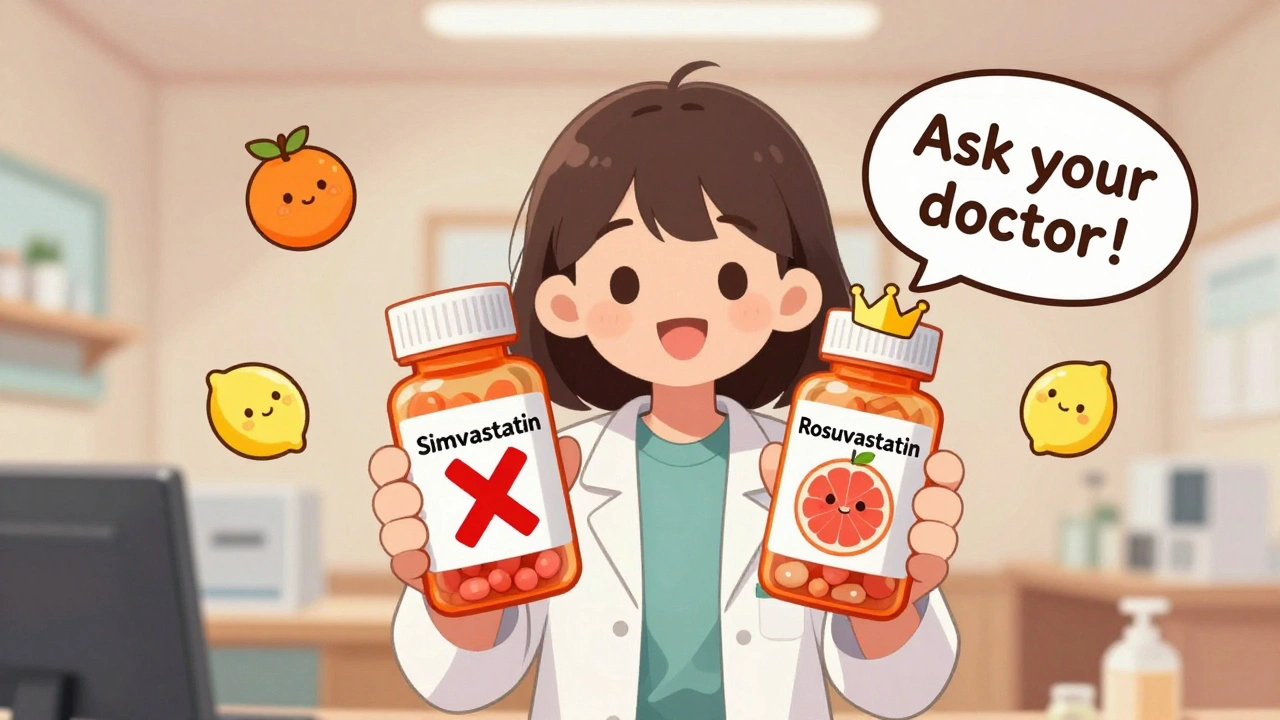
It’s Not Just Juice
People often think the problem is grapefruit juice. But it’s not. It’s the fruit itself. One whole grapefruit contains the same amount of furanocoumarins as a full glass of juice. Even grapefruit segments, grapefruit-flavored candies, or supplements made from grapefruit peel can trigger the reaction. And it’s not just grapefruit. Seville oranges (used in traditional marmalade) and pomelos-those large, sour citrus fruits-have the same compounds. Regular oranges, lemons, limes, and tangerines? Safe. No interaction. You can eat them freely. A lot of people assume that if they take their statin in the evening and drink grapefruit juice in the morning, they’re fine. That’s a dangerous myth. Because the enzyme inhibition lasts for days, timing doesn’t help. You can’t outsmart your biology.What Should You Do?
If you’re on a statin, here’s what to do right now:- Check your medication label. Look for simvastatin, lovastatin, or atorvastatin. If you see them, stop eating or drinking grapefruit immediately.
- Ask your doctor or pharmacist. If you’re unsure which statin you’re on, call your pharmacy. They can tell you. Don’t guess.
- If you’re on a high-risk statin and eat grapefruit, ask about switching. There are plenty of safe alternatives. Rosuvastatin and pravastatin work just as well for most people. No grapefruit restrictions. No hidden risks.
- Don’t stop your statin. Stopping your medication because you’re worried about grapefruit is far more dangerous than eating grapefruit. Heart attacks and strokes are the real threats here.
Why Do So Many People Still Take the Risk?
You’d think this would be common knowledge by now. But it’s not. A 2021 survey found that only 42% of doctors routinely ask patients about grapefruit use when prescribing statins. Only 28% of patients say they were warned. That’s a massive gap in care. Pharmacists are often the last line of defense. One study showed that when pharmacists actively intervened-calling patients, checking prescriptions, offering alternatives-they reduced unsafe grapefruit-statin combinations by 78%. That’s not a small win. That’s life-saving. Part of the problem is confusion. People hear “citrus” and think “all oranges are the same.” They don’t realize grapefruit is the outlier. Or they think, “I only have a little bit.” But even small, regular doses add up. The enzyme doesn’t bounce back quickly. It’s a slow, silent buildup.What’s Next?
Scientists are working on solutions. Researchers at the University of Florida are breeding new grapefruit varieties with almost no furanocoumarins-keeping the taste and nutrition, but removing the danger. Early results look promising. Within the next decade, we might see “safe grapefruit” on store shelves. Until then, the rule is simple: If you’re on simvastatin, lovastatin, or atorvastatin, leave grapefruit on the shelf. It’s not worth the risk. And if you’re on one of the safer statins, you can enjoy your fruit without worry. Your heart health matters. Your diet matters. But when it comes to grapefruit and statins, one choice can change everything. Make the right one.Can I have grapefruit if I take rosuvastatin?
Yes. Rosuvastatin (Crestor) is not metabolized by the CYP3A4 enzyme, so grapefruit doesn’t interfere with it. You can safely eat grapefruit or drink grapefruit juice while taking rosuvastatin. The same applies to pravastatin, fluvastatin, and pitavastatin.
How much grapefruit is dangerous with simvastatin?
Any amount. Even a small glass of juice or half a grapefruit can significantly raise simvastatin levels in your blood. There’s no safe threshold. The FDA and medical guidelines recommend avoiding grapefruit completely if you’re on simvastatin.
What are the early signs of muscle damage from statins?
Unexplained muscle pain, weakness, or cramping-especially in the shoulders, thighs, or lower back-are the most common signs. Dark, tea-colored urine is a red flag for myoglobin release. If you notice these symptoms, stop taking the statin and contact your doctor immediately. Don’t wait.
Can I switch from simvastatin to a safer statin?
Yes, and it’s often the best solution. Many patients switch from simvastatin to rosuvastatin or pravastatin without losing cholesterol control. Talk to your doctor. The change is usually simple, safe, and eliminates the grapefruit risk entirely.
Is grapefruit juice worse than the fruit?
No. Both contain the same amount of furanocoumarins. One grapefruit equals about one cup of juice. The form doesn’t matter-only the compound. Avoid both.
Does grapefruit interact with all cholesterol meds?
No. Only statins that rely on CYP3A4 for metabolism-simvastatin, lovastatin, and atorvastatin. Other cholesterol drugs like ezetimibe, bile acid sequestrants, or PCSK9 inhibitors don’t interact with grapefruit. Always check with your provider.






Deborah Jacobs
December 4, 2025I used to love grapefruit with my morning coffee, but after my dad had a near-miss with rhabdomyolysis last year, I quit cold turkey. I didn’t even realize how common this was until I started reading about it. Now I tell everyone I know who’s on statins - it’s not worth the gamble. Your body doesn’t care how ‘healthy’ you think you are.
Switched to oranges and honestly? I miss the tang, but not the fear.