
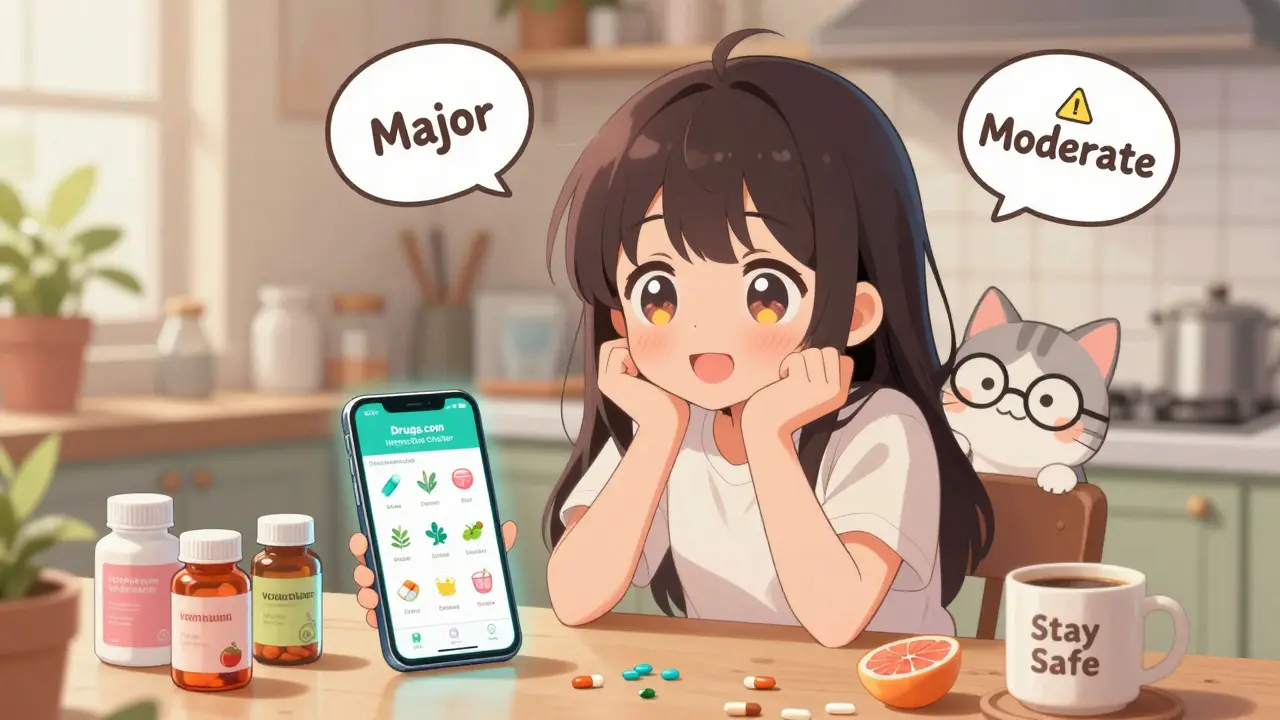
Every year, over a million people in the U.S. end up in the emergency room because of dangerous drug interactions. Many of these cases could have been avoided with a simple check at home - if you know how to do it right. It’s not about replacing your doctor or pharmacist. It’s about becoming an active partner in your own safety. Whether you’re taking a handful of prescriptions, popping daily vitamins, or using herbal remedies, knowing how to spot potential clashes before they cause harm is one of the smartest things you can do.
What Exactly Is a Drug Interaction?
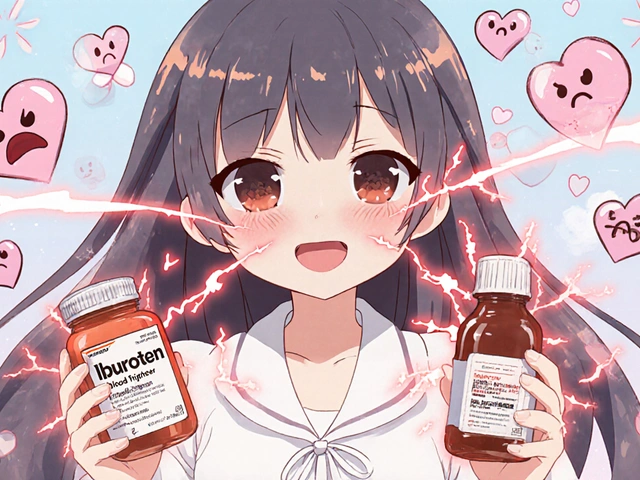
A drug interaction happens when two or more substances affect each other in a way that changes how they work in your body. This isn’t just about mixing pills. It includes prescription drugs, over-the-counter medicines like ibuprofen or cold syrup, herbal supplements like St. John’s Wort, vitamins, and even certain foods and drinks - like grapefruit juice or alcohol. There are three main types:- Drug-drug interactions - the most common, making up over 60% of cases. For example, mixing blood thinners like warfarin with NSAIDs like ibuprofen can raise your risk of bleeding.
- Drug-food/drink interactions - about 27% of cases. Grapefruit can stop your body from breaking down statins, leading to dangerous buildup. Alcohol can make sedatives like benzodiazepines too strong.
- Drug-condition interactions - 12% of cases. Taking decongestants if you have high blood pressure? That’s a risk. Certain meds can worsen kidney disease, liver problems, or heart conditions.
These aren’t theoretical risks. A 2023 study found that nearly 40% of Americans over 65 take five or more medications. At that point, the chance of a hidden interaction jumps dramatically. And many of these aren’t caught until it’s too late.
How Drug Interaction Checkers Work
Digital tools like Drugs.com Interaction Checker and a free, widely used online tool that scans over 80,000 possible interactions between prescription drugs, OTC medications, supplements, and foods don’t guess. They compare your list of substances against massive, constantly updated databases built from decades of clinical research and real-world reports. These tools don’t just say “maybe bad.” They rate each interaction by severity:- Major - requires immediate action. Could cause serious harm, hospitalization, or death.
- Moderate - needs monitoring or adjustment. Might cause side effects like dizziness, nausea, or reduced effectiveness.
- Minor - unlikely to cause problems for most people, but could still bother sensitive individuals.
For example, Drugs.com and a leading consumer-facing interaction checker with daily updates and the largest database of 24,000 prescription drugs and 3,000 supplements flagged a dangerous combo between sertraline (an antidepressant) and St. John’s Wort in a 2022 case. Together, they can trigger serotonin syndrome - a life-threatening condition. The patient had no idea. The checker did.
But here’s the catch: not all tools are equal. WebMD’s Drug Interaction Checker and a popular tool with simpler language and visual severity indicators, but a smaller database covering only 18,000 prescription drugs is easier to use but misses some moderate interactions that Drugs.com catches. Medscape and a professional-grade tool with advanced filtering, designed for clinicians, not everyday users is powerful but overwhelming for non-medical people.
Step-by-Step: How to Use a Drug Interaction Checker at Home
You don’t need to be a pharmacist. Here’s how to do it right:- Make a complete list of everything you take. Don’t skip anything. Include:
- Every prescription - name, dose, how often
- All OTC meds - pain relievers, antacids, sleep aids, cold medicines
- Supplements - vitamins, fish oil, magnesium, CoQ10
- Herbal products - turmeric, ginger, echinacea, St. John’s Wort
- Even occasional use - like a weekend drink or a single aspirin for a headache
Many people forget that “natural” doesn’t mean safe. St. John’s Wort interacts with over 50 medications, including birth control and antidepressants. A 2022 survey found 28% of users couldn’t identify the active ingredient in their OTC meds - like confusing “acetaminophen” with “Tylenol” and not realizing it’s the same thing.
- Go to a trusted checker. Use Drugs.com Interaction Checker or WebMD’s Drug Interaction Checker. Both are free, updated regularly, and used by millions.
Enter each item one by one. Don’t rush. If you’re unsure of the generic name, type in the brand name - most tools recognize both.
- Review results carefully. Don’t just look for “major” alerts. Moderate ones matter too. If something says “increased risk of bleeding” or “may reduce effectiveness,” write it down. Don’t ignore minor ones if you’ve had side effects before.
For example, if you’re on a blood pressure med and take a cold medicine with pseudoephedrine, you might see a moderate alert. That doesn’t mean stop everything - but it does mean you need to talk to your pharmacist about alternatives.
- Bring the results to your pharmacist or doctor. This is the most important step. A checker can’t know your full medical history, kidney function, allergies, or how your body reacts. But your pharmacist can. They’ve seen hundreds of cases like yours.
Studies show that when people bring interaction checker results to their pharmacist, hospitalizations drop by 42%. That’s not magic. That’s teamwork.
What These Tools Can’t Do
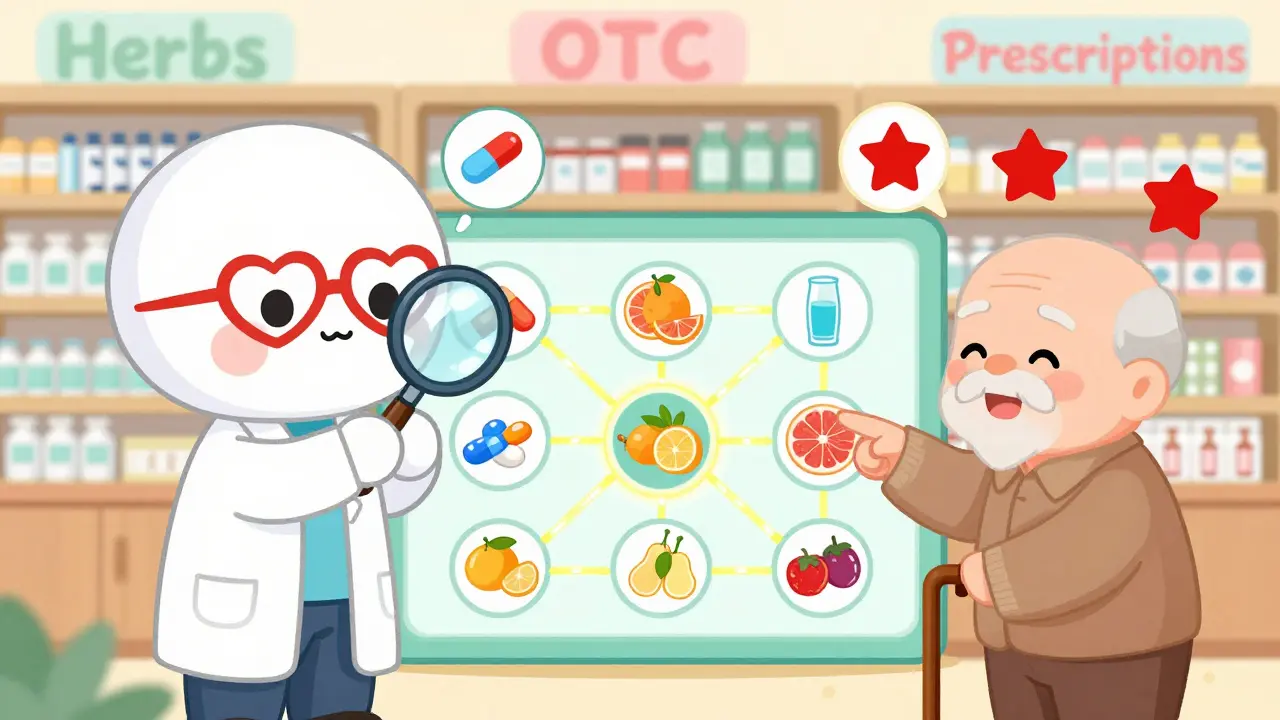
No tool is perfect. Here’s where they fall short:- False alarms - About 18% of flagged interactions aren’t actually risky for your specific situation. WebMD users report false positives 23% of the time.
- Missing rare or new interactions - If a drug was approved last year, or it’s a combination no one’s studied yet, the tool won’t know.
- No personal context - It doesn’t know if you’re 70 with kidney disease or 30 and healthy. It can’t adjust for that.
- Can’t replace a human - Dr. Michael Cohen of the Institute for Safe Medication Practices says these tools catch only 70-80% of dangerous interactions without professional review.
Some people panic and stop their meds after seeing a red flag. That’s dangerous too. The FDA warned in 2022 that 15% of patients stopped essential drugs after non-critical alerts - putting themselves at risk for heart attacks, seizures, or depression relapse.
How to Use These Tools Without Getting Scared
The goal isn’t to scare you. It’s to empower you. Here’s how to use these tools wisely:- Check every 30 days - Especially if you’ve added or dropped a med. Your body changes. So do your meds.
- Use one pharmacy - Filling all your prescriptions at one pharmacy means they can track everything in one system. Studies show this reduces interaction risks by 31%.
- Use barcode scanners - Apps like Medisafe let you scan your pill bottle. It auto-fills the name, dose, and frequency. Saves time. Reduces errors.
- Don’t trust random apps - The FDA flagged 17 fraudulent interaction checkers in 2022. Stick to well-known names: Drugs.com, WebMD, GoodRx.
- Know the warning signs - If you suddenly feel dizzy, nauseous, confused, have chest pain, or unusual bruising after starting a new med, call your doctor. Don’t wait for the app to tell you.
What’s Next? The Future of Drug Safety
The tools are getting smarter. Drugs.com rolled out an AI-powered severity predictor in September 2023. WebMD added 1,200 new supplement interactions in July 2023. By mid-2024, the CDC plans to link interaction checkers directly to MyMedicare accounts - meaning millions of seniors could get alerts automatically. Soon, genetic testing might play a role. Companies like 23andMe are partnering with GoodRx to predict how your genes affect how you process certain drugs. That could one day tell you if you’re at higher risk for side effects from common painkillers or antidepressants. But the core won’t change: technology helps. Humans decide. The most effective safety system isn’t an app. It’s you, armed with information, talking to your pharmacist, and staying informed.Can I trust free drug interaction checkers online?
Yes, if they’re from trusted sources like Drugs.com, WebMD, or GoodRx. These sites update their databases daily and are backed by clinical research. Avoid random apps or websites you find through ads. The FDA has warned about 17 fake interaction checkers in 2022 that gave wrong or misleading info.
What if I take herbal supplements? Do they show up in checkers?
Most reliable checkers, like Drugs.com, include over 3,000 herbal and dietary supplements. St. John’s Wort, garlic, ginkgo, and echinacea are all tracked. But not every obscure herb is in the database. If you’re unsure, type in the common name and check the results. When in doubt, mention it to your pharmacist - they’ve likely seen it before.
I’m on five or more medications. Should I still use a checker?
Yes - but don’t rely on it alone. The more meds you take, the higher the chance of interactions. While checkers can spot many issues, they’re not designed for complex polypharmacy cases. Always schedule a medication review with your pharmacist. Many pharmacies offer free consultations just for this.
Can food really interact with my pills?
Absolutely. Grapefruit juice can stop your body from breaking down statins, calcium blockers, and some antidepressants, leading to toxic levels. Alcohol can make sedatives and painkillers too strong. Even high-fiber foods can slow down absorption of certain antibiotics. Always check if your meds have dietary warnings - and if you’re unsure, ask your pharmacist.
What should I do if the checker shows a major interaction?
Don’t stop your medication on your own. Call your pharmacist or doctor right away. A major alert means there’s a real risk - but there’s often a safe alternative. For example, if you’re on warfarin and take ibuprofen, your doctor might switch you to acetaminophen for pain. The checker flagged it. Your provider fixes it.




Joie Cregin
January 15, 2026Just ran my whole med list through Drugs.com after reading this-turns out my turmeric + blood thinner combo is a moderate risk. Never knew herbal stuff could be sneaky like that. Thanks for the nudge to actually check instead of assuming ‘natural’ = safe. I’ll be bringing this to my pharmacist next week.
Also, side note: I use Medisafe to scan my bottles now. It’s dumb simple and saved me from mixing up my ‘zoloft’ and ‘zoloft ER’ last month. Small wins, y’all.