
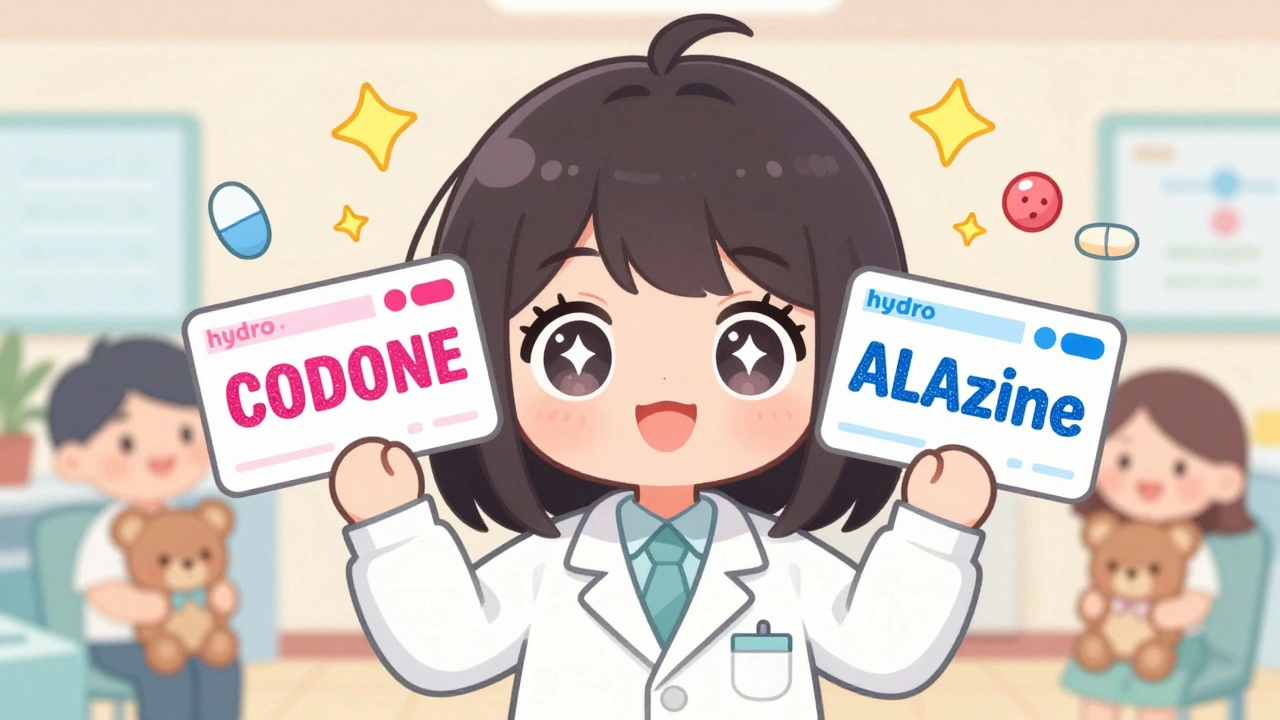
Every year, thousands of patients are harmed because two drug names look too similar on a prescription label. It’s not a rare mistake. It’s a common, preventable error that happens in hospitals, pharmacies, and clinics across the U.S. You might think reading the label carefully is enough-but when hydroCODONE and hydroALAzine are side by side, even experienced staff can slip up. The problem isn’t human error alone. It’s a system that lets confusing names slip through. Here’s how to spot them before it’s too late.
What Are Look-Alike and Sound-Alike (LASA) Drug Names?
Look-alike and sound-alike (LASA) drug names are pairs of medications that are spelled or pronounced similarly enough to cause confusion. For example: vinBLAStine and vinCRIStine. One treats lymphoma. The other treats testicular cancer. Mix them up, and the consequences can be deadly. The U.S. Pharmacopeial Convention has documented over 3,000 such pairs. The Institute for Safe Medication Practices (ISMP) says LASA errors make up about 25% of all medication mistakes reported.
It’s not just about spelling. Sound matters too. doXEPamine and doBUTamine sound almost identical when spoken quickly over a phone or in a busy ER. One is for depression. The other is for heart failure. A single misheard word can lead to the wrong drug being given.
Tall Man Lettering: The Visual Fix
The most widely used tool to fight LASA errors is called tall man lettering (TML). It’s simple: capitalize the letters that make two similar names different. Instead of writing hydrocodone and hydralazine, you write hydroCODONE and hydroALAzine. The uppercase letters act like visual flags-your brain picks them up faster than the rest.
The FDA has a list of 35 high-risk drug pairs that require TML as of 2024. These include:
- hydrOXYzine vs. hydrALAzine
- CISplatin vs. CARBOplatin
- INSULIN glargine vs. INSULIN detemir
- VALTREX (valACYclovir) vs. VALCYTE (valGANciclovir)
Studies show TML reduces visual confusion by 32%. That’s significant-but it’s not a magic fix. If the label is printed poorly, or if the font is too small, the capital letters disappear. The Joint Commission requires a minimum 12-point font size for TML and a 4.5:1 contrast ratio between text and background. If your pharmacy’s label printer is old or low on ink, TML won’t help.
How Technology Makes It Worse (and Better)
Electronic Health Records (EHRs) were supposed to fix this. But many still show confusing drug names in the same dropdown list. If you type “val,” you might see valacyclovir and valganciclovir right next to each other. That’s a recipe for a click-error.
The Office of the National Coordinator for Health IT fixed this in 2019 by requiring EHRs to block confusing drug names from appearing consecutively. Systems that follow this rule reduce selection errors by 41%. But not all systems comply. If you’re using an older EHR, you might still see them side by side.
Another rule: require at least five letters before a drug list appears. This cuts down the number of matches from dozens to just a few. One study showed this reduces error-prone dropdowns by 68%. If your pharmacy’s system lets you type “ins” and shows 20 insulin types, that’s a red flag.
Barcode scanning is the gold standard. When you scan a medication before giving it to a patient, the system checks the drug, dose, patient, and time. If it doesn’t match, it stops you. Studies show barcode scanning prevents 89% of administration errors. But it’s expensive-hospitals spend an average of $153,000 to install it. Many smaller clinics still don’t have it.
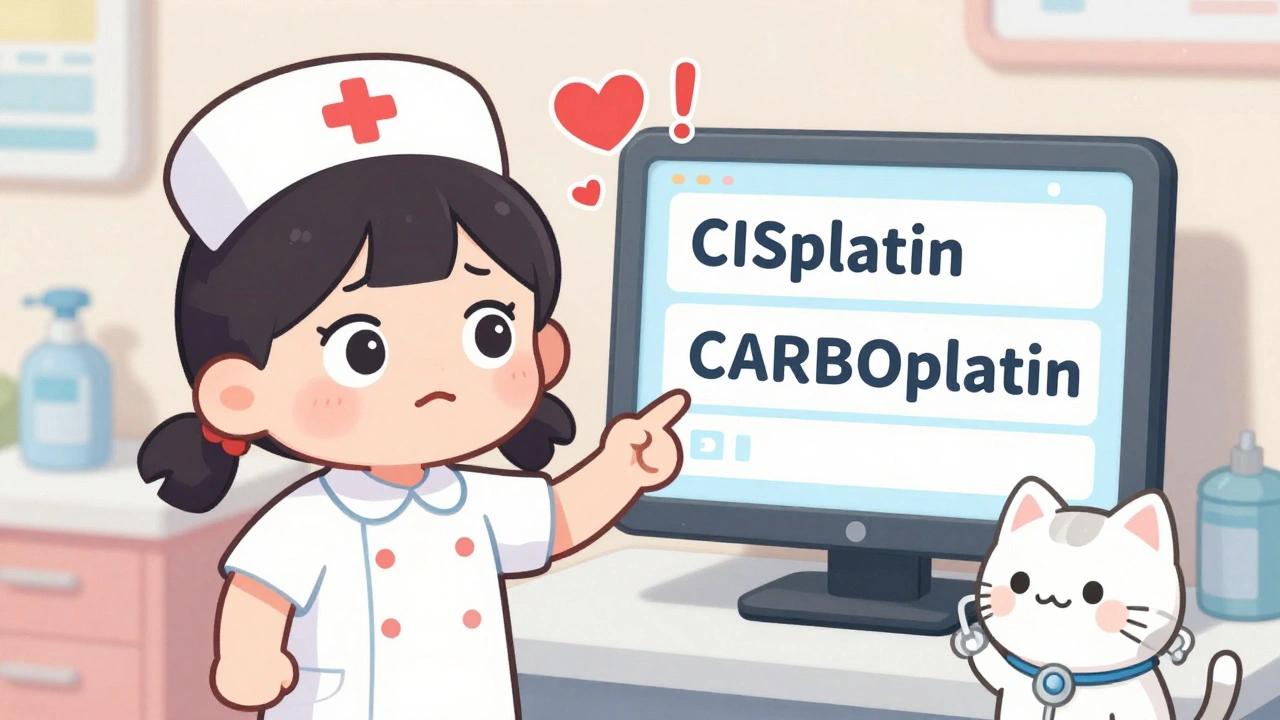
The Real Problem: Inconsistent Systems
Here’s where things break down. A pharmacist sees hydroCODONE on the computer screen. But when they print the label for the patient, it comes out as hydrocodone-all lowercase. The nurse checks the EHR and sees the tall man letters. The patient gets the pill bottle without them. Now the nurse is confused. Which one is it?
This mismatch happens all the time. A 2023 survey by the American Society of Health-System Pharmacists found that 65% of pharmacists reported inconsistent TML use across different systems. One ICU nurse on Reddit said: “The EHR shows tall man letters. The MAR doesn’t. I have to guess.” That guess could kill someone.
Handwritten prescriptions are still a major risk. About 41% of LASA errors happen because a doctor scribbles “Hydrocodone” on a paper pad. No tall man letters. No barcode. No system check. Just a name that looks like another. If you’re handling handwritten orders, treat every one like a potential trap.
What Works Better Than Tall Man Lettering Alone
Tall man lettering helps-but it’s not enough. The most effective systems combine multiple layers:
- TML + color coding: Using different background colors for high-risk pairs (e.g., red for insulin, yellow for opioids) boosts error reduction to 47%.
- Adding the purpose: Writing “for pain” next to hydrocodone or “for high blood pressure” next to hydralazine reduces errors by 59%. It forces the brain to think, not just recognize.
- Computer alerts: Systems that pop up a warning when you select a high-risk pair catch 76% of errors. But 49% of clinicians ignore them because they’re too frequent. Smart alerts-only triggered for the most dangerous pairs-cut override rates to 31%.
Johns Hopkins Hospital reduced LASA errors by 67% over two years by using all three: TML, purpose-of-treatment notes, and smart alerts. They didn’t just change labels-they changed workflows.
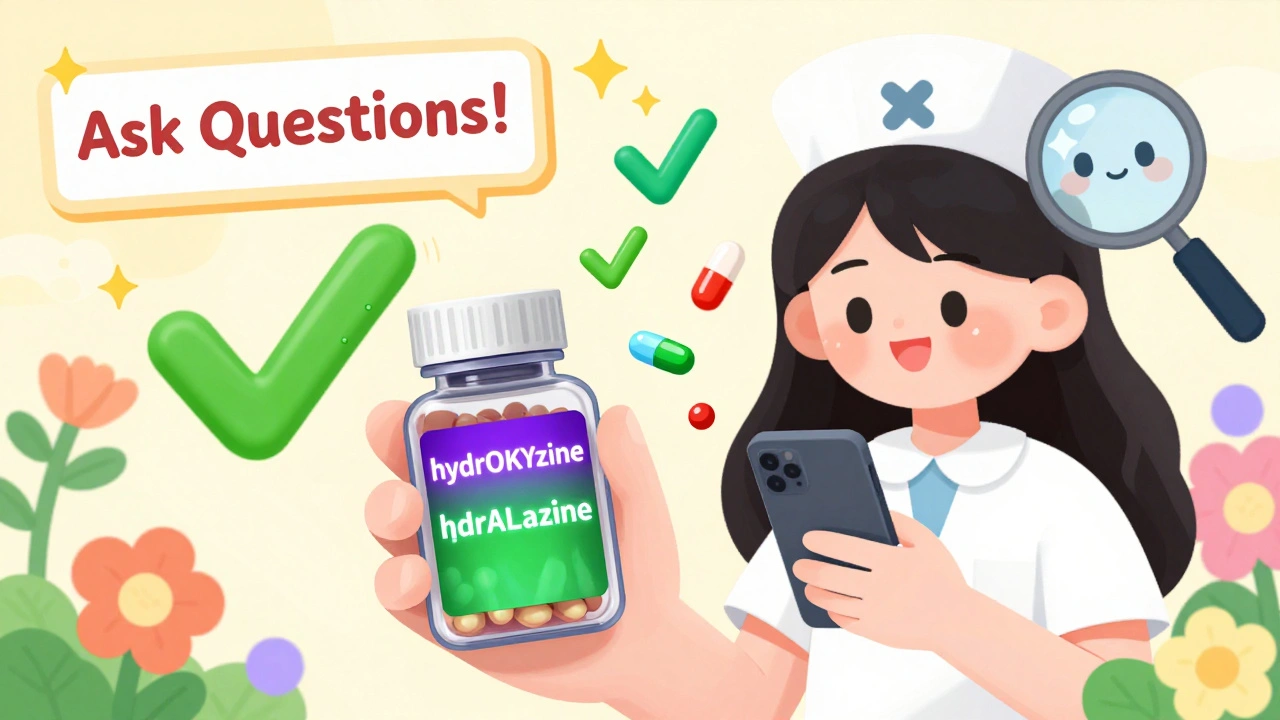
How to Protect Yourself (Even If You’re Not a Pharmacist)
You don’t have to be a medical professional to catch a dangerous mix-up. Here’s what anyone can do:
- Read the full name. Don’t just glance. Say it out loud: “Hydro-CO-done.” Does it sound like “Hydro-AL-a-zine”? If not, it’s probably safe.
- Check the purpose. On your prescription, does it say “for anxiety” or “for high blood pressure”? If the reason doesn’t match the drug, ask.
- Compare the pill. If you’ve taken this drug before, does the new pill look the same? Color, shape, imprint? If not, call your pharmacy.
- Ask for the generic name. Brand names like Valtrex and Valcyte sound alike. But the generics-valacyclovir and valganciclovir-are very different. Ask your pharmacist to write the generic on the label.
- Use your phone. Take a picture of the label. Compare it to the one you got last time. If something looks off, don’t take it.
One hospital pharmacist told ISMP: “Since we started using tall man letters on our insulin labels, we haven’t had a single mix-up between Humalog and Humulin in 18 months.” That’s not luck. That’s process.
What’s Changing in 2025
The FDA just added 12 more drug pairs to its TML list in late 2023, bringing the total to 35. By December 2024, all U.S. healthcare systems must use TML for these pairs. The National Council for Prescription Drug Programs updated its LASA data standard in January 2023, so systems can now share risk alerts across pharmacies, hospitals, and insurers in real time.
Artificial intelligence is stepping in, too. Google Health’s Med-PaLM 2 can predict which drug names are likely to be confused with 89% accuracy. It’s not replacing humans-it’s helping them. The ISMP’s 2023 action plan calls for mandatory TML across all U.S. settings by 2026. That includes nursing homes, clinics, and even mail-order pharmacies.
Final Checklist: 5 Steps to Spot a Dangerous Label
Before you take any prescription, run through this quick check:
- Is there tall man lettering? Look for capitalized letters in the middle of the name.
- Does the purpose match? Is the reason for the drug clearly written?
- Are confusing names blocked? If you’re using an EHR, are hydrocodone and hydralazine listed separately?
- Is the label clear? Is the font big enough? Is the ink smudged?
- Do you recognize the pill? Compare it to your last bottle. If it looks different, ask why.
Medication errors aren’t inevitable. They’re the result of systems that don’t protect people. You don’t need to be an expert to help fix them. You just need to look closely-and ask questions when something doesn’t feel right.





Deborah Jacobs
December 5, 2025Just saw my grandma’s prescription last week-hydrocodone printed in all lowercase. The pharmacist said, 'It’s fine, we’ve always done it this way.' I almost had a heart attack. This isn’t just a system flaw-it’s a death sentence waiting to happen.