
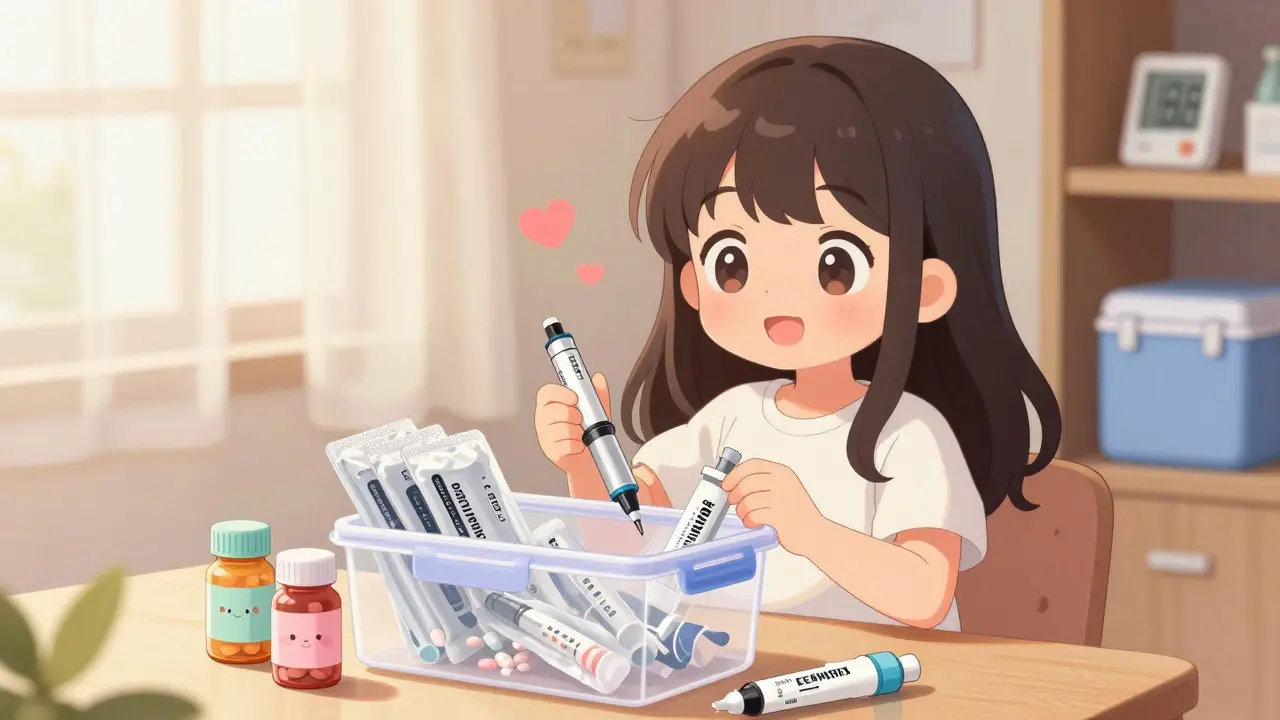
When disaster strikes, your emergency kit could mean the difference between life and death-and the most critical part of that kit is often the medication. But if your pills, insulin, or epinephrine auto-injectors have been sitting in a damp bathroom or a hot garage, they might not work when you need them most. A 2022 study in the Journal of Emergency Medicine found that improperly stored epinephrine auto-injectors lost 37% of their effectiveness within just 72 hours during simulated disaster conditions. That’s not a small risk-it’s a life-threatening one.
Why Storage Matters More Than You Think
Medications aren’t like canned food. They don’t just sit there. Heat, moisture, and light break them down. Even if the expiration date hasn’t passed, improper storage can render them useless. The FDA says temperature excursions cause 78% of emergency medication failures. That means if your insulin got too warm during a power outage, or your antibiotics were left in direct sunlight, they might not save your life. Take insulin, for example. Eli Lilly’s 2020 data shows that when insulin is exposed to temperatures above 46°F (8°C) for more than 12 hours, it loses 15% of its potency. That’s enough to cause dangerous blood sugar spikes. Or consider amoxicillin: a 2020 study in the Journal of Pharmaceutical Sciences found that after 48 hours of direct sunlight, capsules lost 42% of their active ingredient. You might still have the pill-but it’s not doing what it’s supposed to.The Gold Standard: Temperature and Humidity Control
The FDA and American Society of Health-System Pharmacists (ASHP) agree: most medications should be stored between 59°F and 77°F (15°C-25°C). That’s room temperature, but not just any room. Avoid places that get too hot or too humid. Bathrooms? No. Near the stove? No. Attics or garages? Absolutely not. Humidity is just as dangerous as heat. The International Council for Harmonisation (ICH) Q1A(R2) guidelines say relative humidity should stay under 60%. A 2019 University of Florida study showed that acetaminophen tablets stored at 75% humidity for 30 days had a 28% drop in how well they dissolved. That means your painkiller might not even get into your bloodstream. For refrigerated meds like insulin, insulin pens, or certain antibiotics, the range is tighter: 36°F to 46°F (2°C-8°C). But here’s the catch: if your power goes out, your fridge isn’t going to stay cold forever. A 2021 Consumer Reports test found that storing insulin in a toilet tank (yes, really) kept it 15-20°F cooler than the air for 8-12 hours. It’s a hack, not a solution. Better? A battery-powered medical cooler. These can hold steady temps for 72+ hours and are now standard in hospital emergency kits.Containers Matter-A Lot
Never transfer pills to pill organizers unless you’re using them daily. The original bottle? That’s your best friend. Why? Because manufacturers design those containers to block light, control moisture, and prevent contamination. A 2022 FDA study found that medications stored in original containers maintained 33% more integrity over 12 months than those moved to plastic bags or generic boxes. And labels? Don’t remove them. The National Drug Code (NDC) on the label isn’t just for pharmacy use. In an emergency, first responders or ER staff need to know exactly what you’re taking. The American Pharmacists Association reports that 62% of emergency medication errors happen because labels were missing. That’s not just inconvenient-it’s deadly.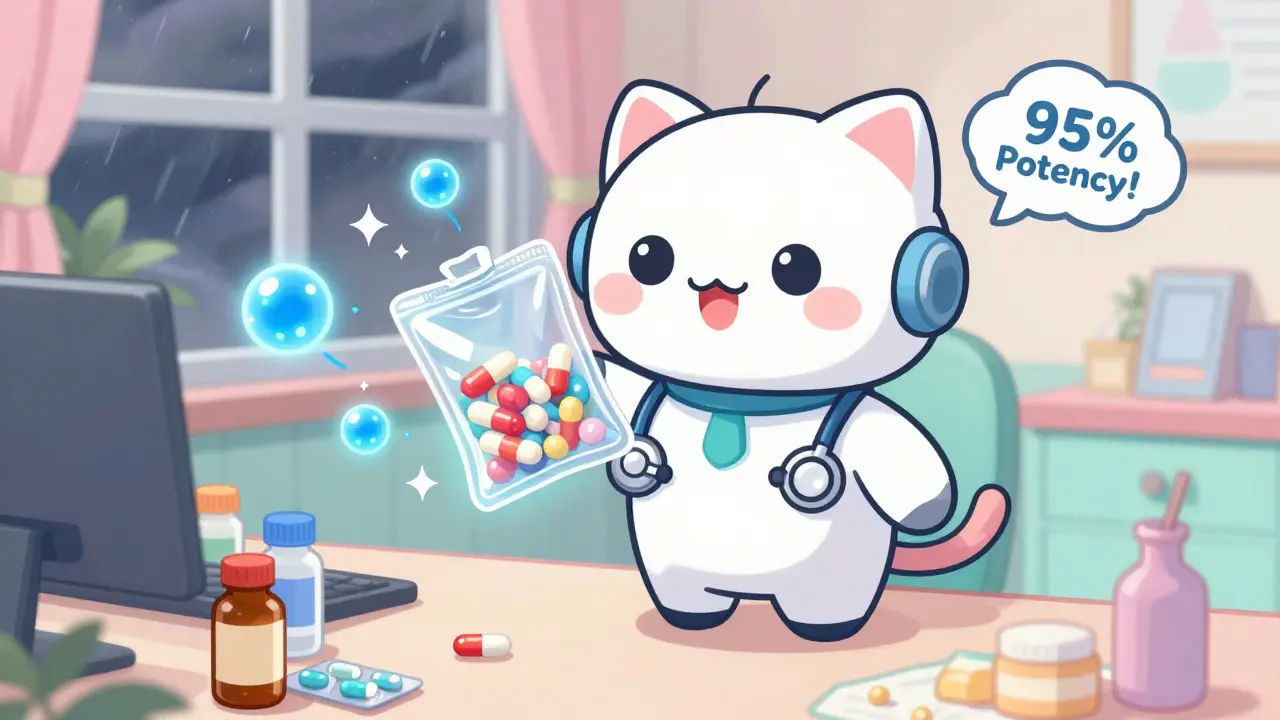
Vacuum Sealing: A Game-Changer for Solid Medications
Here’s something most people don’t know: vacuum-sealing tablets and capsules can extend their usable life by 1-2 years beyond the printed expiration date. Dr. Michael Rhodes’ 2021 research at Intermountain Healthcare showed that vacuum-sealed pills retained 95% potency for 24 months past expiration. Non-vacuum-sealed ones? Only 68%. How? By removing oxygen and moisture-the two main culprits behind degradation. This works great for antibiotics like amoxicillin, painkillers like ibuprofen, and even epinephrine tablets. But don’t vacuum-seal liquids. Insulin, liquid antibiotics, or inhalers? Those need different handling. Liquids degrade faster and are more sensitive to pressure changes. Reddit’s r/Preppers community has over 1,200 posts on this. One user, u/SurvivalMedic99, wrote: “My vacuum-sealed amoxicillin from 2019 worked perfectly during a 2022 emergency.” That’s not luck. It’s science.What About Expired Medications?
The FDA says most solid medications are safe and effective well past their expiration date-sometimes years. But “safe” doesn’t mean “reliable.” Potency drops over time. Epinephrine auto-injectors, for instance, lose 15% of their strength every year-even under perfect conditions. That’s why the CDC recommends replacing them every 12-18 months regardless of the printed date. For insulin, the rules are stricter. Even if it’s not expired, if it’s been exposed to heat or light, toss it. The 2023 FDA update on temperature-stable insulin (Tresiba®) changed the game. It stays potent for 56 days at 86°F. That’s a 400% improvement over older versions. But if you’re still using older insulin? Treat it like a ticking clock.How to Build and Maintain Your Kit
Start with a 30-day supply. The CDC and American College of Emergency Physicians say three days is the bare minimum. Thirty days is what actually prepares you for most disasters-hurricanes, wildfires, winter storms. Here’s how to assemble it:- Collect all prescriptions, OTC meds, and supplements. Include inhalers, EpiPens, and insulin.
- Keep everything in original containers with labels.
- Use a waterproof, airtight container. A plastic tub with a rubber seal works. Add silica gel packs to control humidity.
- For refrigerated meds, use a battery-powered cooler with 72-hour ice packs. Store it in a cool, dark closet-not the kitchen.
- Label the container: “Emergency Medications - Do Not Remove.”
- Store it where you can reach it fast, but keep it locked if you have kids.
- Discolored pills or cloudy liquids
- Leaking containers
- Expired dates
- Weak battery in your cooler
What to Avoid
Don’t store your emergency meds in:- Bathrooms (humidity spikes from showers)
- Windowsills (direct sun = UV damage)
- Car glove compartments (can hit 140°F in summer)
- Unlocked cabinets (risk of accidental ingestion)
- Plastic bags (they don’t block moisture or light)
What’s Changing in 2026
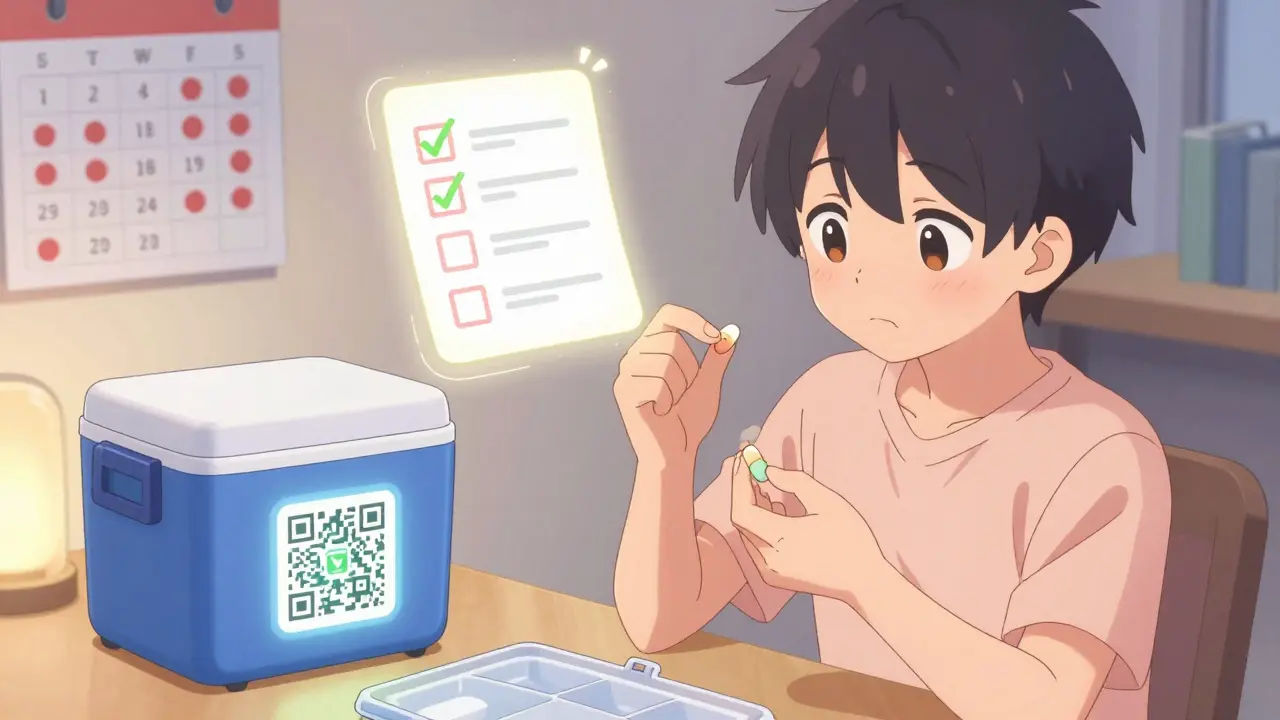
The FDA launched a blockchain pilot in April 2023 with 10 major drugmakers. It tracks real-time temperature and humidity data from storage units. The goal? Cut waste by 30%. In five years, you might be able to scan a QR code on your emergency kit and see exactly how your meds have been stored. The Department of Homeland Security now recommends 14 days of medication-double the old 7-day standard. And by 2027, half of all essential emergency meds should have room-temperature stability. That’s huge. But until then, you need to be proactive.Final Thought
Your emergency kit isn’t just a box of pills. It’s a lifeline. If your insulin fails, your asthma inhaler won’t open, or your antibiotics don’t work, you’re not just inconvenienced-you’re in danger. The science is clear: proper storage saves lives. It doesn’t take a lot of time or money. Just discipline. Check it. Store it right. Replace it when needed. And when disaster hits, you’ll be ready.Can I still use medication after its expiration date?
Yes, many solid medications remain safe and effective past their expiration date-sometimes for years. But potency decreases over time. Epinephrine, insulin, and liquid antibiotics are exceptions. They degrade faster and should be replaced on schedule. The FDA says most pills retain at least 90% potency for 1-5 years after expiration if stored properly. But if they’ve been exposed to heat, moisture, or light, toss them.
Should I store insulin in the fridge if I’m not using it?
Yes. Unopened insulin should always be refrigerated between 36°F and 46°F. Once opened, it can stay at room temperature (up to 77°F) for 28 days, but only if it’s not exposed to direct heat or sunlight. If you’re preparing for an emergency, keep a backup in a battery-powered cooler. Never leave it in a car, near a window, or in a bathroom.
Is vacuum-sealing safe for all medications?
No. Vacuum-sealing works well for tablets and capsules-like antibiotics, painkillers, and blood pressure meds. But never vacuum-seal liquids, inhalers, or injectables. The pressure can damage the medication or its delivery system. For liquids, use airtight containers with silica gel packs instead. Always keep them in their original bottles.
How often should I check my emergency medication kit?
Check it every month. Spend 15 minutes. Look for expired dates, discolored pills, leaking containers, or dampness. Replace epinephrine auto-injectors every 12-18 months, even if they haven’t expired. Test your battery-powered cooler’s charge. Update your list if you get a new prescription. Consistency beats perfection.
What’s the best container for storing emergency meds?
A hard plastic storage tub with a rubber seal, like a tackle box or food-grade container. Add silica gel packs to absorb moisture. Keep it in a cool, dark place-like a closet shelf. Avoid cardboard boxes (they absorb moisture) and ziplock bags (they don’t block light). If you’re storing refrigerated meds, pair it with a battery-powered medical cooler. The container should be waterproof, airtight, and clearly labeled.




Donna Zurick
March 3, 2026This is the most practical guide I've read in years. I used to keep my meds in the bathroom until I read this. Now they're in a sealed tub with silica packs in the closet. Simple fix. Life saver.