What Is an Insurance Formulary?
Every time you fill a prescription, your insurance plan doesn’t just pay for any drug-it pays for the ones on its formulary. This is a list of medications your plan agrees to cover, and it’s not random. It’s carefully built by pharmacists, doctors, and insurers to balance cost and effectiveness. If your medicine isn’t on the list, you might pay full price-or worse, be denied coverage entirely.
Think of it like a menu at a restaurant. The plan picks what’s available, and you’re stuck with those options unless you appeal. In the U.S., nearly all Medicare Part D plans and most private insurers use formularies. They’re not optional. By law, Medicare Part D must cover at least two drugs in each common treatment category. But beyond that, each plan decides what goes in and what stays out.
How Formulary Tiers Work
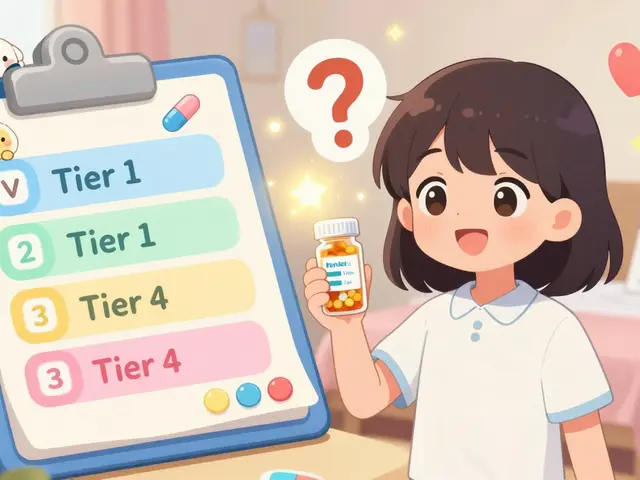
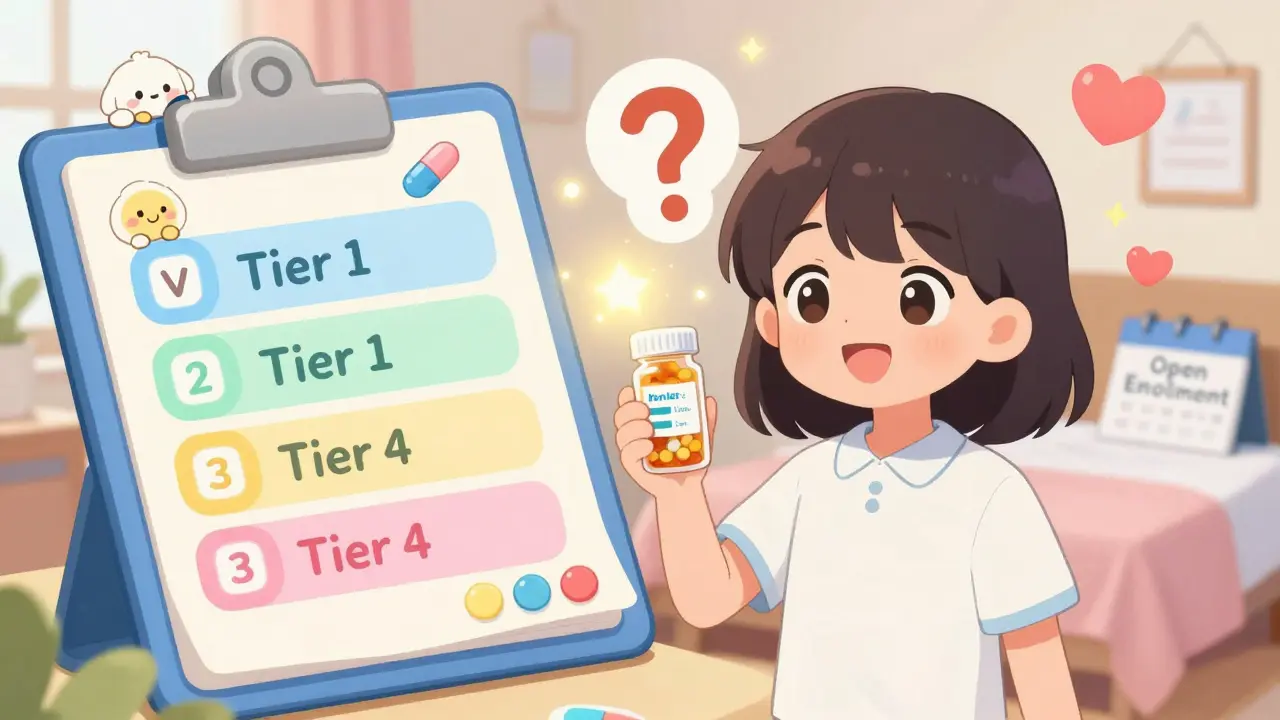
Formularies don’t just list drugs-they sort them into tiers. These tiers determine how much you pay out of pocket. Most plans use four tiers:
- Tier 1 (Generic): Cheapest. Usually $10-$15 per prescription. These are proven, off-patent drugs with the same active ingredients as brand names.
- Tier 2 (Preferred Brand): Brand-name drugs the plan favors. Copays around $40-$50.
- Tier 3 (Non-Preferred Brand): More expensive brand drugs. Expect $70-$100 per fill.
- Tier 4 (Specialty): High-cost drugs for complex conditions like cancer, MS, or rheumatoid arthritis. You might pay 33% of the total cost-sometimes thousands per month.
Moving from Tier 1 to Tier 4 can triple or quadruple your monthly bill. A 2023 GoodRx survey found patients paying $1,200 a month for a drug that used to cost $45 after it was moved to a higher tier. That’s not a typo. It happens.
What Happens When Your Drug Isn’t Covered?
Not all drugs are on every formulary. If yours isn’t, you have three options:
- Prior Authorization: Your doctor must submit paperwork proving you need this specific drug. Insurers often delay or deny these requests. The American Medical Association reports 82% of doctors have seen delays cause serious harm to patients.
- Step Therapy: You must try cheaper alternatives first-even if they didn’t work before. For example, you might have to try three generic painkillers before getting your usual migraine medication.
- Quantity Limits: You can only get a 30-day supply, even if your doctor prescribes 90 days.
These rules aren’t meant to be punitive-they’re designed to save money. But they often ignore real patient needs. A 2023 study found that 18% of patients had to switch medications because of these restrictions, and 29% ended up skipping doses because they couldn’t afford the new drug.
Therapeutic Substitution: When the Pharmacist Swaps Your Drug
Even if your drug is covered, you might not get it. In 31 states, pharmacists are legally allowed to swap your prescribed brand-name drug for a cheaper generic or another drug in the same class-without telling you first. This is called therapeutic substitution.
It sounds harmless: both drugs treat the same thing. But not all drugs work the same for everyone. A patient on Humira for rheumatoid arthritis might be switched to a biosimilar. For some, it works fine. For others, it triggers flare-ups, fatigue, or worse. A 2023 study in the American Journal of Managed Care found that 5-7% of patients with complex conditions experienced treatment disruptions because of these swaps.
And here’s the kicker: you might not even know it happened. Pharmacies aren’t required to notify you unless your state has specific laws. Many don’t. That’s why checking your pill bottle every time you pick up a prescription matters.

Open vs. Closed Formularies: What’s the Difference?
Not all plans are created equal. There are three main types:
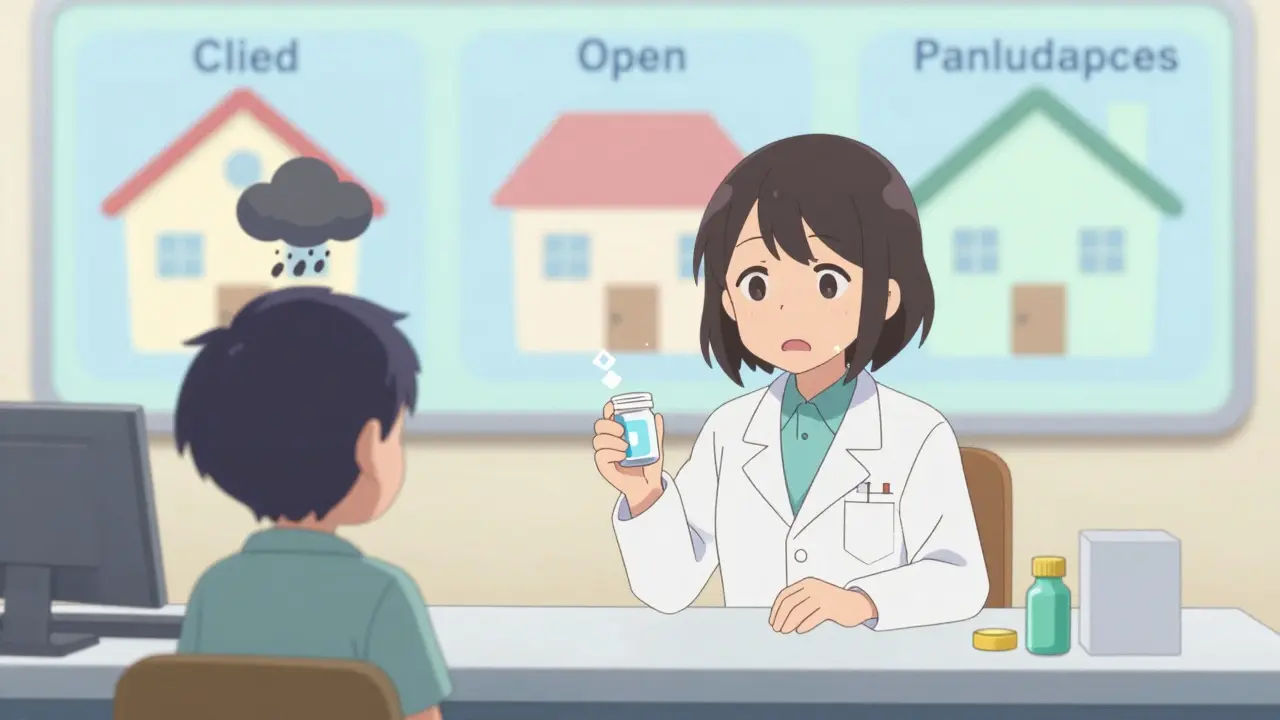
- Closed Formulary: Only drugs on the list are covered. About 65% of Medicare Part D plans use this. You pay full price for anything else-unless you win an exception.
- Open Formulary: Covers almost all drugs, but your premiums are 12-15% higher. Only 22% of Part D plans use this.
- Partially Closed: A middle ground. Some drugs are excluded based on cost or clinical guidelines.
Here’s the trade-off: closed formularies keep premiums low, but they limit your choices. Open formularies give you freedom-but cost more each month. If you’re on a chronic medication, a closed plan might save you $200 a year on premiums… but cost you $1,500 more in out-of-pocket drug expenses.
How to Check and Protect Your Coverage
You can’t rely on your insurer to tell you when your drug gets moved or dropped. You have to check yourself.
- Review your formulary every year during open enrollment. For Medicare, that’s October 15 to December 7. For ACA plans, it’s November 1 to January 15.
- Use your insurer’s online tool. Most have a formulary lookup. Type in your exact drug name, including the manufacturer. Don’t assume “ibuprofen” is covered-some plans only cover specific brands.
- Call member services. Ask: “Is this drug on formulary? What tier? Are there any restrictions?” Write down the date and rep’s name.
- Compare plans. The Medicare Plan Finder shows cost differences between plans. Users who compare at least three plans save an average of $472 a year.
Pro tip: If you take multiple medications, use a spreadsheet. List each drug, its tier, copay, and any restrictions. Update it every time you get a new plan document.
What to Do If Your Drug Is Removed
If your drug gets kicked off the formulary, don’t panic. You can request an exception.
- Ask your doctor to write a letter explaining why you need this exact drug. Generic alternatives didn’t work. You had side effects. Your condition is unstable.
- Submit it through your insurer’s appeals portal. CMS data shows 73.2% of initial requests are approved.
- If you’re in urgent need (like cancer treatment), ask for an expedited review. Approval rates drop to 38.5%, but it’s your only option.
- Don’t give up. If denied, you can appeal again. The process takes 7-10 business days on average-but for life-threatening conditions, it can be faster.
But here’s the hard truth: 28% of patients who start the process never finish. It’s too confusing, too time-consuming. If you’re overwhelmed, reach out to a patient advocate. Many hospitals and nonprofits offer free help.
The Bigger Picture: Why Formularies Exist
Formularies aren’t evil. They exist because drug prices are out of control. The U.S. spent $621 billion on prescriptions in 2023. Without formularies, premiums would be unaffordable for everyone.
Insurers use them to negotiate rebates. Pharmacy Benefit Managers (PBMs) like CVS Caremark and Express Scripts control 92% of prescription coverage. They demand discounts from drugmakers in exchange for placing their drugs on preferred tiers. That’s why a drug might be on Tier 2 at one plan but Tier 3 at another-it’s not about medical value. It’s about who paid the most.
Some changes are helping. Starting in 2023, Medicare capped insulin at $35 a month. Starting in 2025, there’s a $2,000 annual cap on out-of-pocket drug costs. That’s huge. But it’s still not enough. Specialty drugs for rare diseases can cost $100,000 a year. Even with a cap, patients pay thousands.
What’s Changing in 2025 and Beyond
The system is evolving. By January 2026, all Medicare Part D plans must show you your exact out-of-pocket cost at the moment your doctor prescribes a drug. That’s new. Before, you found out at the pharmacy counter-too late.
Some insurers are testing “digital formularies” that include apps and online therapy tools. Others are moving toward “value-based” formularies: if your diabetes drug keeps your HbA1c below 7.0%, your copay drops.
By 2030, experts predict formularies will use genetic data to personalize drug lists. If your DNA shows you metabolize a drug slowly, your plan might automatically skip certain medications before you even try them.
But the biggest change? Simplicity. CMS now requires formulary documents to be no longer than 4 pages. They used to be 287 pages long. That’s progress.
Final Advice: Know Your Rights
You have more power than you think. You can:
- Ask for a drug list before signing up for a plan.
- Request a formulary exception anytime.
- Ask your pharmacist if substitution is allowed-and insist on being notified.
- Report surprise cost increases to your state’s insurance department.
Don’t assume your coverage is safe. Formularies change every month. Your drug could be removed tomorrow. But if you check once a year, ask questions, and fight for exceptions when needed-you can keep your treatment on track.
What is a formulary in health insurance?
A formulary is a list of prescription drugs that your health insurance plan covers. It’s organized into tiers based on cost and clinical effectiveness. If your medication isn’t on the list, you may have to pay full price or go through an approval process to get it covered.
Can my pharmacist substitute my prescription without telling me?
In 31 states, pharmacists are allowed to swap your prescribed drug for a cheaper alternative in the same therapeutic class without your doctor’s approval-and without notifying you. This is called therapeutic substitution. Always check your pill bottle and ask the pharmacist if a change was made.
Why is my drug no longer covered?
Insurers update formularies frequently to cut costs. A drug might be moved to a higher tier, removed entirely, or replaced by a newer generic. These changes often happen without direct notice. Always review your plan’s formulary during open enrollment.
How do I get a drug that’s not on my formulary?
You can request a formulary exception. Your doctor must submit documentation explaining why you need the specific drug-usually because alternatives didn’t work or caused side effects. About 73% of these requests are approved. For urgent cases, ask for an expedited review.
What’s the difference between Tier 1 and Tier 4 drugs?
Tier 1 drugs are usually generics with the lowest copay, often $10-$15. Tier 4 drugs are specialty medications for complex conditions like cancer or autoimmune diseases. You pay a percentage of the cost-usually 33%-which can mean thousands per month. Moving from Tier 1 to Tier 4 can increase your out-of-pocket cost by 300-500%.
What to Do Next
Right now, open enrollment is over for most people-but that doesn’t mean you’re stuck. If your medication was changed or removed, start the exception process today. Call your insurer. Ask for the formulary policy in writing. Talk to your doctor about alternatives. And next year, don’t wait until November. Bookmark your plan’s formulary page. Set a calendar reminder. You’re not just paying for insurance-you’re paying for access to your health. Make sure you get what you’re owed.