
Quercetin Medication Interaction Checker
Check Your Medication Interactions
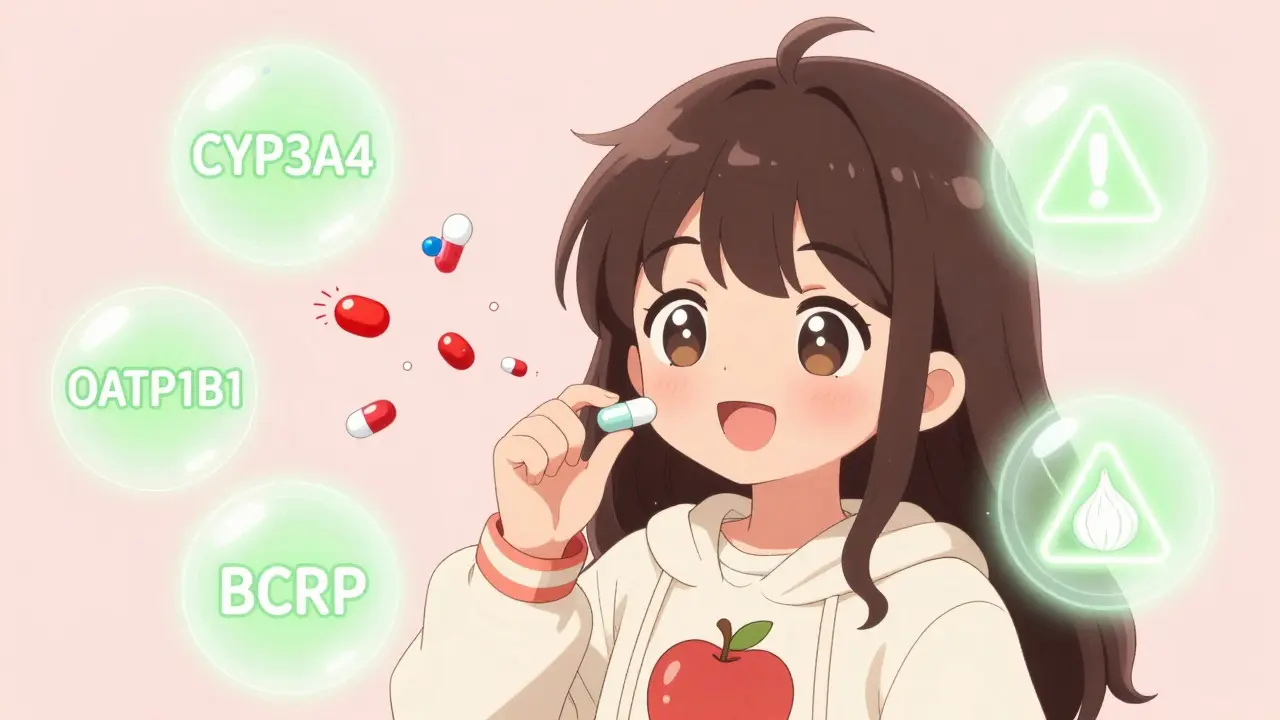
When you take a daily quercetin supplement for its anti-inflammatory benefits, you might not think twice about it-after all, it’s a natural compound found in apples, onions, and berries. But if you’re also on prescription medication, that little capsule could be quietly changing how your body handles your drugs. The truth is, high-dose quercetin supplements can interfere with the enzymes and transporters responsible for breaking down and clearing medications from your system. This isn’t theoretical. It’s happening right now in thousands of people, and many don’t even realize it.
How Quercetin Slows Down Your Medications
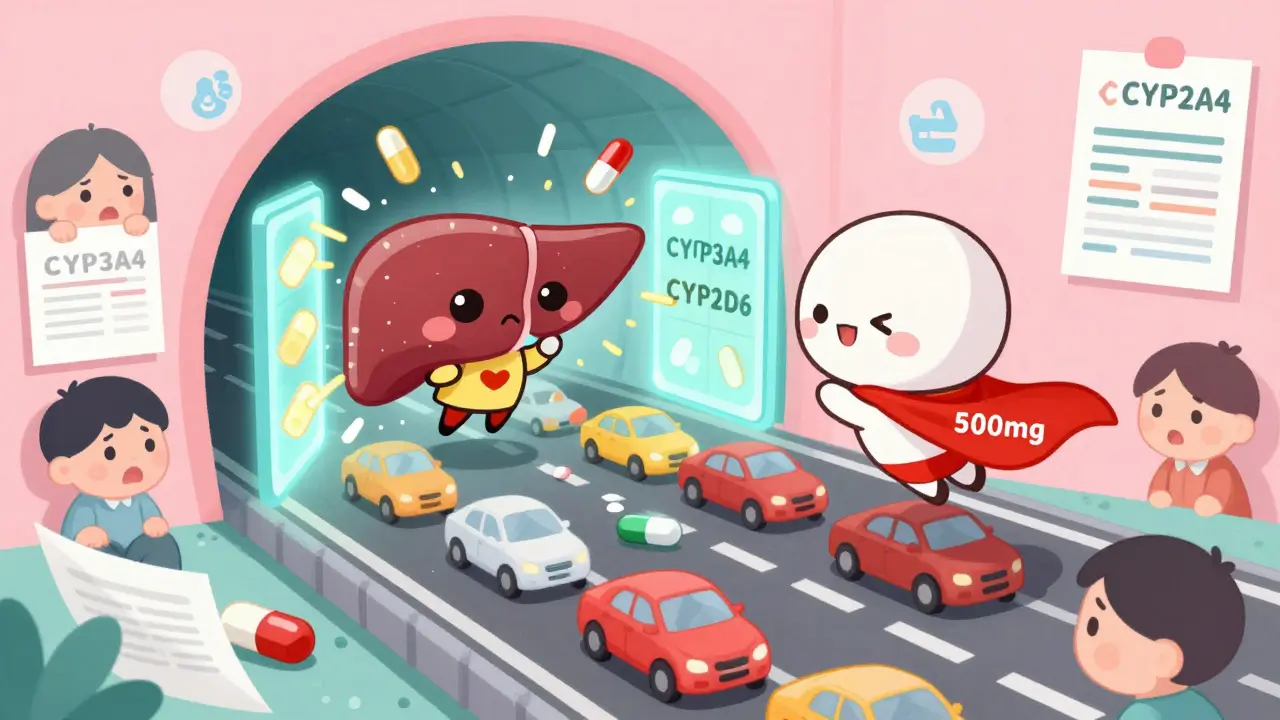
Your liver and intestines use a family of enzymes called cytochrome P450 (CYP) to break down most prescription drugs. Among them, CYP3A4, CYP2D6, and CYP2C19 are the most important. Quercetin doesn’t just gently nudge these enzymes-it actively blocks them. In lab studies, quercetin reduced CYP3A4 activity by 40-60% and CYP2D6 by 70-85% at concentrations you can reach with a 500 mg supplement. That’s not a small effect. It’s enough to make your blood levels of certain drugs rise by 20% to over 300%.
Think of it like a traffic jam on a highway. Normally, your body clears drugs efficiently. But quercetin slams the brakes. Drugs like abemaciclib (a cancer treatment), abrocitinib (for eczema), and acenocoumarol (a blood thinner) can build up dangerously when quercetin is in the picture. Even common painkillers like acetaminophen can see a 20-30% increase in blood concentration. That might sound harmless, but when you’re already taking the highest safe dose, that extra bump can push you into toxicity.
It’s Not Just About the Liver
Most people assume drug interactions happen only in the liver. But quercetin also blocks transporters like OATP1B1, OATP1B3, and BCRP-proteins that shuttle drugs into and out of cells. These transporters control how much of a drug enters your bloodstream from the gut and how quickly it leaves your liver. When quercetin blocks them, drugs like statins, certain antibiotics, and even some chemotherapy agents can’t be cleared properly. The result? Higher levels in your blood, longer time in your system, and more side effects.
For example, studies show quercetin can raise levels of apixaban and rivaroxaban-two common blood thinners-by 20-35%. That’s not a minor risk. It means you could bleed internally without warning. The American Society of Health-System Pharmacists warns against combining quercetin with these drugs entirely. There’s no safe window. No ‘just a little’ that won’t matter.
What Medications Are Most at Risk?
Not all drugs are affected equally. The ones you need to watch out for fall into three categories:
- Narrow therapeutic index drugs: These have a tiny gap between a helpful dose and a toxic one. Even a small increase can be dangerous. Examples: warfarin, cyclosporine, tacrolimus, digoxin, and phenytoin.
- CYP3A4 substrates: Over half of all prescription drugs rely on this enzyme. That includes statins (atorvastatin, simvastatin), calcium channel blockers (amlodipine, diltiazem), immunosuppressants, many antidepressants, and most cancer drugs.
- CYP2D6 and CYP2C19 substrates: These affect antidepressants (fluoxetine, sertraline), anti-anxiety meds (diazepam), anti-seizure drugs (diazepam, clobazam), and proton pump inhibitors (omeprazole).
If you take any of these, and you’re taking more than 250 mg of quercetin daily, you’re playing with fire. A 2021 study from UCSF found that patients on cyclosporine who took 1,000 mg of quercetin saw their drug levels spike by 40-50%. One patient developed kidney damage. Another needed hospitalization.
Diet vs. Supplements: The Big Difference
You might be thinking, ‘But I eat onions and apples every day. Isn’t that the same thing?’ No. The quercetin in food is bound to sugar molecules (glycosides), which your body absorbs slowly and converts into less active forms. A bowl of onions gives you maybe 10-20 mg of quercetin. A supplement? 500 mg, 1,000 mg, even 1,500 mg. That’s 100 times more. And it hits your system all at once, overwhelming your enzymes.
Even worse, most supplements use the pure aglycone form of quercetin-the most potent inhibitor. That’s the version used in lab studies showing strong enzyme blockade. Food-based quercetin? It barely registers. Supplements? They’re designed to deliver a punch.
Who’s Most at Risk?
It’s not just about dose. Your age, health, and other medications matter too. People over 65 clear quercetin metabolites 25-40% slower than younger adults, according to studies from 2008. That means the stuff lingers longer, blocking enzymes for more hours. If you’re on multiple medications-common in older adults-you’re at higher risk for overlapping interactions.
People with liver disease are also more vulnerable. If your liver is already struggling to process drugs, adding a potent inhibitor like quercetin can tip you into failure. And if you’re taking chemotherapy, immunosuppressants, or anticoagulants, the stakes are life-or-death.
What Should You Do?
If you’re taking quercetin supplements and any prescription drug, here’s what to do right now:
- Stop taking quercetin if you’re on warfarin, DOACs, cyclosporine, tacrolimus, statins, or any cancer drug.
- Check your dose. If you’re taking more than 500 mg daily, you’re in the danger zone. The European Food Safety Authority says doses above 1,000 mg/day are a red flag.
- Talk to your pharmacist. They have access to interaction databases your doctor might not check daily. Bring your supplement bottle with you.
- If you must keep taking it, separate it from your meds by at least 4-6 hours. That reduces interaction risk by 30-50%, based on pharmacokinetic modeling.
There’s no need to panic if you’ve been taking quercetin for months. But if you’ve noticed unexplained bruising, dizziness, nausea, or muscle pain since starting the supplement, get your blood tested. Drug levels can be checked for many of these medications.
The Bigger Picture
Quercetin supplements are a $387 million market. Over 18 million Americans take them. And nearly half of those users are taking more than 500 mg a day. Yet, almost no one is warned. The FDA has issued 17 warning letters to supplement makers for making false health claims, but they don’t require interaction warnings on labels. That’s changing. The FDA is proposing new rules in 2024 that would force supplement companies to list drug interaction risks for high-risk ingredients like quercetin.
Until then, you have to be your own advocate. Natural doesn’t mean safe. And more isn’t better. If you’re on medication, treat quercetin like a drug-not a vitamin. Because in your body, that’s exactly what it is.
Can I take quercetin with blood pressure medication?
It depends. Quercetin can interfere with calcium channel blockers like amlodipine, diltiazem, and verapamil by inhibiting CYP3A4, which may raise their levels and cause low blood pressure, dizziness, or swelling. If you’re on one of these, avoid quercetin supplements. Talk to your doctor before combining them.
Does quercetin interact with statins?
Yes, especially simvastatin and atorvastatin. Quercetin blocks CYP3A4, the main enzyme that breaks down these statins. This can cause muscle pain, weakness, and in rare cases, a dangerous condition called rhabdomyolysis. Avoid quercetin supplements if you’re on these statins. Rosuvastatin is less affected, but still not risk-free.
Is quercetin safe with antidepressants?
Some antidepressants, like sertraline, fluoxetine, and paroxetine, are metabolized by CYP2D6, which quercetin strongly inhibits. This can lead to higher drug levels, increasing side effects like nausea, dizziness, or serotonin syndrome. If you’re on one of these, skip quercetin supplements. Talk to your psychiatrist before combining them.
How much quercetin is too much?
For most people on medication, anything over 250 mg per day is risky. The European Food Safety Authority flags doses above 1,000 mg/day as a clear concern. Even 500 mg daily can cause dangerous interactions with narrow-therapeutic-index drugs. If you’re not on medication, 500 mg is generally considered safe short-term-but long-term safety data is limited.
Can I take quercetin if I’m on chemotherapy?
No. Quercetin can interfere with the metabolism of many chemotherapy drugs, including abemaciclib, paclitaxel, and docetaxel. This can either reduce their effectiveness or increase toxicity. Cancer patients should avoid quercetin supplements unless explicitly approved by their oncologist and monitored with blood tests.
Do I need to stop quercetin before surgery?
Yes. Because quercetin can affect blood clotting and interact with anesthetics and pain meds metabolized by CYP enzymes, it’s recommended to stop all quercetin supplements at least 7-10 days before any surgery. This reduces the risk of unexpected bleeding or drug reactions during or after the procedure.




kabir das
January 30, 2026Oh my GOD, I’ve been taking 1000mg daily for my ‘anti-inflammatory glow’-and I’m on lisinopril and simvastatin?? I just vomited a little in my mouth. This is a nightmare. I’m deleting my supplement drawer right now. I’m literally crying. Why didn’t anyone tell me??