
When your prescription switches from a brand-name drug to something that looks different-maybe a different color, shape, or packaging-you might feel uneasy. Is it the same medicine? Will it work? Will it hurt you? The answer, more often than not, is yes. And the reason is simple: you’re likely being switched to an authorized generic.
An authorized generic isn’t just another generic. It’s the exact same drug your doctor originally prescribed, made in the same factory, with the same ingredients, and the same quality control. The only difference? It doesn’t carry the brand name on the bottle. That’s it. No extra steps. No hidden changes. Just lower prices.
What Exactly Is an Authorized Generic?
Think of it this way: the company that made the original brand-name drug also makes the authorized version. They’re not outsourcing it to a different manufacturer. They’re using the same生产线, same formula, same pills. The FDA calls this an authorized generic a version of a brand-name drug sold without the brand name label, manufactured under the original New Drug Application (NDA) and identical in every way to the branded product. It’s not a copy. It’s the real thing, just unlabeled.
This is different from traditional generics. Traditional generics have to prove they work the same way through testing (bioequivalence studies). Authorized generics don’t need to. Why? Because they’re made by the same company that made the brand. The FDA already approved the formula years ago. So when a brand company introduces an authorized generic, it’s not trying to compete-it’s just selling the same drug under a cheaper label.
Between 2001 and 2008, 92% of authorized generics were launched by the original brand companies themselves. Today, about 1 in 4 brand-name drugs with generic competition have an authorized version. The FDA keeps a public, quarterly updated list of all authorized generics in its Orange Book. You can check it. You should check it.
Why Do Authorized Generics Cost Less?
Price drops happen fast when an authorized generic enters the market. On average, retail prices fall by 8.4% to 18.2%. In some cases, especially during the 180-day exclusivity window for the first generic competitor, prices drop even more-up to 14% lower at the wholesale level.
Why? Because competition works differently here. Normally, when a brand loses patent protection, only one generic can enter first and get 180 days of exclusive sales. That gives them a monopoly. But if the brand company launches its own authorized generic at the same time, it breaks that monopoly. Suddenly, you’ve got two identical products on the shelf-one with a brand name, one without. Pharmacies and insurers push the cheaper one. Patients save. Everyone wins.
Medicare Part D data from 2022 shows that when an authorized generic is available, 80-90% of prescriptions are filled with it automatically. The average out-of-pocket savings? $15 to $30 per prescription. For someone taking multiple meds, that adds up fast.
How to Know You’re Getting an Authorized Generic
Not every generic is an authorized generic. Some look almost identical to the brand, but they’re made by a different company. Others might have the same ingredients but different fillers or coatings. That’s why you can’t just assume.
Here’s how to confirm:
- Check the pill’s imprint code (the letters/numbers stamped on it). Compare it to your old brand pill. If it matches exactly, it’s likely an authorized generic.
- Ask your pharmacist: "Is this an authorized generic?" They can tell you right away.
- Look up the drug on the FDA’s Orange Book (search by active ingredient and manufacturer). If the manufacturer listed is the same as the brand’s, you’ve got an authorized generic.
For example: If you take Lipitor (atorvastatin), and your new pill says "Watson" or "Actavis" on it, that’s a traditional generic. But if it says "Pfizer"-the same company that made Lipitor-that’s an authorized generic. Same pill. Different label.
What If the Pill Looks Different?
This is the number one concern patients have. "My pill is blue now instead of yellow. Is it still the same?"
Yes. It is.
Authorized generics often look identical to the brand-because they are. But sometimes, even if made by the same company, the packaging or labeling changes. Maybe the bottle is plain. Maybe the imprint is slightly different. That doesn’t mean the drug changed. It just means the branding did.
Pharmacists report that 65% of patient questions about generics are about appearance. The fix? Simple education. Tell patients: "Color and shape don’t change how the medicine works. Only the active ingredient does-and that’s unchanged."
One patient in Bristol told me last month: "I was scared to take the new pills. I thought maybe the formula was weaker. My pharmacist sat with me for 10 minutes, showed me the FDA list, and said, ‘This is your Lipitor, just without the name.’ I felt better instantly."
Insurance and How It Affects Your Switch
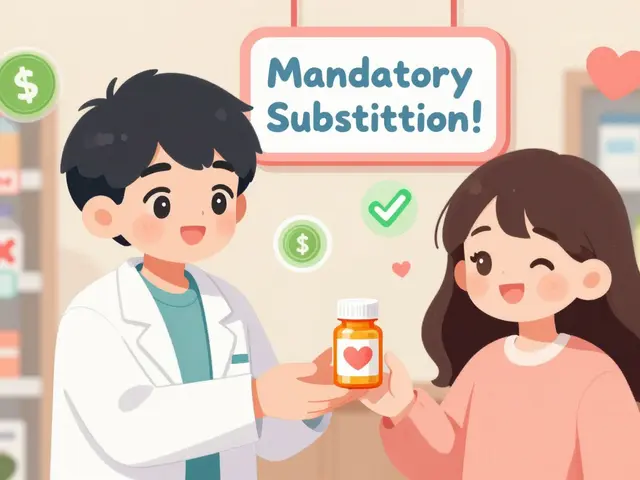
Your insurance plan doesn’t ask you if you want to switch. It just does it.
Most plans automatically substitute authorized generics because they’re cheaper. If your plan covers brand-name drugs but an authorized generic is available, you’ll likely get the generic unless you specifically opt out. That’s by design. Insurers want to save money-and so do you.
But here’s the catch: if you’re on a specialty tier (like for heart disease, diabetes, or mental health meds), you might need prior authorization before the switch. Call your insurer. Ask: "Is there an authorized generic for my drug? Will I need approval to switch?"
Don’t assume your doctor will handle this. Most don’t. It’s your job to check. Your pharmacist can help, but they can’t override your insurance rules.
What About Side Effects or Effectiveness?
Studies show no difference.
A 2018 study in the National Center for Biotechnology Information (NCBI) tracked over 12,000 patients who switched from brand-name drugs to authorized generics. Results? No increase in hospital visits. No rise in medication discontinuation. No drop in effectiveness.
Another study found that 85% of patients stayed on their medication after switching to an authorized generic-same as those who stayed on the brand.
Even the American Academy of Allergy, Asthma & Immunology confirms: authorized generics have the same inactive ingredients as the brand. So if you’re sensitive to dyes or fillers, you’re not at higher risk.
Bottom line: if your brand drug worked for you, the authorized version will too.
When You Shouldn’t Switch
There are rare cases where switching isn’t ideal:
- You have a documented allergy to a specific inactive ingredient (like a dye or preservative) and the authorized generic uses a different one. (Ask your pharmacist to compare the inactive ingredients.)
- You’re taking a drug with a narrow therapeutic index (like warfarin or thyroid meds) and your doctor wants to monitor you closely after any change.
- Your insurance doesn’t cover the authorized generic-but does cover the brand. (Uncommon, but possible.)
In those cases, talk to your doctor. They can write "Do Not Substitute" on your prescription. But that’s the exception, not the rule.
How to Make the Switch Smooth
Here’s your simple checklist:
- When your prescription is refilled, check the pill and packaging. Compare it to your last bottle.
- Ask your pharmacist: "Is this an authorized generic?"
- Check the FDA’s Orange Book online to confirm the manufacturer matches the brand.
- Don’t panic if it looks different. It’s still the same drug.
- Review your insurance statement. You should see lower copays.
- Keep your old bottle until you’re sure the new one works the same.
- If you feel weird or notice side effects, call your doctor. But 99% of the time, it’s just your brain adjusting to a new label.
Most people don’t notice a difference. Not in how they feel. Not in how the drug works. Just in how much they pay.
What’s Next for Authorized Generics?
More are coming. The FDA is improving its tracking system, and pharmacy software is now automatically flagging authorized generics at the point of sale. By 2028, experts predict 35% of biologic drugs (like insulin or rheumatoid arthritis treatments) will have authorized versions.
The trend is clear: brand companies are using authorized generics to keep customers while lowering prices. It’s smart business. And for you? It’s smart savings.
You don’t have to choose between quality and cost. With authorized generics, you get both.
Are authorized generics as safe as brand-name drugs?
Yes. Authorized generics are manufactured under the same FDA-approved New Drug Application (NDA) as the brand-name drug, using identical ingredients, facilities, and processes. They are not copies-they are the exact same medication, just sold without the brand name. The FDA requires the same quality standards, and studies show no difference in safety or effectiveness.
How do I know if my generic drug is an authorized generic?
Check the manufacturer name on the bottle. If it’s the same company that makes the brand-name version, it’s an authorized generic. You can also search the FDA’s Orange Book online using the drug’s active ingredient. If the manufacturer listed matches the brand’s, you’ve got an authorized version. Your pharmacist can also confirm this.
Why does my pill look different now?
The appearance of a pill-its color, shape, or size-is determined by inactive ingredients and manufacturing processes, not the active drug. Authorized generics often look identical to the brand, but sometimes packaging changes. This doesn’t affect how the medicine works. If you’re unsure, compare the imprint code on the pill to your old one. If it matches, it’s the same drug.
Will my insurance cover the authorized generic?
Yes-most plans automatically cover authorized generics because they’re cheaper. In fact, 80-90% of prescriptions are filled with authorized generics when available. You’ll likely see lower copays. If your plan doesn’t cover it, you can ask your doctor to write "Do Not Substitute," but this is rare.
Can I switch back to the brand if I don’t like the generic?
Yes. If you feel the authorized generic isn’t working for you, talk to your doctor. They can write a new prescription for the brand. But most people report no difference in effectiveness or side effects. If you’re concerned, give it a full cycle (usually 2-4 weeks) before deciding.




PAUL MCQUEEN
February 9, 2026Look, I get it - you're saving money, but have you ever actually *checked* the inactive ingredients? I had a friend who went from brand to 'generic' and ended up in the ER with a rash. Turns out, the new pill had a dye he was allergic to. Authorized or not, if the filler changed, you're gambling. Don't be lazy and assume it's the same. Read the label. Or don't. Your call.