

When you’re on a statin to lower cholesterol and need an antifungal for a stubborn infection, it’s not just about taking two pills. Some combinations can push your muscles into crisis - and even kill you. This isn’t theoretical. It happens in real clinics, in real people, and too often, it’s preventable.
Why Azole Antifungals Are the Problem
Not all antifungals are the same. The ones that cause the most trouble are the azoles - especially ketoconazole, itraconazole, posaconazole, and voriconazole. These drugs fight fungal infections by blocking a key enzyme fungi need to build their cell walls. But here’s the catch: they also block the same enzyme in your liver - CYP3A4 - that your body uses to break down other drugs. CYP3A4 handles about 30% of all drug metabolism in your body. That means a huge number of medications - including statins and immunosuppressants - rely on it to be cleared safely. When an azole antifungal shuts down CYP3A4, those drugs build up in your blood like traffic on a highway with no exits. Fluconazole is a bit less risky, but still dangerous with certain statins. Posaconazole and ketoconazole? They’re the worst offenders. Studies show they can boost statin levels by 10 to 20 times. That’s not a small bump. That’s a red alert.Which Statins Are Most at Risk?
Statins aren’t created equal. Some are processed mainly by CYP3A4. Others aren’t. That makes all the difference.- High risk: Simvastatin, lovastatin, atorvastatin - all heavily broken down by CYP3A4. If you’re on one of these and start an azole antifungal, your risk of muscle damage jumps tenfold.
- Lower risk: Pravastatin and rosuvastatin. They don’t rely much on CYP3A4. But even these aren’t safe with ketoconazole, because it blocks a different transporter - OATP1B1 - that pulls statins into the liver. If that’s blocked, statins stay in your bloodstream longer.
That’s why guidelines say: if you need an azole antifungal, stop simvastatin and lovastatin completely. Atorvastatin? You might be able to reduce the dose, but only under strict supervision. Pravastatin or rosuvastatin are the safer bets - but even then, your doctor needs to watch you closely.
Immunosuppressants Make It Worse
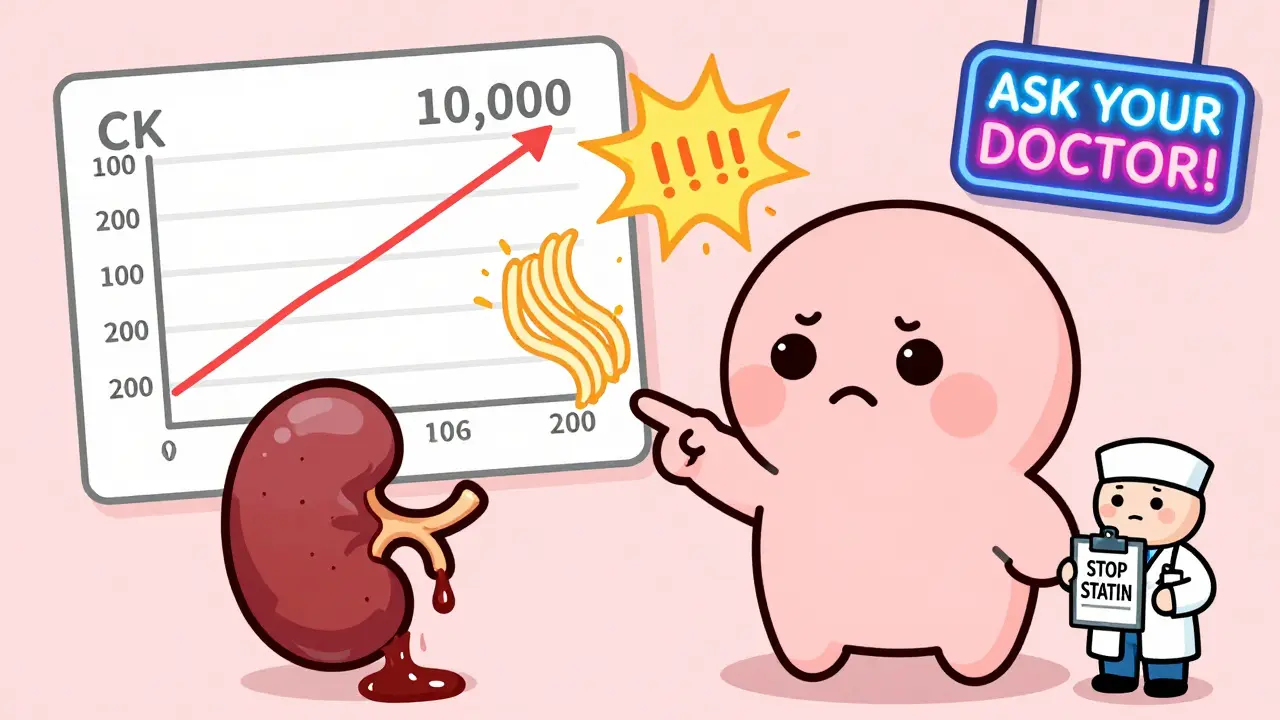
If you’ve had a transplant, you’re likely on cyclosporine, tacrolimus, or sirolimus. These drugs keep your immune system from rejecting your new organ. But they also inhibit CYP3A4 and OATP1B1 - the same pathways that statins need to be cleared. The result? When you combine statins with immunosuppressants, your statin levels can spike 3 to 20 times higher than normal. In transplant patients, up to 25% develop muscle pain or weakness - and a small but deadly percentage go on to rhabdomyolysis. Rhabdomyolysis means your muscle cells are breaking down so fast they flood your bloodstream with toxic proteins. Your kidneys can’t handle it. Creatine kinase (CK) levels may soar past 10,000 U/L - normal is under 200. Without quick action, you could need dialysis, or worse.
What Doctors Should Do - and Often Don’t
Guidelines from the American College of Cardiology and Infectious Diseases Society of America are clear: avoid high-risk combinations. But studies show they’re still being prescribed. Why? Because doctors are busy. Prescriptions are automated. Patients don’t always tell their cardiologist they’re seeing a dermatologist for a fungal nail infection. And pharmacists? They’re often the last line of defense - but not always involved early enough. In academic hospitals, pharmacist-led checks have cut dangerous combinations by 63%. But in community pharmacies? The risk remains high. Electronic alerts help - one study showed a 47% drop in risky prescriptions when systems flagged interactions. But many systems still miss the nuances, especially with newer antifungals or low-dose statins.What You Can Do
You don’t have to be a doctor to protect yourself.- Know your statin. Check your prescription bottle. If it’s simvastatin, lovastatin, or atorvastatin, ask your doctor if it’s safe to keep taking it with your antifungal.
- Speak up about all meds. Tell every doctor - even your dentist or dermatologist - what you’re taking. Antifungals aren’t just for lung infections. They’re used for skin, nails, and even gut issues.
- Watch for symptoms. Muscle pain, weakness, or dark urine - especially after starting a new antifungal - are red flags. Don’t wait. Call your doctor immediately.
- Ask about alternatives. Is there a non-azole antifungal? Is there a safer statin? Pravastatin or rosuvastatin are often good options. For fungal infections, newer drugs like isavuconazole or olorofim (still in trials) may be less risky in the future.
When You Must Use a High-Risk Combination
Sometimes, there’s no choice. A life-threatening fungal infection needs a strong antifungal. A transplant patient needs both immunosuppressants and statins to prevent heart disease. In those cases, guidelines say:- Use the lowest possible statin dose - sometimes half the usual amount.
- Switch to pravastatin or rosuvastatin.
- Test creatine kinase levels before starting and again 1-2 weeks later.
- Stop the statin if CK rises above 10 times the upper limit of normal.
- For posaconazole, wait at least 2-3 days after stopping the antifungal before restarting the statin - its effects linger.
- Monitor immunosuppressant blood levels. When you add an azole, your tacrolimus or cyclosporine levels can spike. Your doctor should lower the dose by 30-50% and recheck levels.
The Future: Safer Options Are Coming
Not all antifungals are built to interfere. The newer drug isavuconazole inhibits CYP3A4 only moderately - meaning less risk than ketoconazole or posaconazole. And olorofim, still in clinical trials, works completely differently. It doesn’t touch CYP enzymes at all. That’s a game-changer. Genetic testing is also becoming more practical. About 12% of people have a gene variant (SLCO1B1) that makes them extra sensitive to statin toxicity. If you’ve had muscle side effects before, ask about testing. It could save you from a future crisis.Bottom Line: Don’t Assume It’s Safe
Just because a drug is approved doesn’t mean it’s safe with everything else you take. Statins and antifungals are both common. But together? They’re a ticking time bomb. The science is clear. The guidelines exist. The tools to prevent harm are available. What’s missing is awareness - from patients and providers alike. If you’re on a statin and your doctor prescribes an antifungal, don’t just say yes. Ask: "Is this safe with my cholesterol pill?" If they hesitate, or say "probably," walk out and get a second opinion. Your muscles matter. Your life matters more.Can I take fluconazole with statins?
Fluconazole is less risky than other azoles, but it still inhibits CYP2C9 and CYP3A4. It’s generally safe with pravastatin and rosuvastatin at normal doses. Avoid it with simvastatin, lovastatin, or atorvastatin unless your doctor approves a reduced dose and monitors you closely. Even then, watch for muscle pain.
What should I do if I develop muscle pain while on an antifungal and statin?
Stop taking the statin immediately and contact your doctor. Muscle pain, weakness, or dark urine could signal rhabdomyolysis. Don’t wait for symptoms to worsen. Your doctor will likely order a creatine kinase (CK) blood test. If levels are high, you’ll need to stop the statin and possibly get IV fluids to protect your kidneys.
Is there a statin that’s always safe with antifungals?
No statin is 100% safe with every antifungal, but pravastatin and rosuvastatin are the safest choices. They’re not heavily processed by CYP3A4, so they’re less likely to build up. However, ketoconazole can still raise their levels by blocking the OATP1B1 transporter. Always use the lowest effective dose and get regular CK checks.
Why do some doctors still prescribe dangerous combinations?
Many factors: time pressure, incomplete patient histories, outdated prescribing habits, and lack of access to drug interaction tools. In community settings, electronic alerts often don’t catch all risks - especially if the patient is on multiple meds or the antifungal is for a short course. Pharmacists are the best safety net - but not all pharmacies have them involved early enough.
Can I take an antifungal cream instead of a pill?
Yes - if the infection is localized. Topical antifungals like clotrimazole or miconazole creams rarely cause systemic interactions because very little enters your bloodstream. But if you’re using oral antifungals for nail, lung, or systemic infections, the risk is real. Don’t assume topical means safe - always check with your doctor if you’re on statins or immunosuppressants.
How long should I wait to restart my statin after stopping an azole antifungal?
It depends on the drug. For fluconazole, wait 1-2 days. For itraconazole, wait 3-5 days. For posaconazole, wait at least 3-5 days - sometimes up to a week - because it lingers in your system. Never restart without talking to your doctor. They may want to check your creatine kinase levels first.







Josh Potter
December 15, 2025Yo I got prescribed ketoconazole last year for athlete’s foot and didn’t think twice-ended up in the ER with muscle pain so bad I couldn’t stand. My CK was 18,000. Doc said I got lucky it wasn’t worse. If you’re on statins and someone hands you an antifungal pill, STOP. Ask. Double check. Don’t be that guy who thinks ‘it’s just a fungus’.