

Medication Side Effect Timing Checker
How This Tool Works
Enter the medication you're taking, your symptom, and when you started the medication. The tool compares your timing to known patterns from medical studies to help you determine if your symptoms might be related to the drug.
Note: This tool provides general information based on published studies and is not a substitute for professional medical advice.
Ever started a new medication and felt something off - but weren’t sure if it was the drug, your illness, or just bad luck? You’re not alone. Many people blame a new pill for fatigue, dizziness, or muscle pain, only to find out weeks later that the real culprit wasn’t the medicine at all. The truth is, time-to-onset - when side effects actually show up after you take a drug - matters more than most doctors or patients realize. And it’s not random. Different classes of drugs trigger reactions at very specific times. Knowing these patterns can save you from unnecessary panic, wrong diagnoses, or even stopping a drug you actually need.
Why Timing Matters More Than You Think
When a side effect shows up isn’t just a coincidence. It’s a clue. A reaction that hits within hours is usually a direct chemical response. One that pops up after months? That’s often your immune system slowly turning against the drug. Mixing these up leads to mistakes. A patient on an ACE inhibitor develops swelling in their throat six months in - their doctor assumes it’s allergies. But it’s actually a delayed reaction to lisinopril. Only when the patient digs up research on delayed angioedema does the link click. This isn’t theory. Studies show that 78% of all adverse drug reactions happen early - within the first few days or weeks. That’s because most side effects are tied to how your body absorbs and processes the drug. But some reactions? They’re sneaky. They hide. And that’s where things get dangerous.Fast Onset: Hours to Days
Some drugs hit fast. Like ciprofloxacin, a common antibiotic. For peripheral nerve pain - a known side effect - the median time to onset is exactly two days. That’s not a guess. It’s from a 2025 study tracking over 12,000 patients. Women get it even faster than men: two days versus four. If you start this drug and your feet go numb by day three, don’t wait. Call your doctor. Then there’s angioedema. If you’re on an ACE inhibitor like lisinopril or enalapril, swelling in your lips, tongue, or throat can happen within hours - especially the first time you take it. But here’s the twist: it can also show up after six months. That’s because there are two types of reactions. One is histamine-driven (fast). The other is bradykinin-driven (slow). Most doctors only know the fast one. If you get swelling after four months on the drug, and your doctor says, “That’s impossible,” they’re wrong. It’s documented. The FDA’s own guidelines say to consider drug-induced angioedema up to six months after starting treatment. And then there’s acetaminophen. Take too much? Liver damage can hit within 24 hours. That’s not a side effect - that’s an overdose. But even at normal doses, some people develop drug-induced hepatitis in under a week. Most people assume liver problems come from alcohol or long-term use. Not always. Timing tells the story.Mid-Term Reactions: Weeks to Months
This is where things get messy. Many side effects show up between two weeks and three months. That’s the sweet spot for drugs that mess with your metabolism or immune system. Take statins. For years, people blamed them for muscle pain. But a 2021 JACC study flipped the script. They gave 60 people who’d quit statins due to muscle pain either the real drug or a placebo - and neither group had worse symptoms. The real kicker? 55% of people felt better within three days of stopping - whether they were on the statin or the sugar pill. That’s the nocebo effect in action. But here’s the catch: for the 45% who truly had statin-related pain, it usually started between one and four weeks. Not day one. Not year one. That window matters. If your muscle ache started after six months, it’s probably not the statin. Antiepileptics like pregabalin and gabapentin? They cause dizziness and fatigue. A review of 1,247 patient reports on Drugs.com found that 58% noticed these symptoms in the first week. But the median time to onset? Nineteen days for pregabalin, 31 for gabapentin. That’s not a typo. It’s the body slowly adjusting. If you start feeling foggy on day 10, don’t panic. It’s likely the drug. But if it’s day 90? Look elsewhere. Drug-induced hepatitis from other meds - like NSAIDs or certain antibiotics - often shows up around 42 days. That’s the average. Range? 20 to 117 days. That’s why doctors don’t test your liver every week. But if you’re on a new drug for over a month and feel unusually tired, yellow-eyed, or your urine looks dark? Get checked. Don’t wait.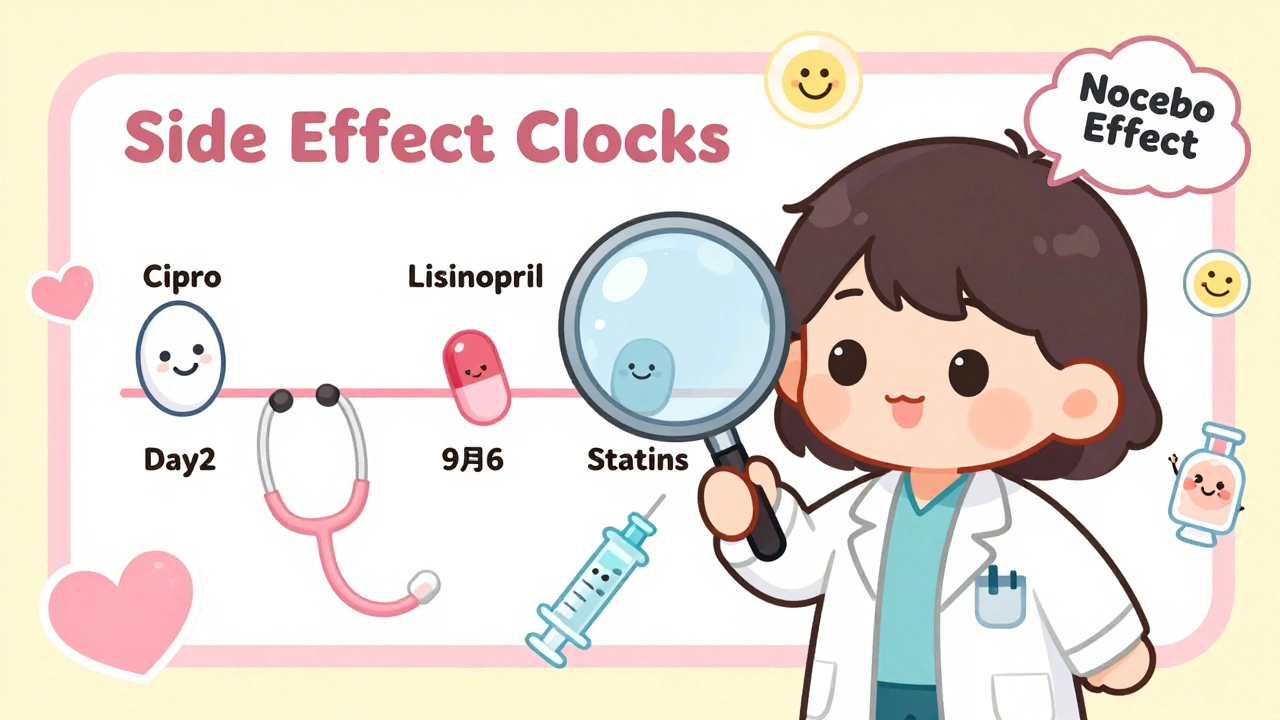
Long-Term Reactions: Months to Years
These are the silent ones. They don’t show up because the drug is toxic. They show up because your immune system is slowly waking up to it. Natalizumab, used for multiple sclerosis, can cause peripheral nerve damage. The median time? 141.5 days. That’s nearly five months. A patient might feel fine for half a year - then suddenly lose feeling in their hands. If the doctor doesn’t know this pattern, they’ll think it’s MS progression. But it’s the drug. Interferon beta-1a? For the same nerve issue, the median time-to-onset is over a year - 526.5 days. That’s more than 17 months. Imagine being on this drug for a year and a half, feeling great, then getting numbness. You’d never connect it. But the data says: this is normal. And then there’s the big one: cancer drugs. Some cause heart damage or lung scarring after years. That’s why patients on long-term therapies get regular scans. Timing isn’t just helpful - it’s life-saving.What Your Doctor Isn’t Telling You
Most doctors don’t memorize these timelines. They learn them on the job - or not at all. A 2022 ASHP survey found that only 23% of clinicians outside academic centers regularly use time-to-onset data. Why? It’s not taught well. Medical schools focus on drug mechanisms, not reaction timing. But hospitals are catching up. Mayo Clinic added TTO algorithms to their electronic health records in early 2022. Result? A 22% jump in spotting hidden drug reactions. Epic and other major systems now flag “possible drug reaction” if symptoms appear within 30 days of starting a new med. That’s the FDA’s official cutoff for suspicion. The problem? The system only looks for early reactions. It misses the delayed ones. That’s why patients still get misdiagnosed. You need to know the patterns yourself.
What to Do When Something Feels Off
Here’s how to use this info in real life:- Write it down. Start a simple log: drug name, start date, symptoms, when they began. Even if it’s just a note on your phone.
- Check the window. If your symptom matches a known early-onset pattern (like ciprofloxacin numbness at day 2), act fast. If it’s day 60 and you’re dizzy on pregabalin? That’s normal - but still worth mentioning.
- Don’t assume it’s the drug. Especially with statins. Muscle pain? Could be the drug. Could be aging. Could be vitamin D. Could be the nocebo effect. Ask for a trial off - even if it’s just two weeks.
- Ask: “Could this be delayed?” If you’ve been on a drug for months and something new pops up, Google the drug + “delayed side effect.” You’ll find studies. Bring them to your doctor.
What’s Changing Now
The future of side effect tracking is personal. The NIH’s All of Us program is starting to combine your DNA with time-to-onset data. Some people metabolize drugs faster. Others are genetically wired to react to certain meds at 30 days. In 2025, your pharmacy might auto-alert you: “Based on your genes, peripheral neuropathy from this drug is likely around day 18.” Wearables are getting in on it too. Johnson & Johnson is testing smartwatches that track subtle changes in heart rate or movement - and flag them if they line up with known TTO patterns for diabetes or blood pressure drugs. But here’s the bottom line: none of this replaces your awareness. Machines can’t feel your fatigue. They can’t hear your voice crack when you say, “I just don’t feel like myself.” You are the most important sensor.Final Thought: Timing Is Everything
Medications aren’t magic. They’re chemicals with clocks. Some react fast. Some take their time. Some never react at all - and that’s the placebo effect talking. Knowing when side effects typically show up doesn’t make you a doctor. But it makes you a smarter patient. It stops you from blaming the wrong thing. It helps you speak up at the right time. And in the end, that’s what keeps you safe.How soon after starting a drug do side effects usually appear?
Most side effects - about 78% - show up within the first few days or weeks. This is especially true for drugs that directly affect your body’s chemistry, like antibiotics or painkillers. However, some reactions, especially those involving your immune system, can take months or even over a year to appear. For example, interferon beta-1a can cause nerve damage after 526 days, and ACE inhibitors can trigger angioedema up to six months after starting.
Can a side effect start after I’ve been on a drug for months?
Yes. Many people assume side effects only happen early, but that’s not true. Immune-related reactions - like drug-induced hepatitis, nerve damage from natalizumab, or angioedema from ACE inhibitors - can emerge months or even years later. These are often missed because doctors don’t connect them to the drug. If something new pops up after being on a medication for more than a month, consider the possibility it’s drug-related.
Are statins really causing muscle pain?
Sometimes - but not as often as people think. A major 2021 study found that 55% of people who stopped statins due to muscle pain felt better within three days - whether they were taking the real drug or a placebo. This suggests the nocebo effect plays a big role. For those who truly have statin-related pain, it usually starts between one and four weeks. If your pain began after six months, it’s unlikely to be the statin.
What’s the difference between early and delayed side effects?
Early side effects (hours to days) are usually caused by the drug’s direct chemical action - like stomach upset from NSAIDs or numbness from ciprofloxacin. Delayed side effects (weeks to years) often involve your immune system slowly reacting to the drug, like liver damage from antibiotics or nerve damage from interferon. Early reactions are easier to spot. Delayed ones are trickier - and more likely to be misdiagnosed.
Should I stop a drug if I feel side effects?
Don’t stop without talking to your doctor. Some side effects are harmless and go away on their own. Others are serious but treatable. If you’re unsure, note when the symptom started and compare it to known time-to-onset patterns for your drug. If it matches a known early window, it’s worth discussing. If it’s far outside that window, the cause may be something else. Your doctor can help you decide whether to stop, adjust, or monitor.
How can I track side effects effectively?
Keep a simple log: write down the drug name, when you started it, and any new symptoms - including when they began. Use your phone notes or a small notebook. This helps you spot patterns and gives your doctor clear data. For example: “Started lisinopril on Jan 5. Swelling in lips started Feb 15.” That kind of detail can change your diagnosis.







Tejas Bubane
December 9, 2025Let’s be real - most doctors don’t know this stuff and still treat side effects like they’re random cosmic glitches. I’ve seen patients get misdiagnosed with autoimmune disorders because their ACE inhibitor-induced angioedema showed up at month 5. The FDA’s own guidelines say up to 6 months is valid, yet primary care docs act like it’s witchcraft. This isn’t rocket science - it’s pharmacokinetics 101. Why isn’t this in every med school syllabus?