
The U.S. Food and Drug Administration doesn’t wait for a public health crisis to act. When manufacturers break the rules-whether it’s selling unapproved drugs, mislabeling food, or marketing dangerous vaping products-the FDA hits back with warning letters, inspections, and sometimes criminal charges. These aren’t gentle reminders. They’re formal notices that can shut down operations, block imports, or lead to millions in fines. And in 2025, the agency is more aggressive than ever.
What a Warning Letter Really Means
A Warning Letter from the FDA isn’t a suggestion. It’s a legal trigger. When the agency finds violations during an inspection or through complaints, it sends a letter listing each specific problem. These might include dirty equipment in a drug factory, false claims on a supplement label, or selling a new tobacco product without approval. The letter says: fix this-or face worse consequences.
Manufacturers get 15 business days to respond. That’s not a suggestion. It’s a deadline. The FDA checks every response. If the fix isn’t good enough, the next step isn’t another letter. It’s detention of products at the border, civil penalties, or even withdrawal of product approval.
What makes these letters powerful is their authority. In the past, they were signed by mid-level staff. Now, they’re signed by the directors of the Center for Drug Evaluation and Research (CDER) or the Center for Biologics Evaluation and Research (CBER). That shift means the FDA is treating every warning as a top-priority issue-not a routine compliance check.
How the FDA Builds Its Case
Before a warning letter goes out, there’s usually an inspection. During that visit, FDA inspectors document problems on FDA Form 483. This isn’t a final decision-it’s a list of observations. But if the issues are serious enough, the agency follows up with a Warning Letter.
For example, if a compounding pharmacy is selling semaglutide (a weight-loss drug) without approval and marketing it as a "miracle" treatment, the FDA will cite violations under Sections 502(a) and 502(bb) of the Federal Food, Drug, and Cosmetic Act. These sections cover misbranding and false claims. The letter will demand they stop selling it, recall existing stock, and prove they’ve fixed their quality control systems.
The FDA also watches digital spaces. In 2025, telehealth companies got warning letters for Instagram posts and website ads promoting compounded GLP-1 drugs with exaggerated results. Even if the product itself is legal, the way it’s advertised can trigger enforcement.
Import Alerts and Border Blockades
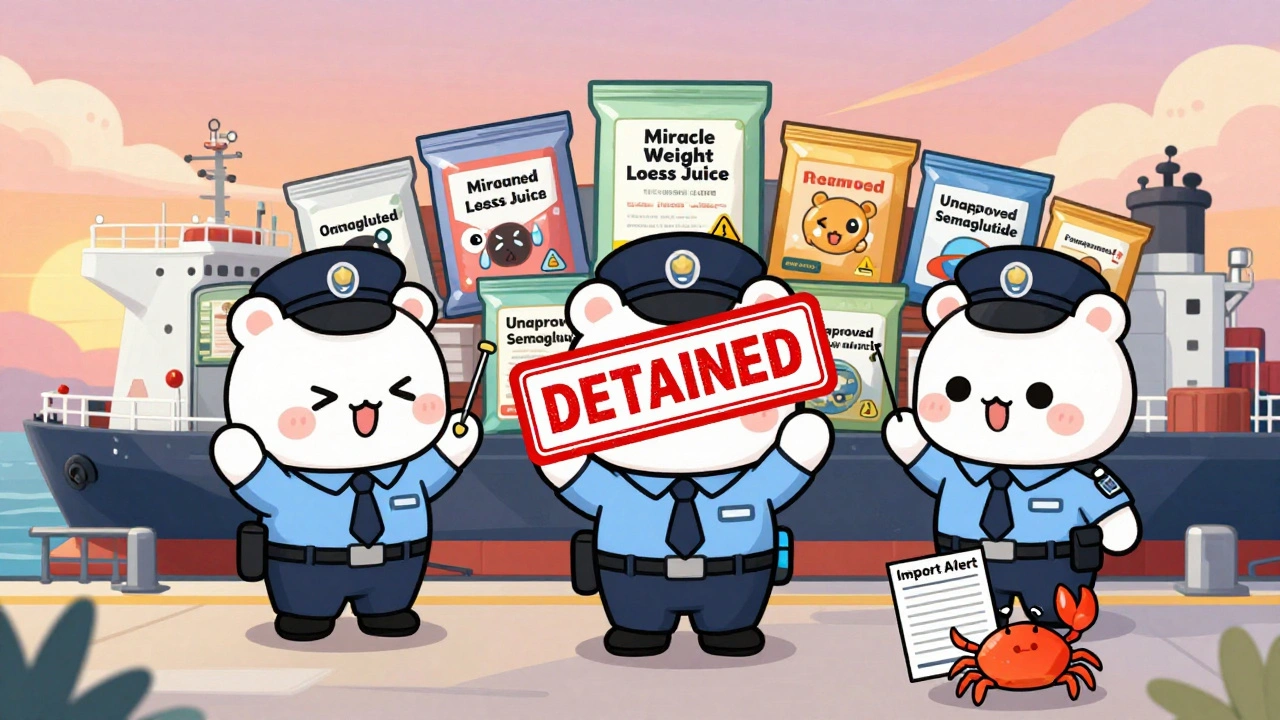
Not all violations happen inside the U.S. The FDA doesn’t wait for products to hit store shelves. At ports of entry, inspectors screen imports. If a shipment of supplements, food, or medical devices fails inspection, it’s put on an Import Alert.
That means the product gets detained without physical examination-no waiting, no second chance. The importer has 30 days to prove it’s safe. If they can’t, the entire shipment is refused entry. In 2024, over 12,000 shipments were blocked this way. Many were from overseas manufacturers who thought they could slip through the cracks.
And it’s getting harder. The FDA is increasing unannounced inspections of foreign facilities by 300% in 2025-2026. That means factories in China, India, and elsewhere can’t plan ahead for inspections. They have to be compliant every day.
What Happens If You Ignore the Letter?
Ignoring a Warning Letter is a gamble-and the FDA always wins.
If a company doesn’t respond, or if the response is weak, the FDA can move to civil penalties. These range from $10,000 to $1 million per violation. For a company selling thousands of units of a mislabeled product, that adds up fast.
Worse, the FDA can issue a recall-either voluntary or mandatory. Mandatory recalls are rare, but they happen. In 2024, the FDA forced a recall of contaminated infant formula after repeated violations. That’s not just bad PR. It’s a financial disaster.
And then there’s criminal action. If a company delays, denies, or limits an FDA inspection-like hiding documents or refusing access-it’s a federal crime. Under Section 303(f) of the FDCA, executives can face jail time. In 2025, two executives from a foreign pharmaceutical lab were charged after their team redacted key records during an inspection. The FDA doesn’t just fine you. It can lock you up.
Who’s Getting Targeted Right Now?
The FDA isn’t going after everyone. It’s focused on high-risk areas.
Tobacco: Since 2021, the agency has issued over 700 warning letters targeting unauthorized vaping products, especially those with candy flavors that appeal to teens. Even if the product is legal in another state, selling it without FDA approval is a violation.
Pharmaceuticals: In the first half of 2025 alone, 58 warning letters went out to compounding pharmacies and telehealth firms selling unapproved versions of drugs like semaglutide and tirzepatide. These aren’t generics-they’re untested, unregulated copies sold online with false claims.
Food: In 2024, the FDA issued 149 warning letters to human food facilities for failing to follow modern food safety rules under the Food Safety Modernization Act (FSMA). It’s no longer enough to keep things clean. You need a risk-based plan that prevents contamination before it happens.
Biologics: Vaccines, blood products, and gene therapies fall under CBER’s watch. Their enforcement tools are even stricter. A single violation can trigger a Notice of Initiation of Disqualification Proceedings and Opportunity to Explain (NIDPOE)-a formal step toward revoking a license.
How Companies Should Respond
If you get a Warning Letter, don’t panic-but don’t delay either. Treat it like a medical emergency.
Step one: Assemble your team. You need quality control, regulatory affairs, legal counsel, and senior leadership all in the same room. This isn’t something for a junior compliance officer to handle alone.
Step two: Analyze every violation. Don’t just fix what’s obvious. Dig deeper. If one machine is dirty, are others? If one label is wrong, are the rest accurate?
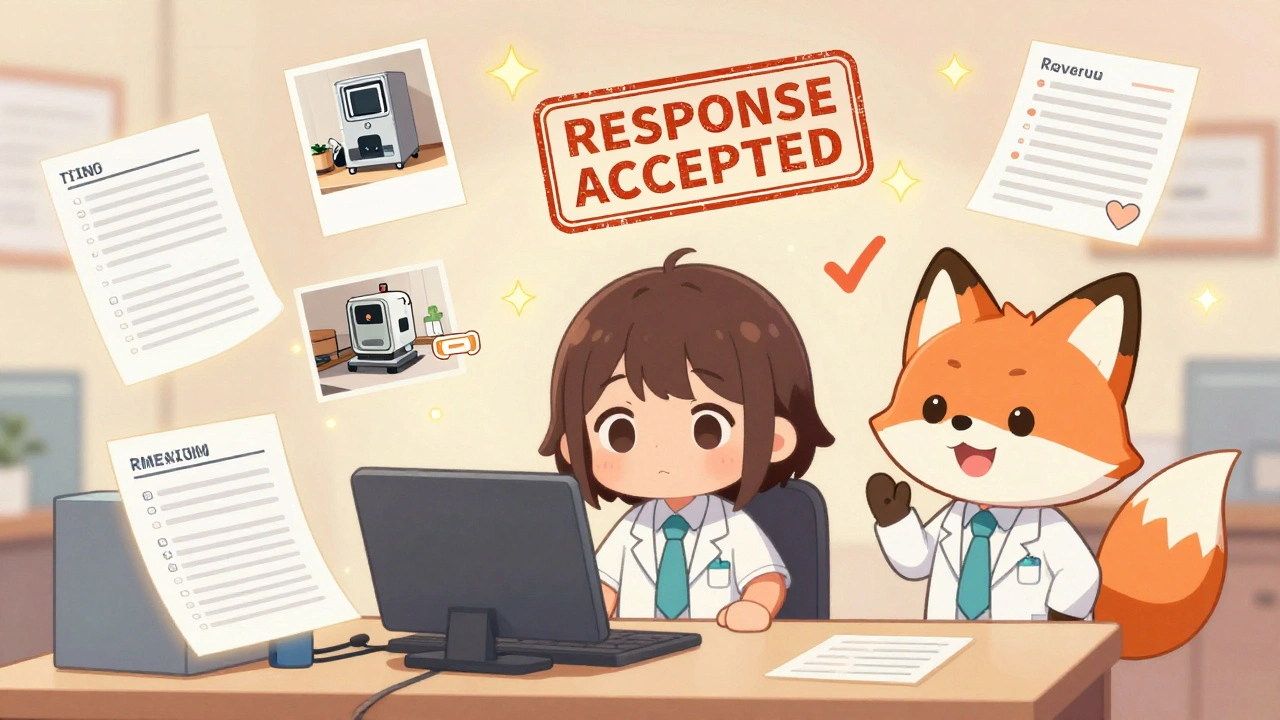
Step three: Write a detailed response. Don’t say, "We’ve fixed it." Say, "We replaced the filter system on Line 3 on [date], retrained 12 staff, updated our SOP-045, and conducted three internal audits. Attached are photos, training logs, and audit reports." The FDA wants proof-not promises.
Step four: Follow up. The FDA will come back. They’ll check your records. They might send inspectors again. Be ready.
What’s Next for FDA Enforcement?
The FDA’s 2026 budget includes $50 million to boost inspections and enforcement. That means more unannounced visits, more import alerts, and more warning letters.
Expect tighter controls on digital marketing. More letters targeting social media ads. More criminal referrals for record tampering. And more centralized decisions-where the Office of the Commissioner signs off on every major enforcement action.
One thing is clear: The era of "just pay the fine and keep going" is over. The FDA now operates with the mindset that compliance isn’t optional. It’s the price of doing business in the U.S. market.
If you make, import, or sell FDA-regulated products, you’re not just running a business. You’re part of a system that protects public health. And the FDA is watching.
What happens if I don’t respond to an FDA Warning Letter?
If you don’t respond within the deadline, the FDA can escalate immediately. This includes issuing an Import Alert to block your products at the border, imposing civil penalties of up to $1 million per violation, initiating a mandatory recall, or even pursuing criminal charges. The FDA does not wait indefinitely. Silence is treated as non-cooperation.
Can the FDA shut down my business?
The FDA doesn’t directly shut down businesses, but it has tools that effectively do the same. It can withdraw approval of your product, block all imports, force a recall, or impose fines so large they make operations unsustainable. In extreme cases, it can refer criminal violations to the Department of Justice, leading to facility closures and personal liability for executives.
Are Warning Letters public?
Yes. All FDA Warning Letters are posted publicly on the agency’s website. This means competitors, investors, and customers can see them. A single letter can damage your reputation, trigger stock drops, and cause retailers to drop your products. Public visibility is part of the enforcement strategy.
What’s the difference between a Warning Letter and an Untitled Letter?
Warning Letters are for serious violations of regulatory significance-like safety risks, false claims, or major quality failures. Untitled Letters are for minor issues, like vague advertising language or minor labeling errors. Untitled Letters don’t require a formal response, but they still appear on your compliance record. The FDA is shifting toward using Warning Letters more often, even for issues it previously handled with Untitled Letters.
Can I appeal an FDA Warning Letter?
You can’t appeal the letter itself, but you can respond with evidence that the violations were incorrect or already fixed. If the FDA disagrees, you can request a meeting with the agency to discuss your case. In rare cases, companies challenge FDA actions in court-but this is expensive, time-consuming, and rarely successful unless there’s clear procedural error.
How long does it take for the FDA to follow up after a response?
The FDA typically reviews responses within 30 to 60 days. If they’re satisfied, they may close the case. If not, they may schedule a follow-up inspection or issue a Notice of Violation. In high-risk sectors like pharmaceuticals and biologics, follow-up inspections can happen within weeks-even without a request.
Do Warning Letters apply to small businesses?
Yes. Size doesn’t matter. The FDA enforces the same rules on small manufacturers, startups, and online sellers as it does on big pharma. In fact, smaller companies are often targeted because they lack robust compliance systems. There are no exemptions based on revenue or employee count.






Julia Jakob
December 4, 2025so the fda is just playing god now? like, who gave them the right to decide what i can buy? i got my semaglutide from a guy on ig and it worked better than my doctor’s prescription. they’re just scared of competition.