
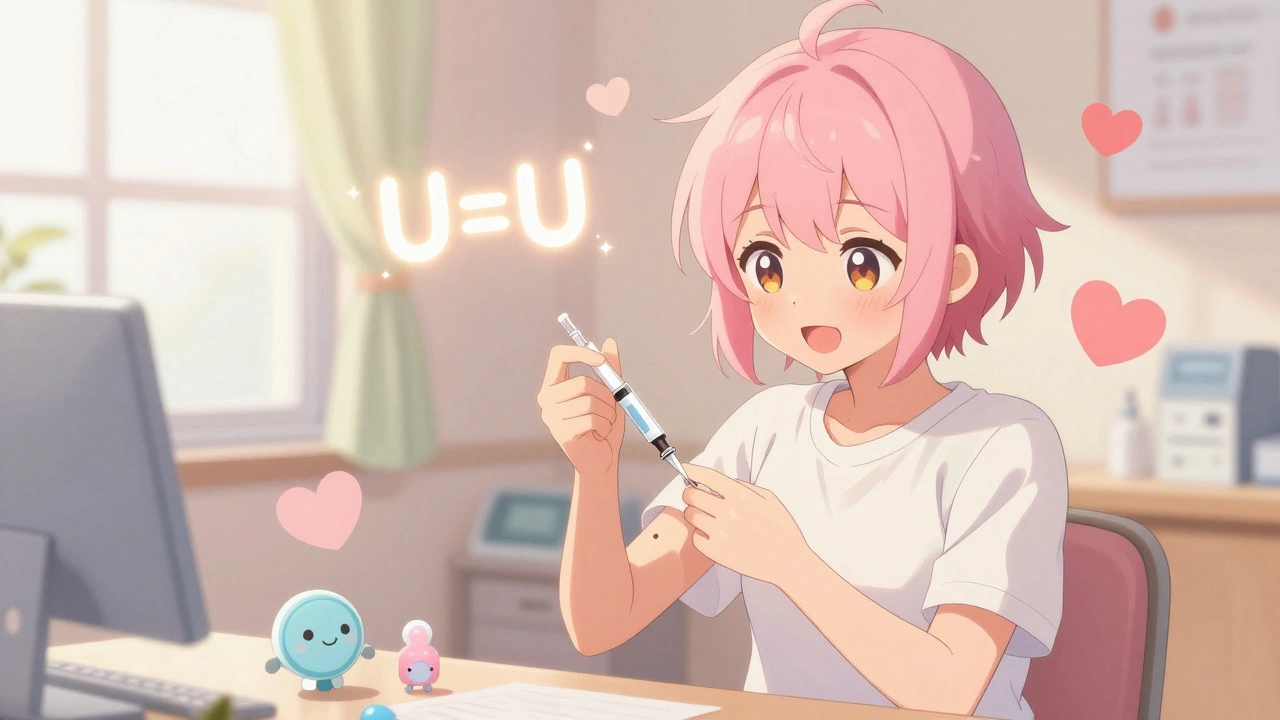
When HIV was first identified in the 1980s, a diagnosis often meant a death sentence. Today, that reality has changed - not because the virus disappeared, but because treatment has evolved beyond recognition. HIV treatment is no longer about surviving day to day. It’s about living fully, without fear of transmission, without daily pill burdens, and without the stigma that once defined the disease. In 2025, people living with HIV can expect the same life expectancy as anyone else - if they have access to the right care.
How HIV Treatment Works Today
Modern HIV treatment relies on antiretroviral therapy (ART), which uses a combination of drugs to stop the virus from multiplying. The goal isn’t just to lower the viral load - it’s to bring it to undetectable levels. When the virus is undetectable, it’s untransmittable (U=U). That’s not a theory. It’s been proven in multiple large studies involving tens of thousands of people. There are seven main classes of antiretroviral drugs, each targeting a different stage of the HIV lifecycle. The most common today are integrase strand transfer inhibitors (INSTIs), like bictegravir and dolutegravir. These are preferred because they work fast, have fewer side effects, and don’t need boosting agents like older drugs did. Then there’s lenacapavir - the first capsid inhibitor approved in 2022. Unlike other drugs that block enzymes, lenacapavir physically breaks apart the protective shell around HIV’s genetic material. It’s like smashing the virus’s armor before it even gets inside your cells.The Game-Changer: Twice-Yearly Injections
In January 2025, the FDA gave Breakthrough Therapy Designation to a new combination called LTZ: lenacapavir plus two broadly neutralizing antibodies, teropavimab and zinlirvimab. This isn’t just another drug. It’s the first HIV treatment that could work with just two injections per year. That’s it. No pills. No daily reminders. No missed doses. Clinical trials showed 98.7% of people on LTZ maintained undetectable viral loads after 48 weeks - better than daily pills. In head-to-head tests against Biktarvy, the most prescribed daily regimen, LTZ matched its effectiveness while making patients feel more in control. Eighty-nine percent reported high confidence in their adherence. Only 12% had mild injection-site reactions. Compare that to monthly shots like Apretude, which require 12 visits a year. LTZ cuts that to two. The World Health Organization endorsed this in July 2025, calling it “the next best thing to an HIV vaccine.” Why? Because it’s not just treatment - it’s prevention. The same drug, now approved as Yeztugo, can be used by people at high risk to prevent infection. For someone who can’t or won’t take a daily pill, a shot every six months is life-changing.What About Cost? The Big Barrier
Here’s the catch: these breakthroughs come with a price tag. Biktarvy costs about $69,000 a year in the U.S. Yeztugo is $45,000. That’s more than most people make in a year. But here’s the twist - the real cost to produce these drugs is around $25 per person annually, according to the European AIDS Treatment Group. The difference? Patent protections, corporate pricing, and market control. Generic versions could change everything. If manufacturers in India or South Africa start making affordable versions, the global HIV response could finally catch up with the science. UNAIDS warns that without action, these treatments will widen the gap between rich and poor countries. Right now, 38% of U.S. patients have switched to long-acting options. In sub-Saharan Africa, where 70% of all HIV cases live, it’s under 2%.
Quality of Life: More Than Just Viral Load
People don’t just want to survive. They want to live without shame, anxiety, or constant medical reminders. One Reddit user, u/HIVWarrior2020, wrote after a year on Sunlenca: “After 12 years of daily pills, the twice-yearly injection has eliminated my treatment-related anxiety completely.” That’s not just a quote. That’s the new standard. The Positive Peers app surveyed over 150,000 people with HIV in 2025. Those on long-acting therapies rated their satisfaction at 8/10 or higher - 92% of them. For those on daily pills, it was 76%. Why? Because the mental toll of remembering to take pills every day, worrying about running out, fearing disclosure - that’s heavy. Long-acting therapy lifts that weight. Injection-site pain? Sure, some people get it. About 28% report mild swelling or soreness for a few days. But 94% said it’s worth it. Ice packs and ibuprofen fix most cases. The trade-off? A lifetime of daily reminders versus two visits a year.Who Gets Access? The Real Challenge
The science is ready. The tools exist. But access? That’s the bottleneck. In the U.S., only 43% of clinics stock Sunlenca because it needs to be stored at -20°C. That’s freezer-level cold. Most rural clinics don’t have that. Yeztugo’s newer formulation is more stable, but rollout is slow. Community health workers are being trained to deliver injections in places like Kenya and South Africa, but they need better training materials and support. WHO’s 2025 guidelines push for this, but funding hasn’t kept pace. Doctors need training too. Gilead found that 87% of providers became confident after just three supervised injections. But without systems to schedule, track, and remind patients, adherence drops. Programs with automated reminders saw 96% on-time dosing. Without them? Just 83%.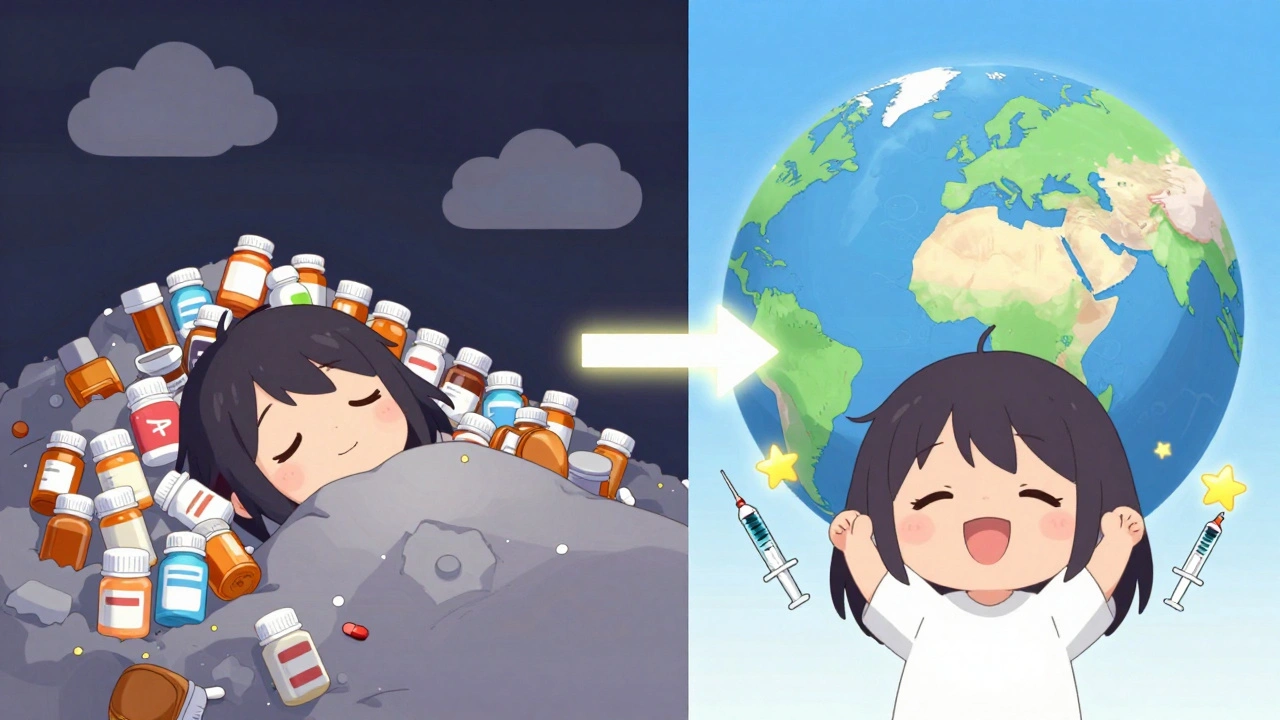
What’s Next? The Future of HIV Care
The next wave is coming fast. Gilead’s LTZ regimen could get full FDA approval by mid-2026. ViiV Healthcare is testing its own long-acting drugs, but none match the twice-yearly dosing. Merck’s doravirine-islatravir combo offers a once-daily two-pill option - good for people with heart risks - but still requires daily use. There’s even talk of a cure. In a small 2025 trial, three out of 25 people stayed virus-free after stopping all treatment. It’s early, but it’s happening. By 2030, experts predict 75% of people with HIV in wealthy countries will be on long-acting therapy. In poorer nations? Maybe 40% - if the world decides that equity matters more than profit.Practical Tips for People with HIV in 2025
If you’re on daily pills and considering a switch:- Ask your provider about lenacapavir-based options. You don’t need to wait for LTZ - Sunlenca alone is already available.
- Check if your clinic has the cold storage needed. If not, ask if they’re planning to get it.
- Don’t switch cold turkey. There’s a 4-week overlap period to ensure your virus stays suppressed.
- Use apps or calendars to track your injection dates. Set two reminders - one month out, and one week before.
- Bring a friend or family member to your injection appointments. Emotional support matters.
- Ask about Yeztugo as PrEP. If you struggle with daily pills, this could be your best option.
- Find a clinic that offers it. Many community health centers now do.
- Don’t assume it’s too expensive. Many insurance plans cover it, and patient assistance programs exist.
What You Need to Know About HIV Today
- HIV is no longer a death sentence. With treatment, life expectancy is normal. - Undetectable = Untransmittable. You can’t pass it on if your viral load is undetectable. - Long-acting therapy is real, effective, and available - but not everywhere. - Cost is the biggest barrier, not science. - Quality of life has improved more than ever before. - The end of the HIV epidemic is possible - but only if access becomes universal.Can you cure HIV with current treatments?
No, current treatments cannot cure HIV. They suppress the virus to undetectable levels, allowing people to live full, healthy lives without transmitting it. A few experimental cases have shown temporary remission after stopping treatment, but these are rare and not yet reproducible. Research into a true cure is ongoing, but no proven method exists today.
Is long-acting HIV treatment safe?
Yes. Lenacapavir and other long-acting options have been tested in thousands of people across multiple clinical trials. Side effects are generally mild - mostly injection-site reactions like soreness or swelling, which usually fade within a few days. Serious side effects are rare. The safety profile is better than many daily pills, especially for people with kidney or bone issues.
Can I switch from daily pills to injections?
Yes, most people can switch. Your provider will typically overlap your current pills with the first injection for about four weeks to ensure the virus stays suppressed. After that, you’ll move to injections every six months. It’s not automatic - you need to discuss it with your doctor and check if your clinic offers the treatment.
Does long-acting HIV treatment prevent transmission?
Yes - if you’re living with HIV and on a suppressive regimen, you cannot transmit the virus, regardless of whether you take pills or get injections. For people without HIV, Yeztugo (the prevention version of lenacapavir) is over 99% effective at preventing infection when used as directed.
Why isn’t this treatment available everywhere?
Three main reasons: cost, storage, and infrastructure. The drugs are expensive, require cold storage, and need trained staff to administer. Many clinics in low-income countries don’t have freezers, refrigerated transport, or enough healthcare workers. Global health organizations are pushing for change, but funding and political will are still lagging behind the science.
Are there side effects from the injections?
Some people experience mild pain, redness, or swelling at the injection site. These usually last 1-3 days and can be managed with ice or over-the-counter pain relievers. In clinical trials, only about 12% of people had these reactions, and most said it was worth it compared to daily pills. Severe reactions are extremely rare.
If you’re living with HIV, your future is brighter than ever. The tools to live well, safely, and without stigma are here. The question now isn’t whether treatment works - it’s whether the world will make sure everyone can get it.





Annie Gardiner
December 8, 2025Okay but what if the real cure is just... not caring anymore? Like, we’ve turned HIV into this medical spectacle when maybe the real breakthrough is learning to live with uncertainty without turning it into a hero’s journey. I’m not saying the science isn’t cool-I’m saying we’ve made people feel guilty for not being ‘grateful’ enough to take their shots. What if the real oppression isn’t the virus? It’s the pressure to be inspirational.