
Trying to refill your prescription while traveling abroad isn’t as simple as walking into a local pharmacy. Even if you have the same medication in your pocket, the rules change the moment you cross a border. One country may accept your U.S. prescription outright. Another might demand a new doctor’s note. A third might ban the drug entirely. This isn’t about convenience-it’s about legality, safety, and survival.
Why Prescription Transfers Between Countries Are So Complicated
There’s no global system for transferring prescriptions. Every country runs its own pharmacy laws, drug classifications, and enforcement practices. The European Union has a mutual recognition system that lets you fill a prescription from Germany in Italy or Spain with minimal hassle. But if you’re flying from the U.S. to Japan, you’re entering a completely different legal landscape. The U.S. Food and Drug Administration (FDA) technically bans importing prescription drugs for personal use under 21 U.S. Code § 384. But here’s the catch: they don’t always enforce it. If you’re bringing in a 90-day supply of a medication you’ve been taking for years-like blood pressure pills or antidepressants-you’re unlikely to be stopped. But if you’re shipping 12 months’ worth of opioids or trying to refill a controlled substance like Adderall overseas, you’re playing with fire. Meanwhile, the Drug Enforcement Administration (DEA) updated its rules in August 2023 to allow one-time electronic transfers of controlled substances between U.S. pharmacies. But that rule does not apply internationally. Your U.S. pharmacy can’t email your prescription to a pharmacy in Canada, Australia, or Thailand. That’s not a glitch-it’s by design.What Works: The EU’s Cross-Border System
If you’re traveling within the European Union, you’re in the best position. Under EU rules, a prescription issued in any member country is valid in all others. But it’s not magic. The prescription must include:- The generic (common) name of the drug, not the brand name
- Strength and dosage instructions
- Quantity prescribed
- Prescriber’s signature and contact info
What Doesn’t Work: The U.S.-Canada Roadblock
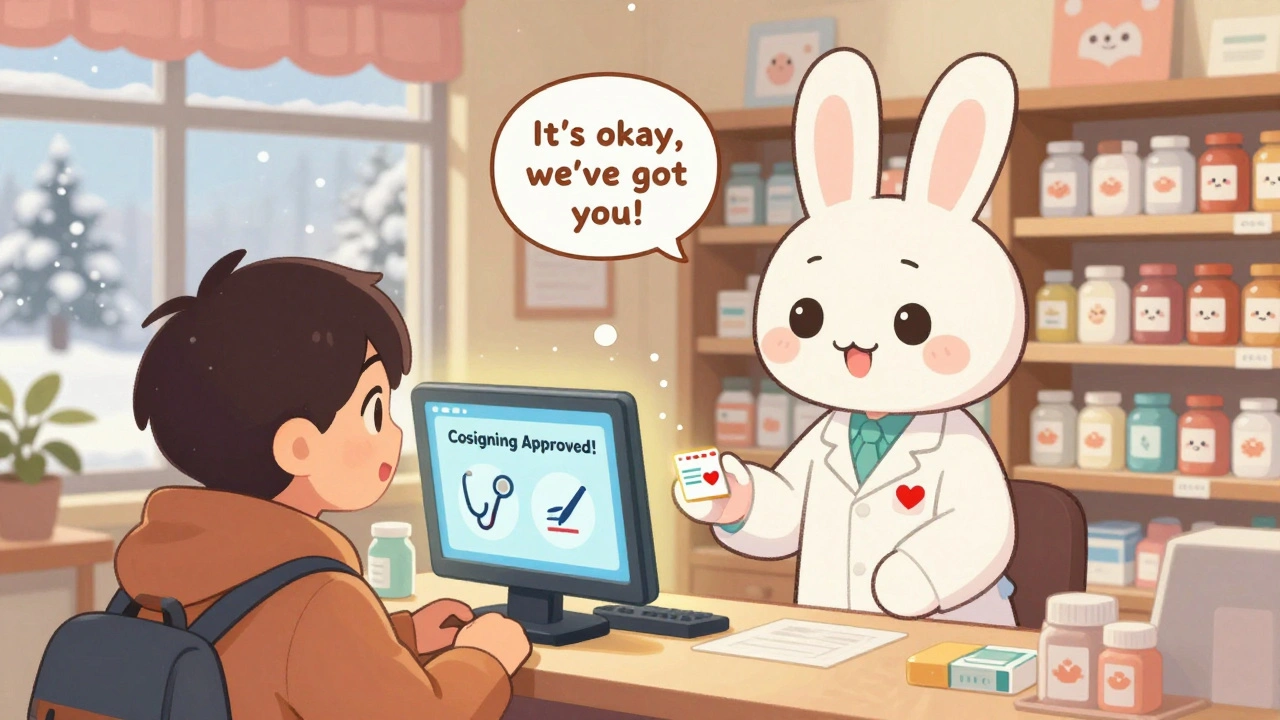
Canada has some of the most affordable prescription drugs in the world. Many Americans cross the border to refill their medications. But you can’t just walk into a Canadian pharmacy with a U.S. prescription and expect them to fill it. Canadian law requires every prescription to be authorized by a Canadian-licensed physician. That means U.S. prescriptions must go through a process called “cosigning.” Here’s how it works:- You contact a Canadian pharmacy that offers cosigning services (like PharmacyChecker-approved ones).
- You send them your original U.S. prescription, your medical history, and your doctor’s contact info.
- The pharmacy forwards everything to a Canadian doctor who reviews your file.
- If approved, the doctor issues a new Canadian prescription.
- The pharmacy fills it.
Tricky Destinations: China, the Middle East, and Beyond
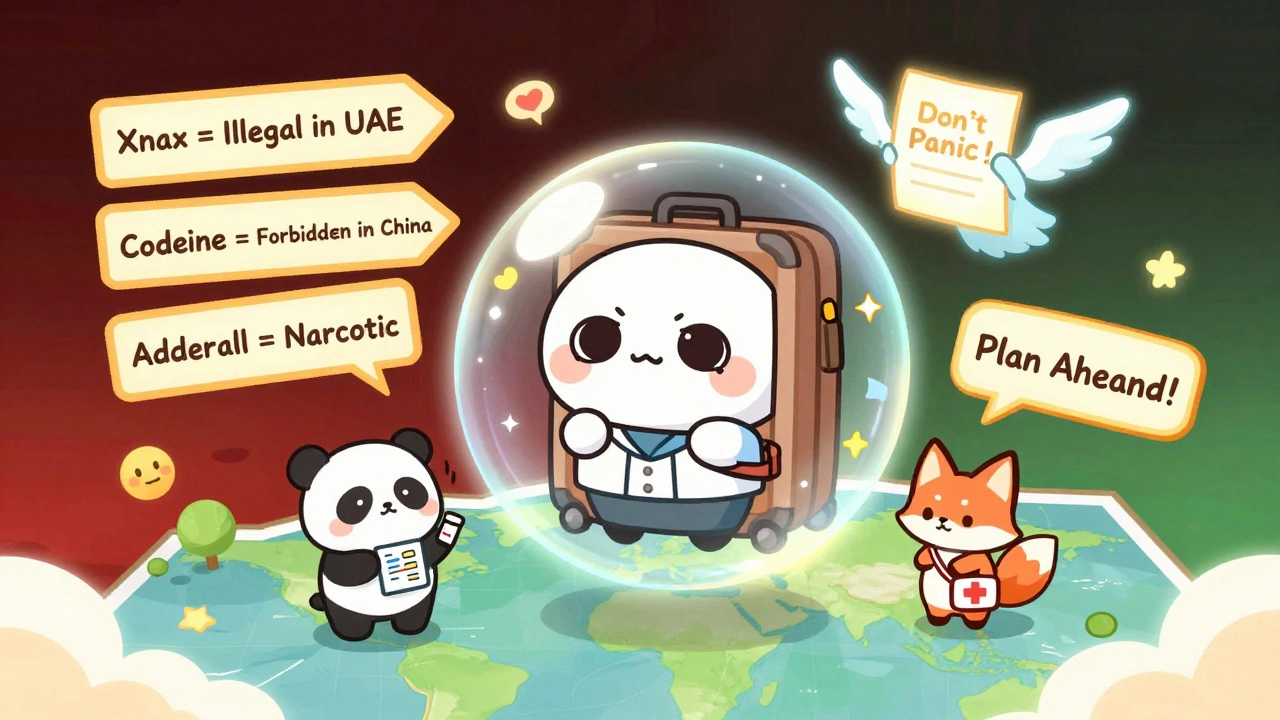
Traveling to China, Saudi Arabia, or the United Arab Emirates? Prepare for a higher hurdle. These countries have strict drug control laws. Many medications that are legal in the U.S. or EU are banned or classified as narcotics abroad. For example:- Alprazolam (Xanax) is illegal in the UAE without a special permit.
- Codeine is a controlled substance in China-even in cough syrup.
- Stimulants like Adderall or Ritalin are classified as narcotics in many Asian and Middle Eastern countries.
- A letter from your doctor on official letterhead, signed and dated, stating your diagnosis and that the medication is necessary for your health
- The original prescription with the doctor’s signature
- Medication in its original packaging with your name on the label
- A copy of your passport and visa
What to Do Before You Leave
Don’t wait until you’re at the airport. Start preparing at least two weeks before your trip. Here’s your checklist:- Know your drug’s status in your destination country. Search the country’s health ministry website or contact their embassy. For example, the U.S. State Department has a Travelers’ Health page listing restricted medications by country.
- Get a doctor’s letter explaining your condition, the medication name (generic preferred), dosage, and that it’s for personal use during travel. Include your doctor’s license number and contact info.
- Carry original prescriptions in your carry-on, not checked luggage. Keep them with your medication in the original bottles.
- Don’t exceed a 90-day supply for personal use. Even if enforcement is rare, carrying more than that raises red flags.
- Use a pharmacy that specializes in international transfers if you’re heading to Canada. Services like PharmacyChecker can connect you with licensed Canadian pharmacies that handle cosigning.
What Not to Do
These are common mistakes that can get you fined, detained, or worse:- Don’t buy medication abroad without a local prescription. Even if it’s the same drug, it’s illegal in most countries.
- Don’t mail your prescription to a foreign pharmacy. The U.S. Postal Service and FedEx will seize it.
- Don’t assume your insurance covers international refills. Most U.S. plans don’t.
- Don’t rely on online pharmacies outside your country. Many are scams or sell counterfeit drugs.
- Don’t lie to customs. If asked, be honest about your medications. Lying can lead to serious penalties.
What Happens If You Run Out?
If you lose your medication or it runs out while abroad, don’t panic-but don’t improvise either. - In the EU: Go to a local pharmacy with your prescription and doctor’s letter. They can usually help. - In Canada: Visit a walk-in clinic or urgent care center. Bring your U.S. prescription and doctor’s contact info. Many clinics will issue a new prescription after a quick review. - In Asia or the Middle East: Contact your country’s embassy. They often have lists of local doctors who understand foreign prescriptions. You may need to pay out of pocket. - In the U.S.: If you’re returning home, call your pharmacy ahead of time. They can often refill your prescription if you’re coming back within the refill window.Bottom Line: Plan Ahead, Carry Proof
International prescription transfers aren’t broken-they’re designed to be this way. Countries protect their drug supply chains for safety, not inconvenience. But that doesn’t mean you’re powerless. The key is preparation. Know your medication’s status. Get the right documents. Don’t assume rules are the same everywhere. And always carry your doctor’s letter and original prescription. It’s not just about avoiding trouble-it’s about staying healthy when you’re far from home.Can I transfer my U.S. prescription to a pharmacy in another country?
No, U.S. pharmacies cannot directly transfer prescriptions to foreign pharmacies. The DEA’s 2023 rule only allows transfers between U.S.-registered pharmacies. For international refills, you must either bring enough medication for your trip, get a new prescription from a local doctor, or use a cosigning service (like in Canada).
Is it legal to bring prescription drugs from another country into the U.S.?
Technically, no-under U.S. federal law, importing prescription drugs for personal use is prohibited. But the FDA exercises enforcement discretion and rarely stops travelers bringing in a 90-day supply of medication they’ve been prescribed, especially if it’s for a chronic condition and in original packaging. You’re still breaking the law, but you’re unlikely to face penalties if you’re not shipping large quantities or controlled substances.
What if my medication is banned in the country I’m visiting?
If your medication is illegal in your destination country, you cannot legally bring it in-even with a prescription. You’ll need to work with a local doctor to find an approved alternative. Some medications have equivalents (e.g., gabapentin instead of pregabalin), but others don’t. Always check the country’s drug regulations before you travel.
Can I use my EU prescription in the U.S.?
No. U.S. pharmacies cannot fill prescriptions issued outside the U.S., even from EU countries. You’ll need to see a U.S. doctor to get a new prescription. Some doctors will accept your EU prescription as a reference, but they’ll still need to issue a new one under U.S. law.
Do I need to declare my medications at customs?
Yes. Always declare all medications when entering a country, even if they’re legal. Customs officials can ask to see your prescriptions and doctor’s letter. Being honest reduces the risk of confiscation or legal trouble. Don’t hide pills in your luggage-carry them in your carry-on with documentation.
How far in advance should I plan for a prescription transfer?
At least two weeks. If you need a cosigning service (like for Canada), it can take 3-7 business days. For countries with strict rules (China, UAE), you may need to apply for special permits or find a local doctor in advance. Rushing this process can leave you without medication.







kevin moranga
December 12, 2025Just returned from a 3-week trip to Germany and Spain-brought my blood pressure med (lisinopril) in original bottles with a doctor’s note, and not a single person blinked at customs. EU system is honestly a lifesaver. I didn’t even need to see a local doctor. Just showed the prescription, they scanned it, and handed me the same generic in a different box. So simple. If you’re traveling in Europe, don’t stress-just be organized. And yes, use the generic name. I learned that the hard way when a pharmacist in Milan squinted at my ‘Zestril’ and said, ‘We don’t know that brand.’ 😅