
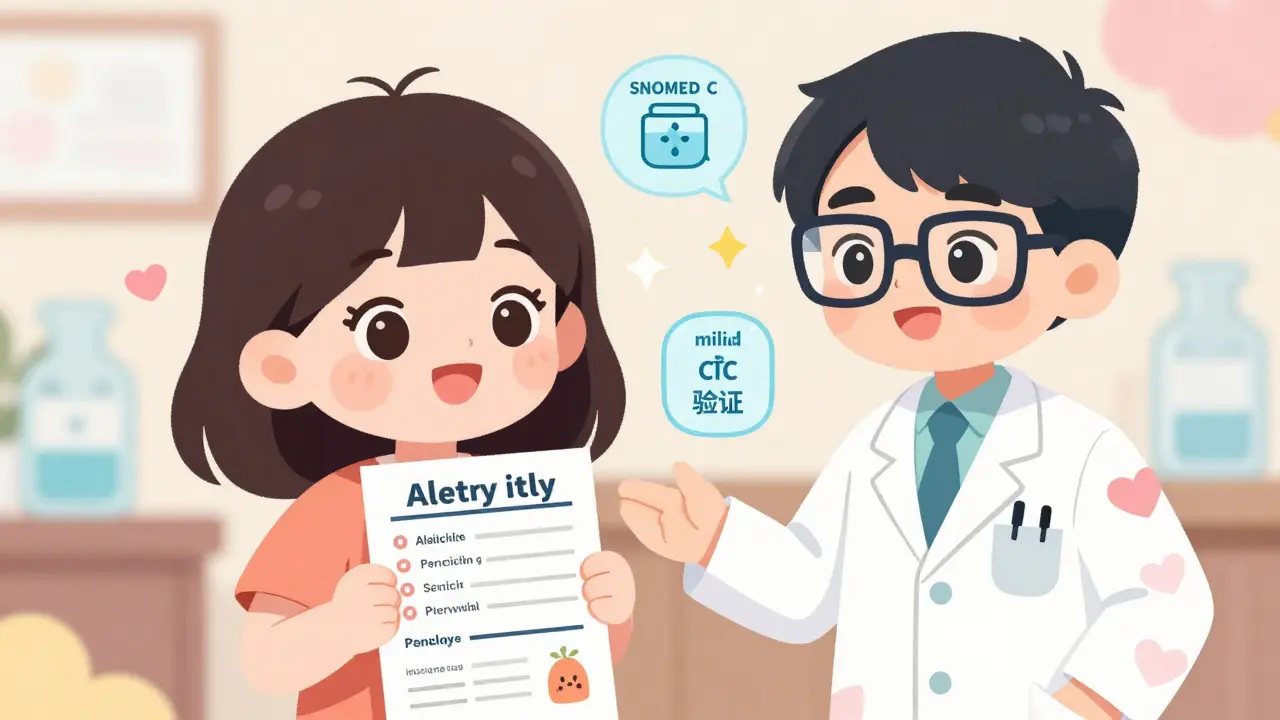
Getting your allergy list right isn’t just a formality-it’s a life-or-death task. Every year, 5% of hospitalized patients suffer avoidable harm because someone thought they were allergic to penicillin… when they weren’t. And in 10% of those severe cases, it’s fatal. The problem isn’t that doctors are careless. It’s that your allergy list is scattered, outdated, or written in notes no one else can read. If you’ve ever had a doctor ask, “Do you still have that allergy?” after you’ve already told them three times, you know how broken this system is.
Why Your Allergy List Doesn’t Match Between Doctors
Your allergy list isn’t one thing. It’s a patchwork. Your GP has one version. Your allergist has another. The ER has a third, scribbled in a rush during a panic. Even if you told everyone the same thing-“I break out in hives from penicillin”-that’s not enough. EHRs don’t understand phrases. They need structured data: what the reaction was, when it happened, how bad it was, and whether it’s been verified. The system changed on January 1, 2025. All certified U.S. electronic health record systems now have to follow USCDI v3 standards. That means every allergy must be tagged with a SNOMED CT code (like “Penicillin G allergy”), a severity level (“mild,” “moderate,” “severe”), and a verification status (“patient-reported,” “unverified,” or “verified”). But here’s the catch: not every provider uses the same system. And even if they do, many still don’t turn on the tools that check for conflicts. At Mass General Brigham, they found that 6.8% of patients had allergies listed that had been ruled out by testing. At Parkland Health, 12.9% of allergies needed relabeling because they were wrong. That’s not rare. That’s normal.What You Can Do Right Now
You don’t have to wait for your doctor’s office to fix the system. You can fix it yourself-today.- Get your current list in writing. Log into your patient portal (MyChart, Epic, Cerner, etc.) and download your allergy list. If you don’t have access, call your primary care clinic and ask for a printed copy. Don’t rely on memory.
- Compare it to your real history. Did you have a rash after amoxicillin in 2019? Or did you just feel nauseous after a migraine pill? Don’t lump everything together. Write down each reaction: what you took, what happened, how long it lasted, and if you’ve had it since.
- Ask for verification. If you think you might be mislabeled-especially with penicillin-ask your doctor about an allergy challenge. Over 90% of people who think they’re allergic to penicillin aren’t. Testing takes 2-3 hours. It’s safe. And it clears up years of unnecessary restrictions.
- Update every provider. Don’t assume your new specialist has your list. Bring your printed copy. Say: “I want to make sure my allergy list here matches what’s in my main record.” Hand them the paper. Watch them enter it.
How Providers Are (Trying) to Fix This
The biggest health systems are using AI to catch errors before they hurt you. Tools like the one at Mass General Brigham scan your entire medical record-clinical notes, lab results, medication logs-and flag mismatches. One system caught 37 cases last month where patients had negative penicillin tests but still had active allergy alerts. That’s 37 times a doctor almost prescribed the wrong drug. These tools work because they don’t just show you allergies from other hospitals. They analyze your history. If you had a CT scan with contrast in 2021 and didn’t react, but your chart says “contrast allergy,” the system asks: “Is this still true?” But here’s the problem: only 40% of hospitals have these tools. Most still use basic systems like Epic’s Care Everywhere, which just copies your allergy list from another hospital-without checking if it’s right. That means if your old doctor wrote “allergic to sulfa,” and you never were, your new doctor sees that and assumes it’s true.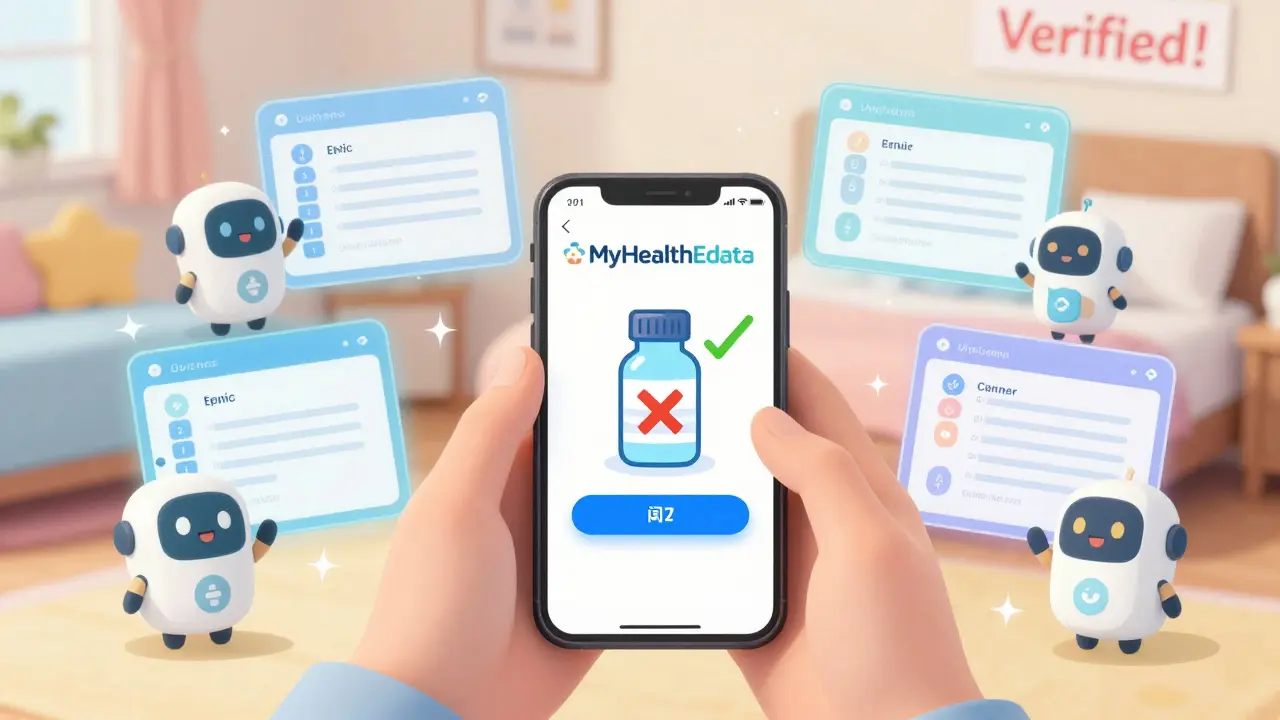
The Hidden Gap: Food and Environmental Allergies
Most systems are built for drugs. That’s where the laws focus. But what about your peanut allergy? Your latex reaction? Your severe pollen-triggered asthma? Only 32.6% of EHRs capture those accurately. If you have non-drug allergies, you’re on your own. No SNOMED code. No automated alert. No one’s checking. So you need to be even more careful. Write them down. Bring them to every appointment. Say: “This isn’t just a note-I need it in your system.”What’s Changing in 2026
Starting in 2026, hospitals will lose money if their allergy documentation is inaccurate. CMS is tying 2.3% of their Medicare payments to how well they track allergies. That’s pushing systems to upgrade. And by 2027, you’ll be able to update your allergy list directly through your phone using the MyHealthEData initiative. You’ll log in, change “penicillin allergy” to “negative challenge,” and it’ll sync across all connected providers. But that’s not here yet. Right now, you’re still the most important part of the system.What to Say at Your Next Appointment
Don’t let your doctor rush you. Use these exact phrases:- “I’d like to review my allergy list with you. Can we go over it together?”
- “I had a reaction to amoxicillin in 2020. I broke out in hives, but I’ve never had trouble since. Is this still active?”
- “I think I might be mislabeled. Can we test me for penicillin?”
- “I have a food allergy to peanuts. Can you make sure that’s in your system too?”
Common Mistakes (And How to Avoid Them)
- Mistake: You say “I’m allergic to antibiotics.” Fix: Name the exact drug. “I had a rash with amoxicillin.”
- Mistake: You assume your pharmacy has your list. Fix: Pharmacies don’t share with hospitals. Your list is only as good as your EHR.
- Mistake: You don’t update after a negative test. Fix: Even if your doctor says “we’ll update it,” get it in writing. Follow up in two weeks.
- Mistake: You think your specialist will know your primary care list. Fix: Always bring your printed list. Specialists see 30 patients a day. They won’t check.
What If You’re Not Sure?
If you’re unsure whether you’re truly allergic to something, get tested. Penicillin skin tests are 97% accurate. They cost less than $200. Most insurance covers them. And if the test is negative, your life gets easier: you can take cheaper, safer antibiotics. You won’t be stuck with broad-spectrum drugs that increase your risk of C. diff infections. The CDC says only 17% of people with suspected penicillin allergies ever get tested. That’s insane. You’re not being careful-you’re being misinformed.Final Rule: Never Assume
Your allergy list isn’t a static document. It’s a living record. It changes. Reactions fade. Labels get copied wrong. Systems glitch. Every time you walk into a clinic, hospital, or urgent care, treat your allergy list like your ID. Show it. Confirm it. Correct it. Don’t let someone else’s outdated note decide your treatment. You’re not just a patient. You’re the only one who knows your body. Use that power.How often should I update my allergy list?
You should review and update your allergy list at every visit to a new provider or after any new reaction. Even if nothing changed, confirm it’s still accurate. Allergies can resolve over time-especially to penicillin-and outdated labels can lead to worse treatments. Don’t wait for your provider to ask you.
Can I update my allergy list through my patient portal?
Some portals let you submit updates, but they don’t automatically change your official record. You’ll still need a provider to review and verify it. Use the portal to send a message like: “I believe my penicillin allergy has been ruled out. Can you confirm this in my chart?” Then follow up in person or by phone if you don’t get a response in 5 business days.
What if my doctor refuses to remove an allergy label?
If you’ve had a verified negative test and your doctor won’t update your record, ask to speak with the clinic’s patient safety officer or medical director. They’re required to review documentation errors. You can also request a copy of your medical record under HIPAA and submit a formal correction request. Many providers are afraid of liability, but the law supports you: inaccurate records are a safety risk, not a legal shield.
Do I need to tell every provider, even if I’ve been there before?
Yes. Even if you’ve been to the same hospital for years, your allergy list might have been entered wrong, copied from another system, or flagged as “unverified.” Always confirm at each visit. Systems don’t auto-update. People do.
Is it safe to get tested for a drug allergy?
Yes. Drug allergy testing-especially for penicillin-is very safe when done under supervision. It usually involves a skin prick test followed by a small oral dose if the skin test is negative. Reactions are rare and handled immediately by trained staff. The risk of mislabeling is far greater than the risk of testing. Over 90% of people who think they’re allergic to penicillin aren’t. Testing saves lives and money.
Why do I keep getting asked the same allergy questions?
Because most systems don’t talk to each other well. Even if your hospital uses Epic, your specialist might use a different EHR. Or your old records were entered as text instead of structured data. Your answers aren’t being shared correctly. That’s why you have to carry your list and confirm it yourself. It’s broken-but you can fix it.
Can I get my allergy list from a different provider if I don’t have access to my portal?
Yes. Under HIPAA, you have the right to request a copy of your medical records, including your allergy list, from any provider. Call their records department and ask for a “copy of your problem list and allergy list.” They must provide it within 30 days, often for free. If they charge you, ask for a waiver-you’re entitled to it for personal use.




Peyton Feuer
January 4, 2026man i just realized i still have 'penicillin allergy' on my chart from when i got a rash at 12 and it was probably just the stupid soap i was using. never thought to get it checked. gonna call my doc tomorrow.