
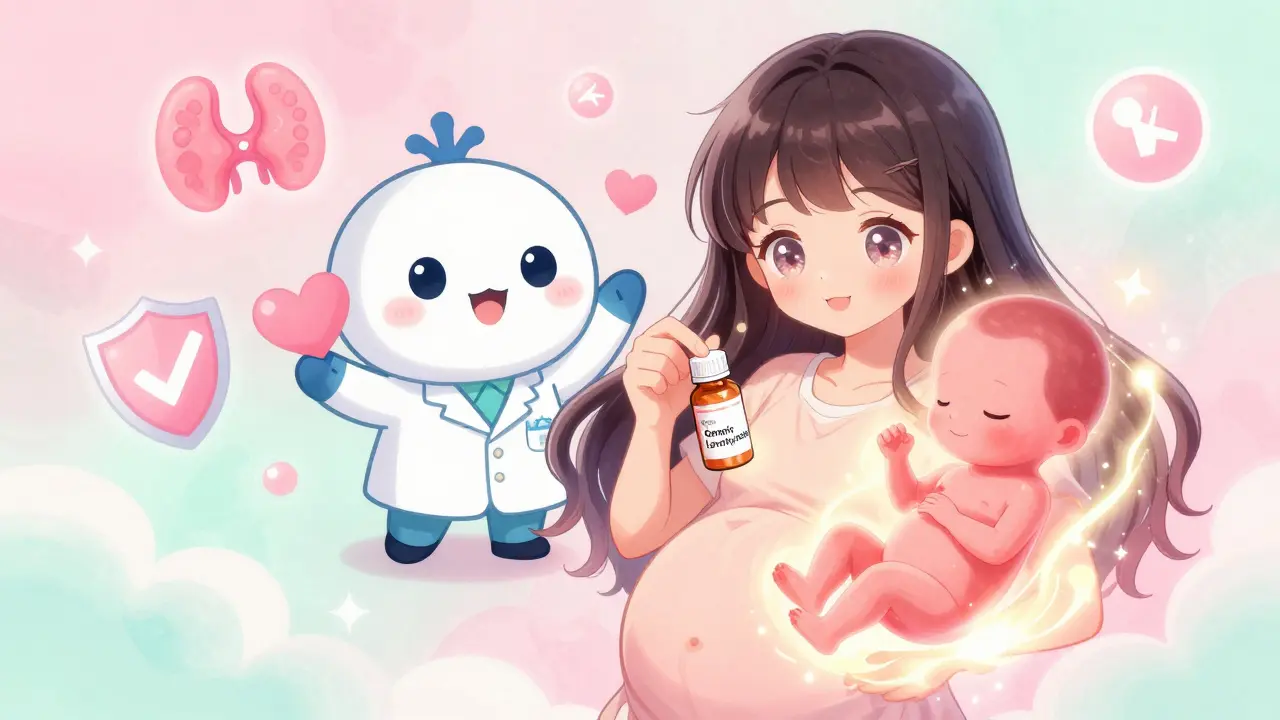
When you're pregnant, every pill you take matters-not just for you, but for your baby. That’s why so many expectant mothers ask: Are generic medications safe during pregnancy? The short answer is yes-when approved by the FDA, generics are just as safe and effective as their brand-name counterparts. But the real story is more detailed, and it’s one you need to understand before making any decisions. Generic drugs aren’t cheap imitations. They’re exact copies of brand-name drugs in terms of active ingredients, dosage, strength, and how they work in your body. The FDA requires them to meet the same strict standards for quality, safety, and performance. If your doctor prescribes a medication for morning sickness, high blood pressure, or thyroid issues, the generic version has gone through the same testing-and has the same pregnancy safety profile. Still, doubts linger. You might have heard stories from friends who felt worse after switching to a generic prenatal vitamin. Or maybe your pharmacist mentioned that some generics use different fillers. These aren’t myths, but they’re often misunderstood. Let’s break down what you really need to know.
How the FDA Ensures Generic Drugs Are Safe in Pregnancy
The FDA doesn’t treat generics as second-class drugs. Before approving any generic, they require proof of bioequivalence. That means the drug must deliver the same amount of active ingredient into your bloodstream at the same rate as the brand-name version. For most drugs, this range is 80% to 125% of the original. But for medications where even small changes can matter-like levothyroxine for thyroid function-the FDA tightened the rules in 2012. Now, generics must stay within 90% to 112% of the brand’s absorption rate. Why does this matter in pregnancy? Untreated hypothyroidism increases miscarriage risk by 61% and preterm birth by 39%. If a generic thyroid pill doesn’t absorb properly, it could harm both you and your baby. That’s why the FDA made the standard stricter. And it works: studies show no difference in pregnancy outcomes between brand and generic levothyroxine. The same rules apply to other common pregnancy meds. Acetaminophen, prenatal vitamins, and antihistamines like doxylamine have generic versions that are identical in active ingredients. The FDA requires that all generics carry the same pregnancy warnings as the brand name. If a drug is labeled as Category B (no evidence of harm in human studies), that applies whether it’s called Tylenol or a generic version.What’s Different About Generics? (And Why It Matters)
Here’s the catch: generics can differ in color, shape, taste, and inactive ingredients-things like dyes, fillers, or preservatives. These don’t affect how the medicine works, but they can affect how you feel. For example, some women report more nausea with a generic version of ondansetron, used for severe morning sickness. A 2020 study found that 32.7% of pharmacists had seen patients react differently to different generic brands of the same drug. It’s not because the active ingredient changed-it’s because the filler might irritate a sensitive stomach, or the coating dissolves faster in an altered digestive system during pregnancy. The same thing can happen with prenatal vitamins. One woman on Reddit said her generic brand gave her constipation, while the brand-name version didn’t. Another said the opposite. These aren’t side effects of the vitamins themselves-they’re reactions to the extra ingredients. If you notice a change after switching, talk to your provider. Sometimes, switching to a different generic brand (not back to the name brand) fixes it.High-Risk Medications: When Generics Are Just as Strict
Some medications carry serious risks during pregnancy. Isotretinoin (used for severe acne) can cause severe birth defects. Whether it’s sold as Accutane or a generic version, it’s still isotretinoin. And it’s still controlled by the same safety program: iPLEDGE. This program requires monthly pregnancy tests, two forms of birth control, and mandatory counseling before each refill. The FDA tracks every prescription-brand or generic. Data from 2018 to 2022 showed no difference in pregnancy rates between the two: 0.21% for brand, 0.23% for generics. That’s not a coincidence. It’s proof that the safety rules apply equally. The same goes for other high-risk drugs like methotrexate or certain epilepsy medications. The FDA’s Risk Evaluation and Mitigation Strategies (REMS) program ensures that generics follow the same strict protocols as the original. No exceptions.
What the Experts Say
Dr. Siobhan Dolan, a leading obstetrician and author of Healthy Mom Healthy Baby, puts it simply: "The molecular structure is identical. If the brand-name drug is safe in pregnancy, so is the generic." The American College of Obstetricians and Gynecologists (ACOG) agrees. In their 2020 guidelines, they state clearly: "Healthcare providers should not hesitate to prescribe generic medications during pregnancy when indicated." But even experts acknowledge the complexity. Dr. Kristin Palmsten points out that pregnancy changes how your body absorbs drugs. Your stomach empties slower, your blood volume increases, and your kidneys work harder. These changes could, in theory, make small differences in how a generic formulation behaves. But so far, no large-scale studies have shown this leads to worse outcomes. The evidence is clear: for the vast majority of medications, generics are just as safe. The real issue isn’t science-it’s perception.What Women Are Really Experiencing
A 2022 survey from MotherToBaby found that 42% of pregnant women were initially worried about using generics. But after talking to their doctors, 89% continued using them. That’s a big shift. On Reddit’s r/BabyBumps, a thread about prenatal vitamins got 287 responses. Sixty-three percent said they noticed no difference. Twenty-nine percent said the generic made them more nauseous. Eight percent actually preferred the generic. No single brand won. It was personal. One case in the Journal of Perinatal Education described a woman who had more migraines after switching from brand-name sumatriptan to generic. But the doctors couldn’t prove the generic caused it. Her hormone levels, sleep, and stress had also changed. Coincidence? Possibly. But it’s why you should never switch medications without talking to your provider.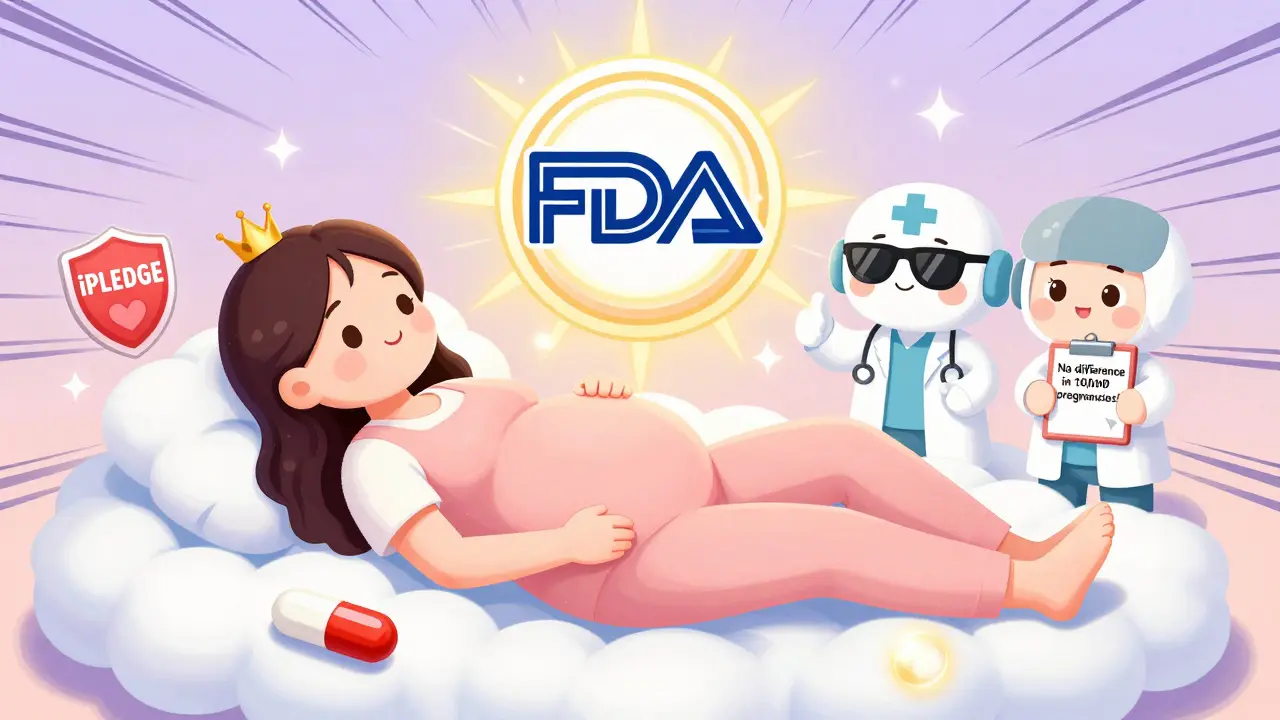
What You Should Do
Here’s your practical guide:- Don’t avoid generics because they’re cheaper. They’re not inferior. They’re regulated the same way.
- Don’t assume all generics are the same. If you switch brands and feel different, tell your doctor. Try another generic before going back to the name brand.
- Ask your pharmacist. They’re trained to explain differences in inactive ingredients. Most spend about 4 minutes per pregnancy consultation-longer than you think.
- Never switch without telling your provider. Even if it’s just a different brand of prenatal vitamin, your doctor should know.
- Avoid compounded medications. These aren’t FDA-approved generics. They’re mixed in small labs and aren’t tested for safety in pregnancy.
What’s Changing in 2026
The FDA’s Sentinel Initiative is now using electronic health records to track pregnancy outcomes linked to generic drugs in real time. By 2027, 95% of medications used during pregnancy will have generic versions. That’s up from 82% in 2020. New labeling rules are coming too. The FDA’s 2023 draft guidance wants all pregnancy safety info presented the same way-no more confusing letters like "Category B." Instead, you’ll see clear summaries: "No increased risk found in 10,000 pregnancies," or "Use only if benefits outweigh risks." These changes are designed to make it easier for you to understand what you’re taking-and why it’s safe.Final Takeaway
You don’t have to pay more to be safer. Generic medications are not a compromise. They’re a standard. The FDA, ACOG, and decades of research all agree: if a brand-name drug is safe in pregnancy, so is its generic version. Your body is changing. Your needs are changing. But the science hasn’t. Trust the data. Talk to your provider. And know that choosing a generic isn’t cutting corners-it’s making a smart, safe choice.Are generic medications as safe as brand-name drugs during pregnancy?
Yes. The FDA requires generic drugs to have the same active ingredient, strength, dosage form, and bioequivalence as the brand-name version. This means they work the same way in your body and carry the same pregnancy safety profile. If a brand-name drug is approved for use in pregnancy, its generic equivalent is too.
Can inactive ingredients in generics cause problems during pregnancy?
They can, but rarely. Inactive ingredients like dyes, fillers, or coatings don’t affect how the drug works, but they might cause mild side effects like nausea or stomach upset. If you notice a change after switching to a generic, talk to your doctor. Switching to a different generic brand often solves the issue without needing to go back to the name brand.
Why are some doctors hesitant to prescribe generics in pregnancy?
Most aren’t. ACOG and the FDA strongly support generics. But some providers still hear patient concerns or recall rare anecdotal cases-like increased nausea with a specific generic version. This leads to hesitation, even though evidence shows no difference in safety. Education is improving, and patient trust is growing as more data becomes available.
What about high-risk drugs like isotretinoin? Are generics safer or riskier?
They’re the same. Isotretinoin-whether branded as Accutane or generic-is subject to the same iPLEDGE safety program. This includes monthly pregnancy tests, two forms of birth control, and mandatory counseling. FDA data from 2018-2022 shows no difference in pregnancy rates between brand and generic versions.
Should I avoid generics if I’m taking medication for thyroid issues?
No-but be consistent. For levothyroxine, the FDA requires a tighter bioequivalence range (90-112%) because even small changes in absorption can affect pregnancy outcomes. Once you’re stable on a specific generic brand, stick with it. Don’t switch brands without checking your thyroid levels. Consistency matters more than brand name.
Are over-the-counter generics safe during pregnancy?
Yes, if they’re the same active ingredient as a known safe option. Generic acetaminophen, calcium carbonate antacids, and diphenhydramine are all considered safe in pregnancy. Always check the label for the active ingredient and consult your provider if unsure. Avoid compounded OTC products-they’re not FDA-approved.
How do I know if my pharmacy is giving me the right generic?
Ask. Pharmacists are required to confirm you’re getting the correct medication. You can also check the pill’s imprint code (the letters/numbers on it) against the FDA’s database or ask for the manufacturer name. If you’re unsure, request the same generic brand each time to avoid variation.
Is it safe to switch from a brand-name drug to a generic mid-pregnancy?
It can be-but only with your provider’s approval. For most medications, it’s safe. But for drugs with narrow therapeutic windows-like thyroid meds, seizure drugs, or blood thinners-switching can cause instability. Always check with your doctor before making any change, even if it’s just a different brand of prenatal vitamin.





Izzy Hadala
January 23, 2026The FDA's bioequivalence standards for generic medications are rigorously enforced, particularly for drugs with narrow therapeutic indices such as levothyroxine. The 90–112% absorption range mandated since 2012 is grounded in pharmacokinetic modeling and clinical validation. Studies published in the New England Journal of Medicine and the American Journal of Obstetrics & Gynecology consistently demonstrate no clinically significant difference in maternal or fetal outcomes between branded and generic formulations when bioequivalence is confirmed. The perception of variability often stems from placebo effects or confounding variables such as concurrent hormonal fluctuations during pregnancy. Regulatory oversight remains the gold standard.