
Every year, millions of unused or expired pills sit in bathroom cabinets, kitchen drawers, and medicine chests across America. Many people don’t know what to do with them-so they flush them, toss them in the trash, or just leave them there. But here’s the truth: prepaid drug mail-back envelopes are one of the safest, most effective ways to get rid of old medications without hurting the environment or putting your community at risk.
Why You Shouldn’t Flush or Toss Old Medications
Flushing pills down the toilet or throwing them in the trash might seem harmless, but it’s not. Medications that end up in water systems don’t break down easily. They can show up in rivers, lakes, and even drinking water supplies. The FDA says this kind of disposal can harm fish, wildlife, and potentially people over time. And if you just throw pills in the trash, someone-maybe a kid, a teen, or someone struggling with addiction-could dig them out. Medication misuse is still a major public health issue, and easy access to old prescriptions contributes to it.What Are Prepaid Drug Mail-Back Envelopes?
These are simple, pre-addressed envelopes you can use to send your unwanted medications to a secure disposal facility. They’re free or low-cost, and you don’t need to go anywhere special to drop them off. Just fill the envelope with your old pills, seal it, and drop it in any U.S. Postal Service mailbox. That’s it. The concept started back in 2010 when Congress passed the Secure and Responsible Drug Disposal Act. It gave the DEA and FDA the green light to expand safe disposal options beyond just take-back events at police stations or pharmacies. Since then, companies like Mail Back Meds, Stericycle, and American Rx Group have built services around this idea. And now, as of March 31, 2025, a new government-backed program called the Opioid Analgesic REMS Mail-Back Envelope Program will give out free envelopes specifically for opioid painkillers through participating pharmacies.What Can You Put in These Envelopes?
These envelopes are designed for common household medications. Here’s what’s accepted:- Prescription drugs (including controlled substances like opioids, benzodiazepines, and stimulants)
- Over-the-counter pills, capsules, and liquids (up to 4 ounces)
- Pet medications
- Medication samples from doctors
- Topical creams and lotions
- Needles, syringes, or sharps
- Aerosol inhalers (like albuterol or Advair)
- Illicit drugs (cocaine, heroin, etc.)
- Chemotherapy drugs
- Medical devices or packaging with batteries
- Any non-medical items (cosmetics, supplements without labels, etc.)
How Do They Work? A Simple 4-Step Process
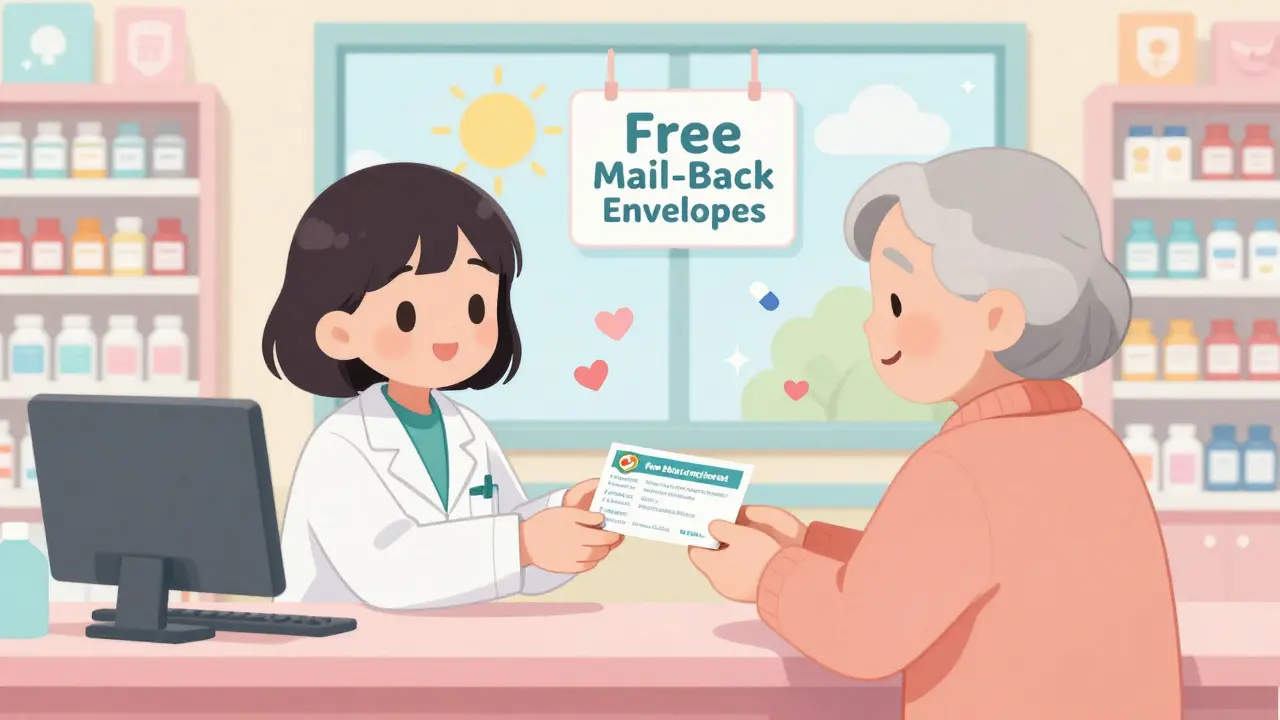
Using a mail-back envelope is easier than returning a package from Amazon. Here’s how:- Order or pick up the envelope-You can get them online from providers like Mail Back Meds, Stericycle, or American Rx Group. Some pharmacies also hand them out for free. Check with your local pharmacy or visit the Drug Takeback Solutions Foundation’s map to find nearby options.
- Fill the envelope-Take out your unused pills and put them directly into the envelope. You can leave them in their original bottles, but scratch out your name, address, and prescription number first. This protects your privacy. Don’t worry about removing the pills from blister packs-just toss the whole thing in.
- Seal it-Most envelopes have a tamper-evident seal. Once you close it, you can’t reopen it without tearing it. Some brands include special orange tape for extra security. Make sure it’s fully sealed.
- Mail it-Drop the sealed envelope in any USPS mailbox. No stamp needed. It’s prepaid. The envelope will be collected, tracked, and taken to a DEA-registered incineration facility where it’s destroyed safely.
Who’s Offering These Envelopes?
There are a few major players in this space, each with a slightly different focus:- Mail Back Meds sells packs of 3, 50, or 250 envelopes. Great for families or small clinics. They offer online tracking and emphasize EPA-aligned disposal.
- Stericycle’s Seal&Send targets businesses, pharmacies, and hospitals. They provide detailed reports on how many envelopes were returned and how much waste was destroyed-useful for compliance and sustainability reporting.
- American Rx Group partners with waste-to-energy plants. They say their process turns medications into electricity, not landfill waste.
- Opioid Analgesic REMS Program (launching March 31, 2025) will give out free envelopes specifically for opioid painkillers. Pharmacies that fill these prescriptions will be required to offer them.
What Happens After You Mail It?
Once the envelope reaches the disposal facility, it’s not buried, burned in an open pit, or dumped anywhere. It’s incinerated in a high-temperature, EPA-regulated furnace designed for medical waste. The ash is tested to ensure no harmful chemicals remain. Any remaining packaging is separated and recycled where possible. The whole process is tracked and audited to meet DEA standards. The DEA says over 1 million pounds of unused medications were collected during their 2022 National Prescription Drug Take Back Day. That’s a huge number-and mail-back envelopes make up a growing part of that total. They’re not just convenient. They’re changing how we think about medication waste.Limitations and Things to Watch Out For
Mail-back envelopes aren’t perfect. Here are the real-world issues you should know:- Not everywhere has them-Some rural areas or small pharmacies don’t offer free envelopes. You might have to order online.
- They don’t take inhalers or sharps-If you have asthma inhalers or insulin pens, you need a different program. Med Take Back California, for example, offers special mailers for inhalers.
- You can’t drop them off at a pharmacy-This is a big one. People often think they can hand a filled envelope to the pharmacist. But no. You must mail it. Taking it to a pharmacy, police station, or hospital is against the rules and can delay disposal.
- Weight limits are strict-Don’t try to cram in 12 ounces. If you exceed the limit, the envelope might be rejected.
Why This Matters Beyond Your Medicine Cabinet
Using a prepaid mail-back envelope isn’t just about cleaning out your bathroom cabinet. It’s about protecting your water, your neighbors, and future generations. Every pill you dispose of properly is one less chance for accidental overdose. One less chemical leaching into groundwater. One less opportunity for someone to misuse a drug they shouldn’t have. The FDA calls mail-back programs “one of the best ways” to dispose of medications. The DEA backs them. Environmental groups support them. And now, with the opioid crisis still active, the government is stepping in to make them even more widely available.What to Do Next
If you’ve got old pills sitting around, here’s what to do right now:- Check your medicine cabinet. Look for anything expired, discontinued, or no longer needed.
- Find a mail-back envelope. Visit DrugTakeBack.org to find free options near you.
- Prepare your meds: Remove personal info from bottles, but leave pills in the packaging.
- Fill the envelope. Seal it. Mail it.
What About Opioids?
If you or someone you know uses opioid painkillers, this is especially important. These drugs are powerful-and dangerous if misused. Starting March 31, 2025, pharmacies that prescribe opioids will be required to offer free mail-back envelopes. You won’t have to ask. You won’t have to pay. You’ll just get one when you pick up your prescription. That’s a major shift. It means safe disposal is no longer an option-it’s part of the process.Can I put my old insulin pens in a prepaid drug mail-back envelope?
No. Insulin pens, needles, and other sharps are not allowed in these envelopes. They require special disposal through a sharps mail-back program or a local drop-off site. Many pharmacies offer free sharps containers and return shipping labels. Check with your pharmacy or visit SafeNeedleDisposal.org for options.
Are these envelopes really free?
Yes, for individuals. Many providers give away envelopes at no cost through pharmacies or government programs. The Opioid Analgesic REMS Program will be completely free. Some commercial providers sell packs online, but if you’re just disposing of your own meds, you can usually get one for free from your local pharmacy or through a take-back initiative.
Do I need to remove pills from the bottle before putting them in the envelope?
No. You can leave pills in their original bottles or blister packs. Just make sure you’ve scratched out your name, address, and prescription number on the label. This protects your privacy. The envelope is designed to handle bottles and packaging.
Can I mail multiple envelopes at once?
Yes. You can mail as many as you need. Just make sure each one is sealed and prepaid. Don’t tape multiple envelopes together. Each one should go in the mailbox on its own. Some organizations, like senior centers or clinics, order bulk packs to distribute to patients.
What if I live in a rural area and can’t find an envelope?
Order one online. Companies like Mail Back Meds and Stericycle ship nationwide. You can also check the Drug Takeback Solutions Foundation’s map to find the nearest free drop-off point. If you still can’t find one, contact your local pharmacy or health department-they may have extra envelopes on hand or know of a nearby program.



Naresh L
February 1, 2026It’s wild how something so simple-just tossing pills in a prepaid envelope-can ripple out to protect ecosystems, prevent addiction, and even spare families from tragedy. We fixate on big policy changes, but real progress often hides in mundane, quiet acts of responsibility. This isn’t activism with banners. It’s just… doing the right thing without fanfare. And honestly? That’s the most powerful kind.