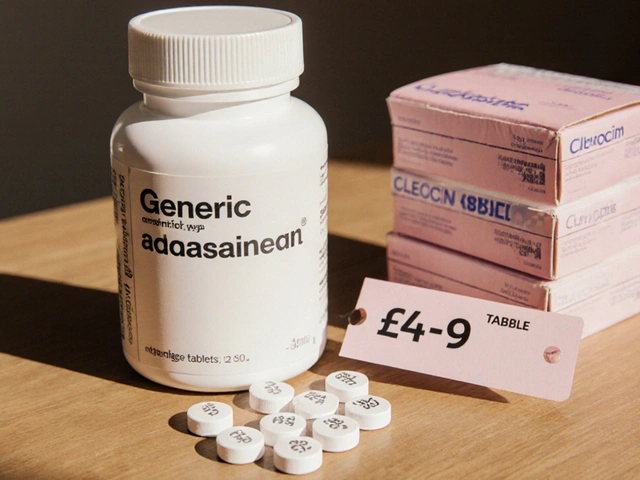
Imagine you have been taking a specific brand-name medication for years. It works. You trust it. Then your doctor switches you to a generic version. The pill looks slightly different-maybe a different color or shape-but the active ingredient is the same. Your insurance saves you money. Yet, a nagging doubt creeps in: *Is this really as safe? Will it still work?* You are not alone. This hesitation is known as **risk perception**, and it is one of the biggest barriers to affordable healthcare today.
Risk perception regarding generic drugs is not just about science; it is about psychology. Even though regulatory bodies like the U.S. Food and Drug Administration (FDA) require generics to be bioequivalent to their brand-name counterparts, many patients still view them as inferior or unsafe. This gap between scientific fact and patient belief costs the healthcare system billions of dollars annually and can lead to poor health outcomes when patients skip doses or refuse effective treatments.
The Science Behind the Pill: Bioequivalence Explained
To understand why patients feel uneasy, we first need to look at what makes a generic drug "legal" and "safe." The foundation of this trust is bioequivalence, which is the measure of the rate and extent to which the active ingredient in a generic drug becomes available at the site of action in the body compared to the brand-name drug.
When a company wants to sell a generic version of a drug, they do not need to run massive clinical trials on thousands of patients again. Instead, they must prove that their version delivers the same amount of active ingredient into the bloodstream within a similar timeframe as the original brand. The FDA sets strict limits for this: the generic’s performance must fall within 80% to 125% of the brand-name drug’s pharmacokinetic parameters. In plain English, if the brand releases 100 units of medicine, the generic might release anywhere from 80 to 125 units, but statistically, the average is nearly identical.
For most medications, this slight variance is clinically irrelevant. However, for patients with narrow therapeutic index drugs-medications where small changes in dose can cause serious side effects or loss of efficacy, such as certain seizure or heart medications-this range feels risky. This scientific nuance is often lost in translation, leading patients to assume that any difference means the drug is "weaker" or "dangerous."
Why We Trust Brands More Than Generics
Human brains are wired to associate price with quality. This cognitive bias, often called the "price-quality heuristic," suggests that if something costs more, it must be better. Brand-name drugs are expensive because companies spend billions developing them and recoup those costs after patents expire. Generics are cheap because they skip the initial research phase. But to a patient, high cost signals investment, care, and premium quality.
Dr. Aaron S. Kesselheim, an Associate Professor of Medicine at Harvard Medical School, has noted that the word "generic" itself carries a negative connotation in many product categories. Think about clothing or electronics. A "generic" shirt is usually seen as lower quality than a designer one. Patients subconsciously apply this same logic to their health. They worry that because the manufacturer cut corners on marketing or packaging, they might have also cut corners on purity or stability.
This fear is amplified by the physical appearance of the pills. Brand-name drugs have consistent branding-specific colors, shapes, and logos. When a patient switches to a generic, the pill might change from blue to white, or round to oval. For someone who relies on visual cues to remember their medication routine, this change triggers anxiety. "If it doesn’t look the same, how can I trust it acts the same?" is a common internal monologue that overrides statistical evidence.
Who Is Most Skeptical? Demographics and Risk Perception
Not everyone views generic drugs with suspicion. Research shows that risk perception varies significantly across different demographic groups. Understanding these differences helps healthcare providers tailor their communication strategies.
| Demographic Factor | Impact on Risk Perception | Key Insight |
|---|---|---|
| Health Literacy | Low literacy increases skepticism | Patients with low health literacy are twice as likely to believe generics are less safe. |
| Age | Older adults are more cautious | Patients over 60 show higher concern about side effects and potency changes. |
| Ethnicity | Minorities show higher distrust | Black and Hispanic patients are 1.8 times more likely to express safety concerns than White patients. |
| Education Level | Lower education correlates with fear | Lower-educated participants are 1.73 times more likely to perceive generics as dangerous. |
One of the strongest predictors of generic acceptance is health literacy. A study published in *US Pharmacist* found that among patients with inadequate health literacy, approximately 50% believed generics were less effective and less safe. In contrast, only 25% of the general population held this belief. These patients often struggle to understand concepts like bioequivalence, making them reliant on simple heuristics like "brand is best."
Age also plays a role. Older adults, who often manage multiple chronic conditions, are more attuned to subtle bodily changes. If they switch to a generic and experience a minor fluctuation in blood pressure or mood, they may attribute it to the drug switch rather than natural variability. A 2024 machine learning analysis highlighted that participants over 60 showed heightened concern about side effects compared to younger groups.
Socioeconomic factors add another layer of complexity. Interestingly, unemployed and retired individuals sometimes show more positive attitudes toward generics due to cost sensitivity. However, those with lower educational attainment often perceive generic use as potentially dangerous, creating a paradox where those who need generics most for financial reasons are also the least likely to trust them.
The Power of Anecdote Over Data
Science tells us that generics are safe. But personal stories tell a different tale. Human psychology is heavily influenced by anecdotal evidence. If a friend says, "I switched to the generic statin and felt terrible," that story sticks far longer than a statistic saying "90% of generics are perfectly tolerated."
Online forums and social media amplify these anecdotes. On platforms like Reddit, users frequently share experiences of withdrawal symptoms or reduced effectiveness after switching to generics. For example, discussions around bupropion XL (a depression medication) often cite instances where patients reported adverse effects with certain generic versions. While the FDA issued safety communications about specific manufacturers, these isolated incidents become generalized fears in the public consciousness.
These stories create a "nocebo effect," where the expectation of a negative outcome actually causes physical symptoms. If a patient believes the generic will not work, they may perceive normal bodily fluctuations as treatment failure. This psychological loop reinforces the belief that the brand-name drug was superior, even if the chemistry was identical.
The Role of Healthcare Providers in Building Trust
If patients don’t trust the generic label, who do they trust? Usually, their doctor or pharmacist. Physician communication is the single strongest predictor of generic acceptance. A meta-analysis published in *JAMA Internal Medicine* found that patients who received clear explanations about bioequivalence from their providers were 3.2 times more likely to accept generic prescriptions.
However, time constraints often hinder these conversations. The average pharmacist-patient consultation for a generic substitution lasts only 47 seconds. In that brief window, explaining complex pharmacokinetics is impossible. Instead, providers need simple, empathetic scripts. Saying, "This generic contains the exact same active ingredient as the brand, and I monitor your levels closely so we know it’s working," can alleviate much of the anxiety.
Pharmacists also play a crucial role in managing expectations. When dispensing a generic, acknowledging the change in appearance-"You’ll notice this pill is white instead of blue, but it works the same way"-validates the patient’s observation while reinforcing safety. Community pharmacists who engage in counseling see 37% higher adherence rates among patients prescribed generics.
Economic Implications of Fear
The reluctance to use generics is not just a medical issue; it is an economic crisis. Generic drugs account for 90% of all prescriptions filled in the U.S., yet they represent only 23% of drug spending. This disparity saves the healthcare system approximately $370 billion annually. However, patient-driven "brand loyalty" costs an estimated $8 billion each year in unnecessary brand-name prescriptions.
Insurance designs try to combat this through copay structures. Medicare Part D plans that implemented $0 copays for generics saw an 18% increase in generic utilization compared to tiered copay structures. Still, financial incentives alone cannot overcome deep-seated safety fears. As long as patients perceive generics as risky, they will seek out brand-name alternatives, driving up premiums and out-of-pocket costs for everyone.
How to Navigate Generic Switches Safely
If you are hesitant about switching to a generic, here are practical steps to ensure safety and peace of mind:
- Talk to your prescriber: Ask specifically about bioequivalence for your condition. If you are on a narrow therapeutic index drug, discuss whether staying on the brand is medically necessary.
- Monitor your response: Keep a symptom diary for two weeks after the switch. Track blood pressure, pain levels, or mood. Objective data helps distinguish real side effects from nocebo responses.
- Stick with one manufacturer: If you find a generic that works well, ask your pharmacy to keep using the same manufacturer. Different companies produce different generics, and consistency reduces variables.
- Verify the source: Look for the National Drug Code (NDC) on the bottle. You can check the manufacturer online to ensure it is an FDA-approved facility.
- Ask questions: Don’t hesitate to ask your pharmacist, "Why does this look different?" Their explanation can bridge the gap between fear and understanding.
Future Trends in Generic Acceptance
The landscape of generic drugs is evolving. New challenges arise with "complex generics," such as inhalers, topical creams, and injectables, where demonstrating bioequivalence is harder than with simple tablets. A 2023 survey found that 48% of patients expressed specific concerns about these products. Regulatory bodies like the FDA are investing heavily in improving quality monitoring through programs like the Generic Drug User Fee Amendments (GDUFA), but public awareness remains low.
Technology offers new solutions. Machine learning models are now being used to predict which patients are at highest risk for safety concerns, allowing providers to target interventions proactively. Additionally, multilingual educational campaigns are showing promise, with preliminary data indicating a 15% reduction in safety concerns among Spanish-speaking patients after targeted outreach.
Ultimately, bridging the gap between risk perception and reality requires a collaborative effort. Patients need transparent information, providers need time to communicate effectively, and regulators need to maintain rigorous standards. Until then, the fear of the "unknown" generic will continue to influence healthcare decisions, costing both money and potential health benefits.
Are generic drugs exactly the same as brand-name drugs?
Generic drugs contain the same active ingredients, strength, dosage form, and route of administration as brand-name drugs. However, they may differ in inactive ingredients (like fillers or dyes), which affect appearance and taste. The FDA requires generics to demonstrate bioequivalence, meaning they perform similarly in the body, but they are not chemically identical in every aspect.
Why do some people feel worse on generic medications?
Some patients report feeling worse due to the nocebo effect, where negative expectations cause physical symptoms. Others may react differently to inactive ingredients like lactose or gluten, which vary by manufacturer. In rare cases, specific generic manufacturers may have quality control issues, leading to inconsistent potency. Monitoring symptoms and discussing concerns with a doctor can help identify the cause.
Can I request my doctor to prescribe the brand name instead of the generic?
Yes, you can request the brand-name drug, but your insurance may charge a higher copay. Doctors can write "Dispense as Written" (DAW) on the prescription, but this is typically reserved for medical necessity. If you have had adverse reactions to multiple generic versions, your doctor may justify the brand name based on clinical history.
How does the FDA ensure generic drug safety?
The FDA requires generic manufacturers to prove bioequivalence through rigorous testing. They also inspect manufacturing facilities regularly and conduct post-market surveillance to detect quality issues. Programs like GDUFA enhance oversight by requiring fees from manufacturers to fund improved review processes and safety monitoring.
What should I do if I suspect my generic medication isn't working?
Do not stop taking the medication abruptly. Contact your healthcare provider to discuss your symptoms. They may order blood tests to check drug levels, suggest switching to a different generic manufacturer, or consider returning to the brand-name drug if medically justified. Keeping a symptom log can provide valuable data for your doctor.