
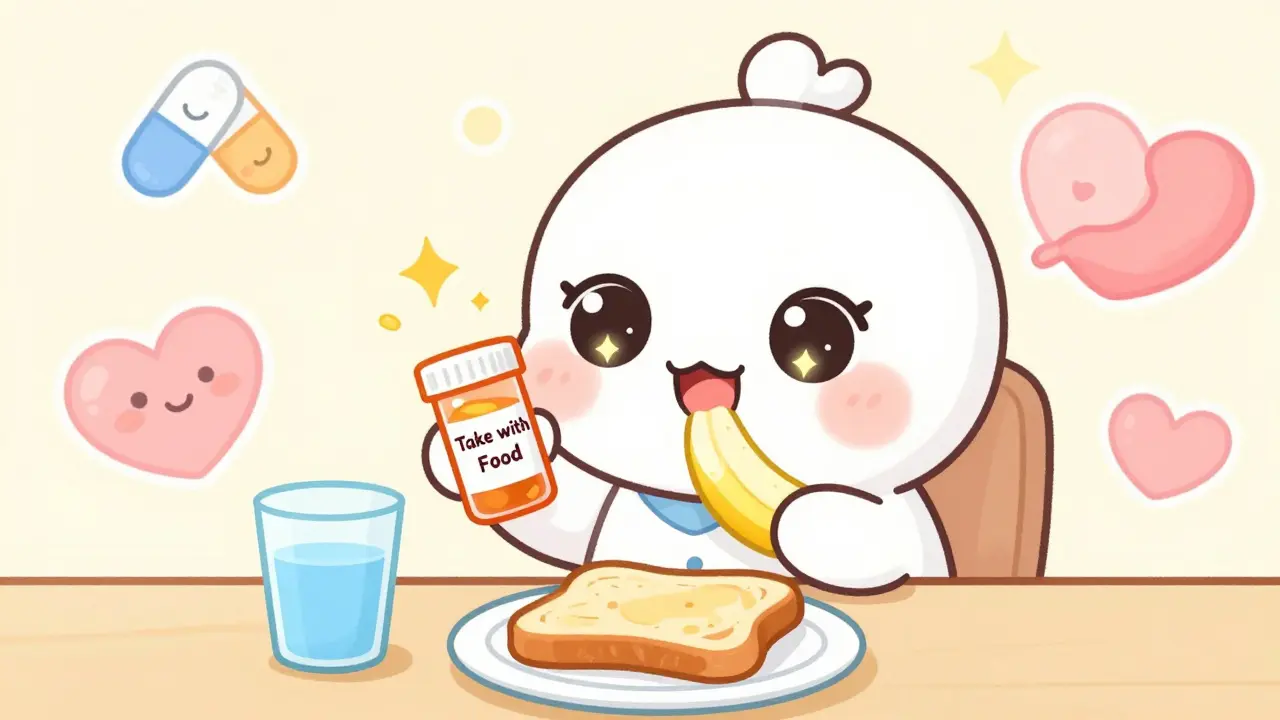
When you pick up a prescription, the label might say "take with food" or "take on an empty stomach". It seems simple. But get it wrong, and your medicine might not work-or it could make you sick. This isn’t just a suggestion. It’s science. And for millions of people, getting this right makes the difference between feeling better and feeling worse.
Why Food Changes How Medicine Works
Your stomach isn’t just a place where food breaks down. It’s a chemical factory. When you eat, your body releases acid, bile, and enzymes. Blood flow changes. Your gut moves slower. All of this affects how drugs get into your bloodstream. Some medicines need that acid to dissolve properly. Others get blocked by calcium in dairy or iron in spinach. Food can slow down absorption, which is good if the drug hits too hard on an empty stomach. Or it can boost absorption, which is critical if the drug barely works without it. Studies show that about 40% of prescription drugs have specific food rules. That’s not a small number. That’s nearly half of everything you might be taking. And the FDA now requires food-effect studies for most new drugs. This isn’t outdated advice-it’s modern pharmacology.Medicines That Need Food
Some drugs are designed to be taken with a meal. Skipping food with these can cause side effects-or make them useless. NSAIDs like ibuprofen, naproxen, and aspirin are the most common. These can irritate your stomach lining. Taking them on an empty stomach raises your risk of ulcers and bleeding. The NHS in the UK and German medical guidelines both recommend taking them after eating. One study found that taking ibuprofen with food cut nausea by 20%. A banana? Some patients say it works better than bread or toast. Antibiotics like Augmentin (amoxicillin/clavulanate) also need food. Without it, you’re more likely to get stomach cramps or vomiting. Food doesn’t make them weaker-it makes them easier to tolerate. And in some cases, it helps them last longer in your system. HIV medications like ritonavir and zidovudine are another example. These drugs are notorious for causing nausea. But patients on Reddit’s r/HIV forum reported that taking ritonavir with a small high-fat snack-like peanut butter or cheese-reduced nausea from 45% down to 18%. Fat helps the body absorb these drugs better. Grapefruit juice? It can boost absorption even more, but it’s risky with other meds. Always check first.Medicines That Need an Empty Stomach
Not all drugs like food. Some get ruined by it. Tetracycline and doxycycline bind to calcium, magnesium, and iron. That means dairy, antacids, and even fortified cereals can cut their absorption by up to 50%. If you take doxycycline with milk, you might as well have skipped the dose. Levothyroxine, used for hypothyroidism, is one of the most sensitive. Food can reduce its absorption by 20% to 55%. That’s huge. Even a cup of coffee or a bowl of oatmeal can interfere. The standard advice? Take it 30 to 60 minutes before breakfast. Some people set alarms to make sure they don’t forget. Didanosine, another HIV drug, breaks down in stomach acid. Food increases acid production, which destroys the drug before it can work. That’s why it’s taken on an empty stomach-no exceptions. The Mayo Clinic recommends a clear rule: if a drug says "take on an empty stomach," do it either one hour before food or two hours after. For bisphosphonates like alendronate, you need a full 30 to 60 minutes between the pill and your first bite.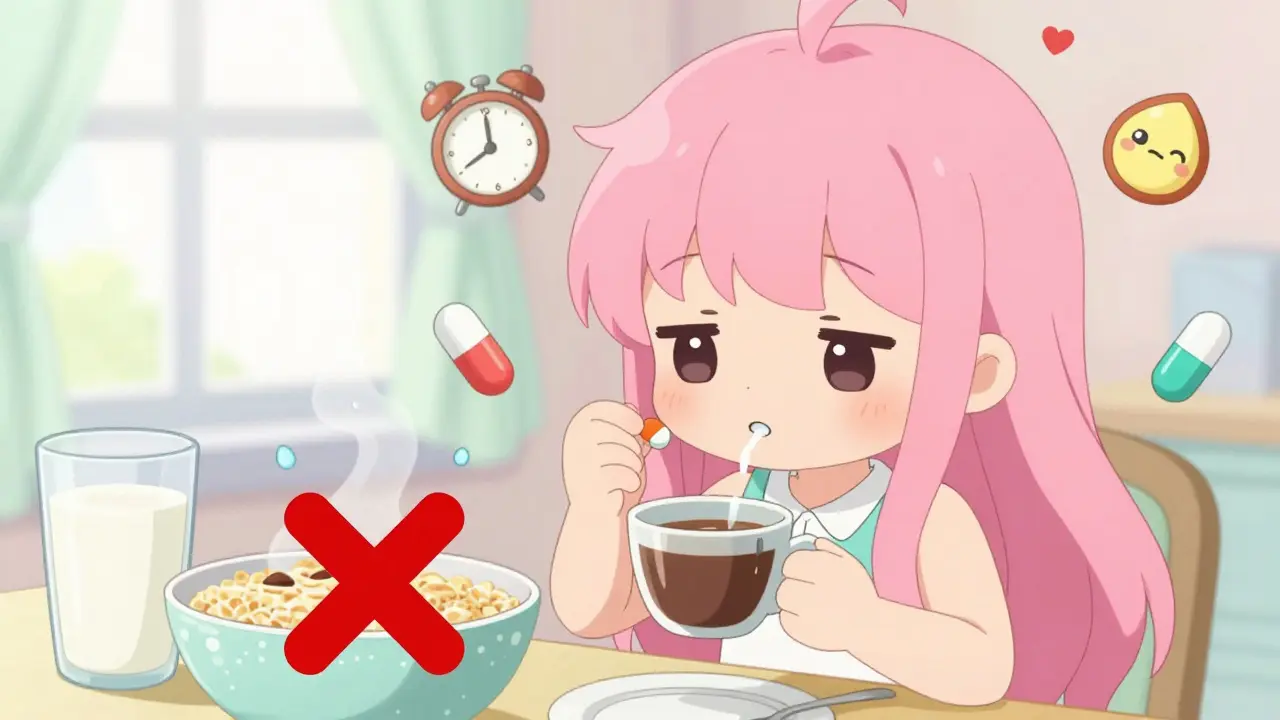
What About Water?
Water matters more than you think. Some drugs need a full glass to move through your system safely. Others can stick to your esophagus if you don’t drink enough. That’s how you get painful sores or even damage to your throat. University Hospitals Cleveland Medical Center suggests keeping a one-liter water bottle next to your meds. Drink a full glass every time you take a pill. It’s simple. It’s cheap. And it prevents a lot of avoidable problems.Why People Get It Wrong
Most people don’t mean to mess up. But when you’re taking five or more pills a day, each with different rules, it gets overwhelming. A 2023 GoodRx survey found that 42% of patients admitted to taking their meds incorrectly about food. The worst offenders? People managing five or more medications. One patient told Express Scripts they took levothyroxine with their morning coffee because they "didn’t think it mattered." Two weeks later, their thyroid levels were off the charts. Another problem? Labels are confusing. "Take with food" doesn’t say how much food. Is it a snack? A full meal? A high-fat breakfast? The FDA is updating labels to be more specific. But until then, you have to ask.




Randolph Rickman
December 15, 2025Just took my ibuprofen with a banana like the post said-no more stomach grumbling at 3 a.m. Seriously, who knew a fruit could be a pharmacy hack? 🍌
Thanks for making this so simple. I’ve been taking it on an empty stomach for years thinking it’d work faster. Nope. Just made me miserable.