

When you’re struggling to breathe, it’s hard to tell if it’s asthma or COPD. Both conditions make you wheeze, cough, and feel short of breath. But they’re not the same. Mistaking one for the other can lead to the wrong treatment - and that can be dangerous.
Think of asthma like a fire alarm that goes off when something triggers it: pollen, cold air, exercise. The alarm stops when you calm things down. COPD is more like a slow-burning fire that keeps growing. It doesn’t turn off. It gets worse over time.
How Symptoms Differ
Asthma symptoms come and go. You might feel fine for days or weeks, then suddenly struggle to breathe after a run or during allergy season. Nighttime coughing and chest tightness are classic signs. Many people with asthma notice their symptoms improve after using an inhaler - sometimes within minutes.
COPD is different. If you have COPD, you’re likely dealing with a daily cough that brings up phlegm. This isn’t occasional - it’s constant. By the time most people are diagnosed, they’ve had this cough for years. Breathing gets harder with every passing year. You might feel winded even walking to the mailbox. Unlike asthma, symptoms don’t vanish between flare-ups. About 87% of COPD patients have a daily productive cough. Only 27% of asthma patients do.
Another clue? Cyanosis. If your lips or fingernail beds turn blue, that’s a red flag for advanced COPD. It means your body isn’t getting enough oxygen. This rarely happens in asthma. Asthma patients may feel tightness, but their skin usually stays pink.
Who Gets Which Condition?
Asthma often starts in childhood. Half of all cases are diagnosed before age 10. Eighty percent are diagnosed before age 30. It’s common in kids with eczema or hay fever. Genetics play a big role - if one of your parents has asthma, your risk jumps.
COPD almost never shows up before 40. Ninety-two percent of cases are in people over 45. Smoking is the biggest cause. Around 90% of COPD patients have smoked - or still do. Even secondhand smoke or long-term exposure to pollution or dust can contribute. It’s not about allergies. It’s about damage.
There’s a twist: some people have both. That’s called Asthma-COPD Overlap Syndrome (ACOS). It affects 15-25% of people with obstructive lung disease. These patients get worse faster. They end up in the ER more often than those with just asthma or just COPD.
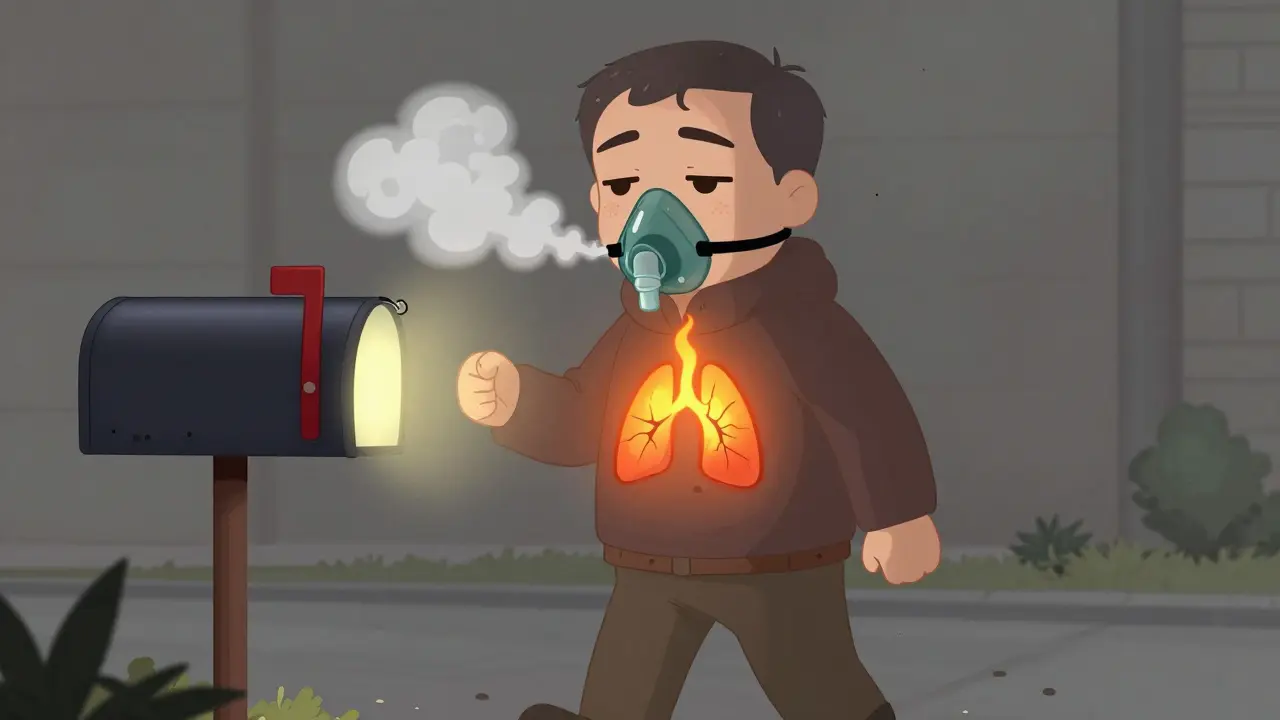
How Doctors Tell Them Apart
Doctors don’t just guess. They use tests.
The main one is spirometry. You blow into a machine that measures how much air you can force out in one second (FEV1). Then you use a bronchodilator - a quick puff from an inhaler - and blow again.
If your FEV1 improves by 12% or more after the inhaler, it’s likely asthma. About 95% of asthma patients show this kind of reversibility. COPD patients? Only 15% do. Their airway damage is permanent.
Another test looks at your breath. Fractional exhaled nitric oxide (FeNO) measures inflammation. If your FeNO is above 50 ppb, it points to eosinophilic inflammation - the kind seen in asthma. COPD patients usually have FeNO below 25 ppb.
Blood tests help too. If your eosinophil count is above 300 cells/μL, it leans toward asthma or ACOS. Below 100? That’s more typical of pure COPD.
CT scans show the difference clearly. In 75% of COPD cases, you’ll see emphysema - holes in the lungs. In asthma? Only 5% show this.
How Treatment Is Different
Asthma treatment starts with quick-relief inhalers like albuterol. If symptoms happen more than twice a week, you’ll move to daily inhaled corticosteroids (ICS). These reduce inflammation and prevent flare-ups.
For severe asthma, biologics like omalizumab or mepolizumab can help. These are injections that target specific immune cells involved in allergic reactions. They work for about 5-10% of asthma patients who don’t respond to standard treatment.
COPD doesn’t respond to corticosteroids the same way. First-line treatment is long-acting bronchodilators - either LABAs (like salmeterol) or LAMAs (like tiotropium). These open the airways for 12-24 hours. Only if you have frequent flare-ups do doctors add ICS. Too much steroid in COPD can increase infection risk.
Pulmonary rehab helps COPD patients more than asthma patients. After rehab, COPD patients can walk 54 meters farther in six minutes. Asthma patients? Only 12 meters. That’s because their lungs are usually fine between attacks. Rehab doesn’t fix their breathing - it helps them manage activity.
For COPD, quitting smoking is the single most effective treatment. It cuts disease progression by 50%. For asthma, smoking doesn’t change much - unless you also have COPD.

What Happens Over Time
Asthma is manageable. With proper care, 89% of patients control their symptoms well. The 10-year survival rate for moderate asthma is 92%.
COPD is progressive. Even with treatment, lung function keeps declining. Only 52% of COPD patients report good symptom control. Hospitalizations are far more common - 0.84 per patient per year versus 0.12 for asthma.
There’s one exception: if you’ve had asthma for more than 20 years, your airways can become permanently narrowed. About 15-20% of long-term asthma patients develop fixed obstruction - mimicking COPD. This is why age and history matter so much.
When to Worry
If you’re under 40 and have breathing problems that come and go, asthma is more likely. If you’re over 45, smoke, and have a daily cough with phlegm, think COPD.
But don’t wait. If you’re wheezing, coughing, or struggling to breathe - get checked. Misdiagnosis is still common. One in four people over 40 with breathing issues get the wrong diagnosis.
And if you’re not sure? Ask for a spirometry test. It’s simple, cheap, and tells you more than any guess ever could.
Can asthma turn into COPD?
Asthma doesn’t turn into COPD. But long-term, uncontrolled asthma can cause permanent airway damage in about 15-20% of cases, leading to fixed airflow limitation - which looks like COPD. Smoking makes this much more likely. So while asthma itself doesn’t become COPD, the combination of severe asthma and smoking can result in a condition that’s hard to tell apart.
Is COPD reversible?
No, COPD is not reversible. The damage to the lungs - whether from emphysema or chronic bronchitis - is permanent. But you can slow it down. Quitting smoking is the most powerful step. Medications, oxygen therapy, and pulmonary rehab can improve quality of life and reduce flare-ups. The goal isn’t to cure it - it’s to keep it from getting worse.
Can you have asthma and COPD at the same time?
Yes. This is called Asthma-COPD Overlap Syndrome (ACOS). It affects 15-25% of people with obstructive lung disease. These patients often have a history of asthma, then develop COPD later - usually after smoking or long-term exposure to irritants. Their symptoms are more severe than either condition alone, and they need a mix of asthma and COPD treatments.
Do inhalers work the same for asthma and COPD?
Not exactly. Short-acting inhalers (like albuterol) help both, but they’re not the main treatment for COPD. COPD patients need long-acting bronchodilators (LABAs and LAMAs) every day to keep airways open. Inhaled steroids are used in asthma as a first-line controller, but in COPD, they’re only added if you have frequent flare-ups - because they increase pneumonia risk. The drugs are similar, but how and when you use them is different.
What’s the best way to diagnose asthma vs. COPD?
Spirometry with a bronchodilator challenge is the gold standard. If your lung function improves 12% or more after the inhaler, it’s likely asthma. If not, it’s probably COPD. FeNO testing and blood eosinophil counts help confirm. A history of smoking, age at onset, and whether symptoms are constant or intermittent also guide diagnosis. Don’t rely on symptoms alone - they overlap too much.







Eimear Gilroy
February 26, 2026Really clear breakdown. I’ve been dealing with wheezing for years and always assumed it was asthma-turns out I’ve had a daily cough since my 40s and never connected it to smoking. Spirometry was a game-changer. Got diagnosed with ACOS last year. So glad I didn’t ignore it.