
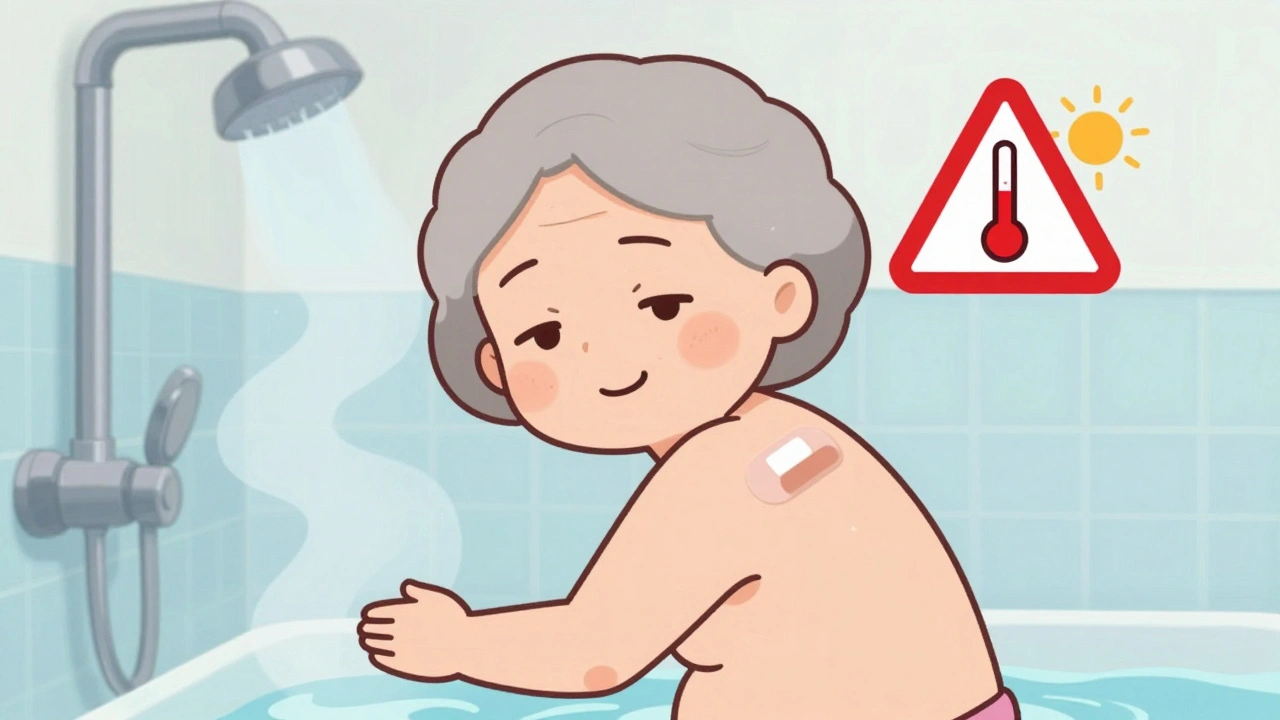
Fentanyl Patch Heat Risk Calculator
This calculator shows how skin temperature affects fentanyl absorption from patches. Heat increases blood flow to the skin, causing more fentanyl to enter your bloodstream.
According to the article: At 40°C (104°F), fentanyl absorption increases by 33%. At 45°C (113°F), absorption can triple.
Using a fentanyl patch for chronic pain can be life-changing - but it can also be deadly if you don’t know one simple, dangerous truth: heat can turn a safe dose into a fatal one.
How Fentanyl Patches Work (And Why Heat Changes Everything)
Fentanyl patches, like Duragesic, are designed to deliver a steady, slow release of opioid painkiller through your skin over three days. They’re not meant for quick relief. They’re for people with severe, ongoing pain who’ve already built up a tolerance to opioids - often cancer patients or those with long-term nerve damage. The patch holds a gel-like reservoir of fentanyl, which seeps through micropores in the adhesive and into your bloodstream over time. By the third day, your body reaches a stable level - enough to manage pain, but not so much that it shuts down your breathing.
That balance is fragile. Your skin isn’t just a passive barrier - it’s a controlled gateway. Heat changes everything. When your skin gets warm, blood vessels expand. More blood flows to the area under the patch. The fentanyl gel inside the patch becomes more fluid. The rate at which the drug moves into your blood skyrockets.
Studies show that raising skin temperature to just 40°C (104°F) - something that can happen with a fever, a hot shower, or even vigorous exercise - can increase fentanyl levels in your blood by 33%. In one controlled experiment, researchers used a special heating pad over fentanyl patches and saw serum concentrations triple. That’s not a small bump. That’s enough to push someone into respiratory depression - where breathing slows so much that oxygen can’t reach the brain.
Heat Sources You Might Not Realize Are Dangerous
Most people know not to put a heating pad on a fentanyl patch. But what about these?
- Hot tubs or long, steamy showers
- Saunas or steam rooms
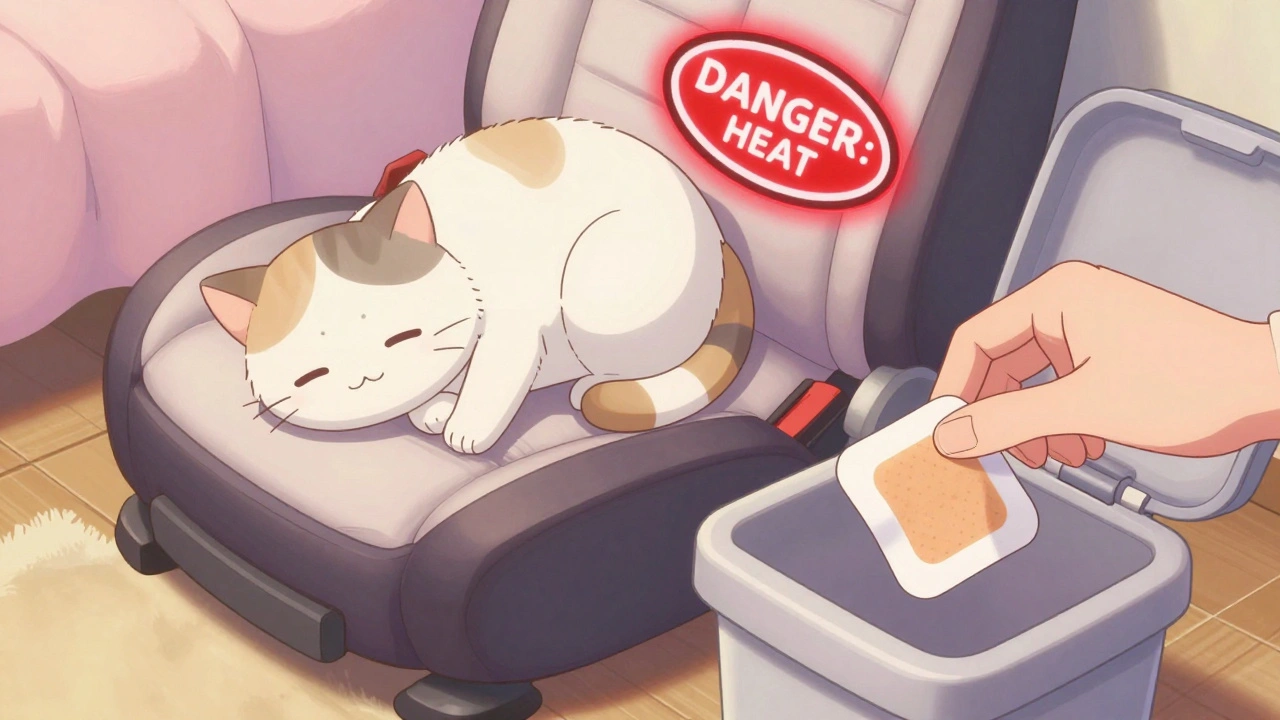
- Electric blankets or heated car seats
- Sunbathing or spending hours in direct sunlight
- Wearing a heating blanket during surgery
- Having a fever from an infection
- Strenuous exercise - like shoveling snow, walking uphill, or even vigorous housework
These aren’t just "maybe" risks. They’re documented causes of overdose. The Medical Letter documented three cases: one patient using a heating pad for back pain, another who got a fever after surgery, and a third who was wrapped in a warming blanket during an operation. All three stopped breathing. One died.
Even after you remove the patch, the danger doesn’t disappear. Up to 70% of the fentanyl remains in the patch’s gel - and your skin still holds onto some of it. If you get hot within hours of removing the patch, you can still absorb a dangerous amount.
Who’s at Highest Risk?
Fentanyl patches are not for everyone. They’re strictly for people who are already opioid-tolerant - meaning they’ve been taking opioids regularly for at least a week. If you’ve never taken opioids before, even one patch can kill you. That’s why they’re never used for acute pain, like after a broken bone or dental surgery.
But even among those who are supposed to use them, some are at greater risk:
- Older adults - their skin is thinner, and their bodies clear drugs slower
- People with liver or kidney problems - their bodies can’t break down or flush out fentanyl efficiently
- Those taking other medications that interact with fentanyl - like antibiotics (erythromycin), antifungals (ketoconazole), or certain antidepressants - these block the liver enzymes that break down fentanyl, causing levels to spike
- People with chronic illnesses who get fevers often - like those with COPD, heart failure, or cancer
One study found that patients using fentanyl patches during anesthesia were at high risk of over-sedation because their body temperature rose during surgery. Many of these patients were already frail. A little extra heat - and a little extra fentanyl - was enough to stop their breathing.
What You Must Do to Stay Safe
If you or someone you care for is using a fentanyl patch, here’s what you need to do - no exceptions.
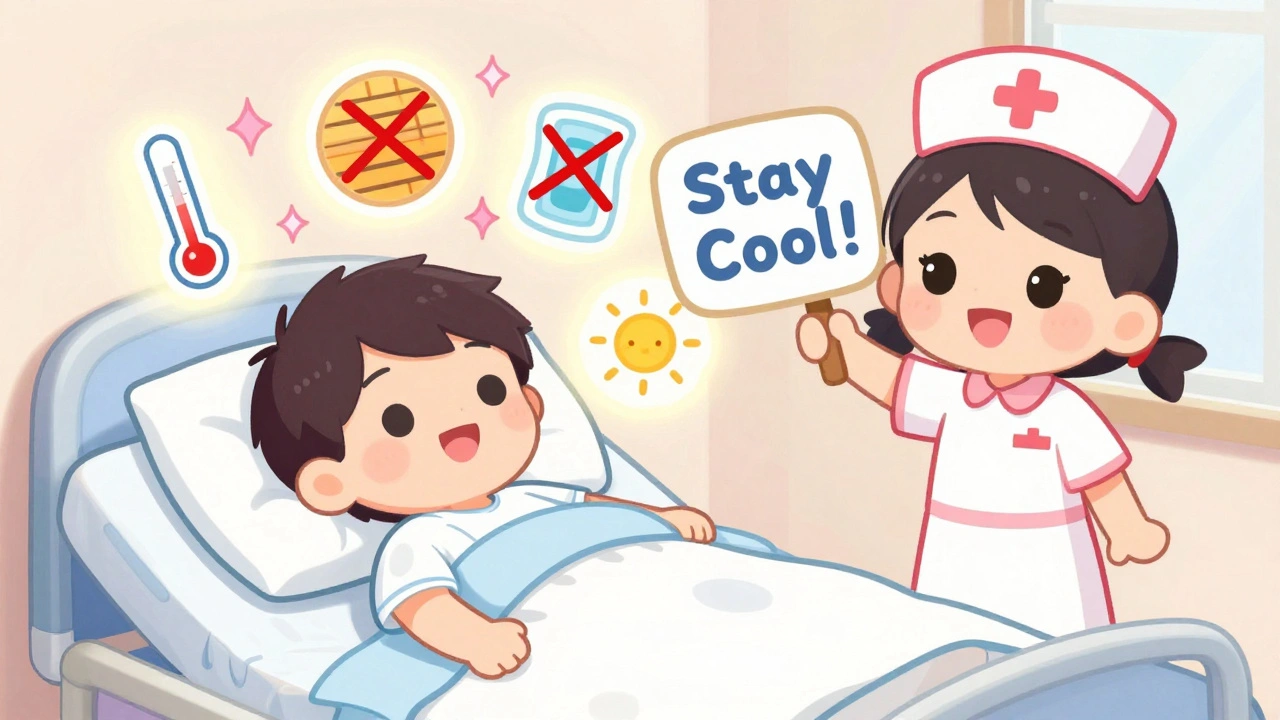
- Never apply heat to the patch area. That includes heating pads, warm compresses, or even warm water bottles.
- Avoid hot baths, showers, saunas, and sunbathing. Keep water temperature lukewarm.
- Don’t use electric blankets, heated car seats, or heated mattress pads.
- If you develop a fever - even a mild one - call your doctor immediately. Don’t wait. Your patch dose may need to be adjusted.
- Limit physical activity. If you feel your heart racing or start sweating heavily, stop. Rest. Overexertion raises your core temperature.
- Check your medications. Tell your doctor about every pill, supplement, or herb you take. Some can dangerously increase fentanyl levels.
- Remove the patch exactly after 72 hours. Don’t leave it on longer, even if the pain returns. The patch isn’t designed to last longer, and the risk of overdose climbs with time.
And here’s something most people don’t realize: if you’re caring for someone on a fentanyl patch, you’re also at risk. Fentanyl can be absorbed through your skin if you touch the sticky side of a used patch. Always fold the patch in half with the sticky sides together before throwing it away. Wash your hands immediately after handling it.
Warning Signs of Overdose - Act Fast
Overdose doesn’t always look like someone collapsing. It often starts quietly:
- Slowed or shallow breathing - you might notice long pauses between breaths
- Unusual drowsiness - they can’t be woken up easily
- Confusion, dizziness, or loss of coordination
- Blue lips or fingernails - a sign of low oxygen
- Extreme cold, clammy skin
If you see any of these, call emergency services right away. If you have naloxone (Narcan) on hand, use it. It won’t hurt, and it might save a life. But don’t wait for naloxone - get help immediately. Naloxone wears off faster than fentanyl, so the person could slip back into overdose.
What About Alternatives?
For some, fentanyl patches are the best option. But if heat exposure is a constant risk - maybe because you live in a hot climate, have frequent fevers, or work in a physically demanding job - talk to your doctor about alternatives. Other long-acting opioids come in pill form. Some patients benefit from non-opioid options like gabapentin, lidocaine patches, or nerve blocks. Physical therapy and cognitive behavioral therapy can also help manage chronic pain without the risks of opioids.
The goal isn’t to stop pain management. It’s to manage it safely. Fentanyl patches work - but only if you treat them like the powerful, dangerous drugs they are.
Can a fever cause a fentanyl patch overdose?
Yes. Even a low-grade fever can increase blood flow to the skin under the patch, speeding up fentanyl absorption. While no cases have been documented where fever alone caused overdose, it’s a known risk factor. If you develop a fever while using a fentanyl patch, contact your doctor immediately. Your dose may need adjustment.
Is it safe to use a fentanyl patch if I’m pregnant?
Fentanyl patches are generally not recommended during pregnancy. They can cross the placenta and cause respiratory depression in the newborn. If you’re pregnant and have chronic pain, talk to your doctor about safer alternatives. Never start or stop a fentanyl patch without medical supervision during pregnancy.
How long does fentanyl stay in the body after removing the patch?
Even after you remove the patch, fentanyl continues to be absorbed from the skin for several hours - sometimes up to 24 hours. Up to 70% of the drug remains in the patch’s gel, and your skin still holds some of what was absorbed. That’s why you should avoid heat, exercise, or hot environments for at least a full day after removing the patch.
Can I use a fentanyl patch after surgery?
No. Fentanyl patches are not approved for acute postoperative pain, especially in opioid-naïve patients. The dose is too high and can be fatal. After surgery, doctors use short-acting painkillers like morphine or hydromorphone, which can be adjusted quickly. Fentanyl patches are only for chronic, long-term pain in people already tolerant to opioids.
What should I do if I accidentally get the patch wet?
If the patch gets wet - like from a shower or sweat - don’t remove it unless it’s falling off. Water doesn’t significantly increase absorption. But if the patch becomes loose or falls off, replace it with a new one. Never tape it back on. If you lose a patch, contact your doctor. You may need a different dose or delivery method.
Can I drink alcohol while using a fentanyl patch?
No. Alcohol can increase the sedative effects of fentanyl and raise your risk of respiratory depression. Even one drink can be dangerous. Avoid all alcohol while using fentanyl patches - and for at least 24 hours after removing them.







Erin Nemo
December 2, 2025My grandma uses one of these for her arthritis, and I had no idea heat could be this dangerous. I always told her to take hot showers to ease the pain. I’m gonna call her right now and tell her to stop.