
Why Medication Safety at Home Matters More Than You Think
Every year, nearly 60,000 kids end up in the emergency room because they got into medicine they weren’t supposed to. Most of these accidents happen when a grandparent, babysitter, or another caregiver is watching the child - not because someone was careless, but because the system wasn’t set up to stop it. The truth is, medicine isn’t candy. Even a single extra pill or a spilled bottle of liquid pain reliever can turn a normal day into a crisis. And it’s not just kids. Older adults taking five or more medications a day are at risk of dangerous interactions, missed doses, or accidental overdoses. The good news? You don’t need to be a nurse to keep your family safe. You just need a simple, consistent routine.
Store Medications Like You Would Store Firearms
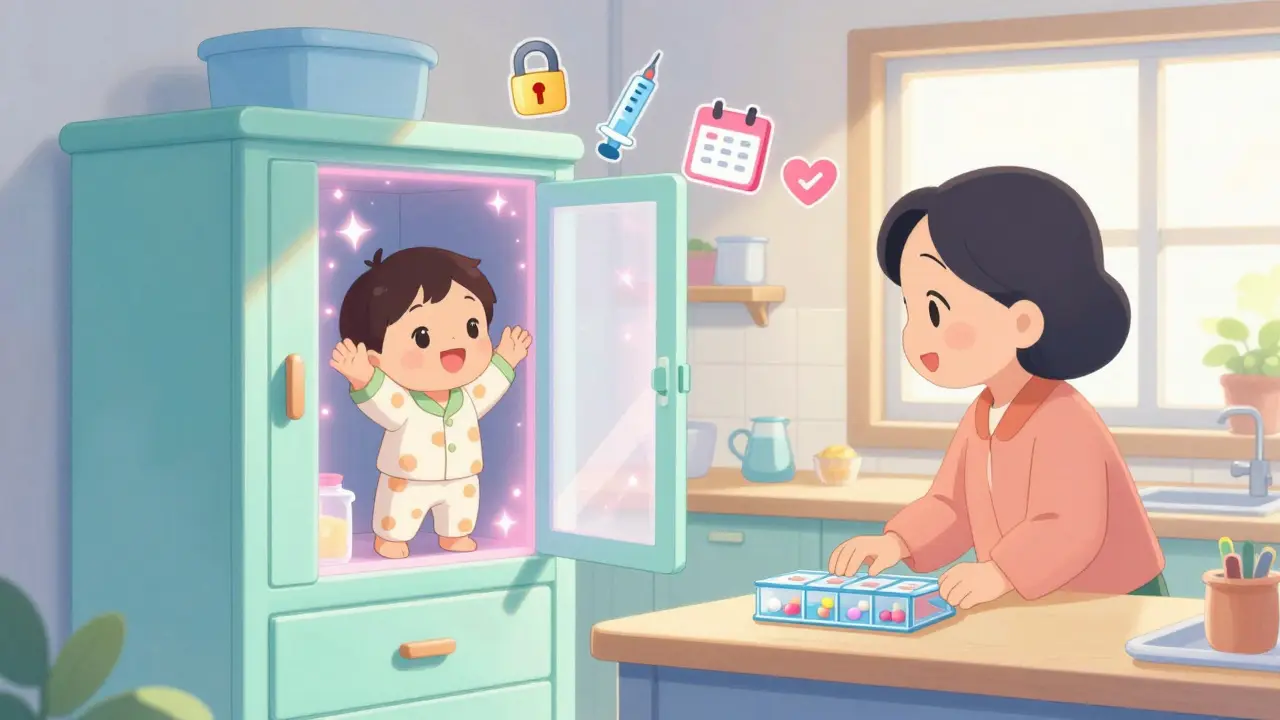
Think of your medicine cabinet like a gun safe. If you wouldn’t leave a loaded rifle on the kitchen counter, don’t leave pills in an unlocked drawer. The CDC says the most effective way to prevent accidental ingestions is to store all medications - prescription, over-the-counter, vitamins, even topical creams - in a locked cabinet, out of sight and out of reach. Height alone isn’t enough. Kids as young as one year old are strong climbers. They can pull down a purse, climb onto a counter, or open a cabinet if it’s not locked. A 2022 study showed households using locked storage reduced pediatric medication exposures by 34%. For households with opioids, the risk is even higher. Keep naloxone (Narcan) on hand if anyone in your home is using opioids. It’s not about expecting an emergency - it’s about being ready if one happens.
Don’t store medications in the bathroom. Humidity from showers and sinks can break down pills and liquids, making them less effective or even unsafe. A bedroom closet, a high kitchen cabinet with a lock, or a dedicated medicine safe are all better options. And always keep them in their original containers. Those labels have vital info: name, dosage, expiration date, and warnings. If you transfer pills to a different container, you lose that protection.
Use the Five Rights Every Time You Give Medicine
Before you hand out any pill, liquid, or patch, ask yourself these five questions:
- Right child - Is this medicine for the person I’m giving it to? Twins, cousins, or siblings with similar names can easily be mixed up.
- Right medication - Does this match the prescription or label? Many pills look alike. A blue oval might be ibuprofen one day and a blood pressure pill the next.
- Right dose - Are you giving the exact amount? Don’t guess. Use the syringe that came with the liquid medicine, not a kitchen spoon. Studies show using a syringe cuts dosing errors by 47%.
- Right route - Is this meant to be swallowed, applied to the skin, or inhaled? Putting eye drops in the ear can cause serious harm.
- Right time - Are you giving it at the scheduled time? Skipping doses or doubling up can be just as dangerous as giving the wrong one.
Write these down on a sticky note and put it next to your medicine storage. Repeat them out loud before each dose. It sounds silly, but it works. Caregivers who use this method report 60% fewer errors.
Build a Master Medication List - And Keep It Updated
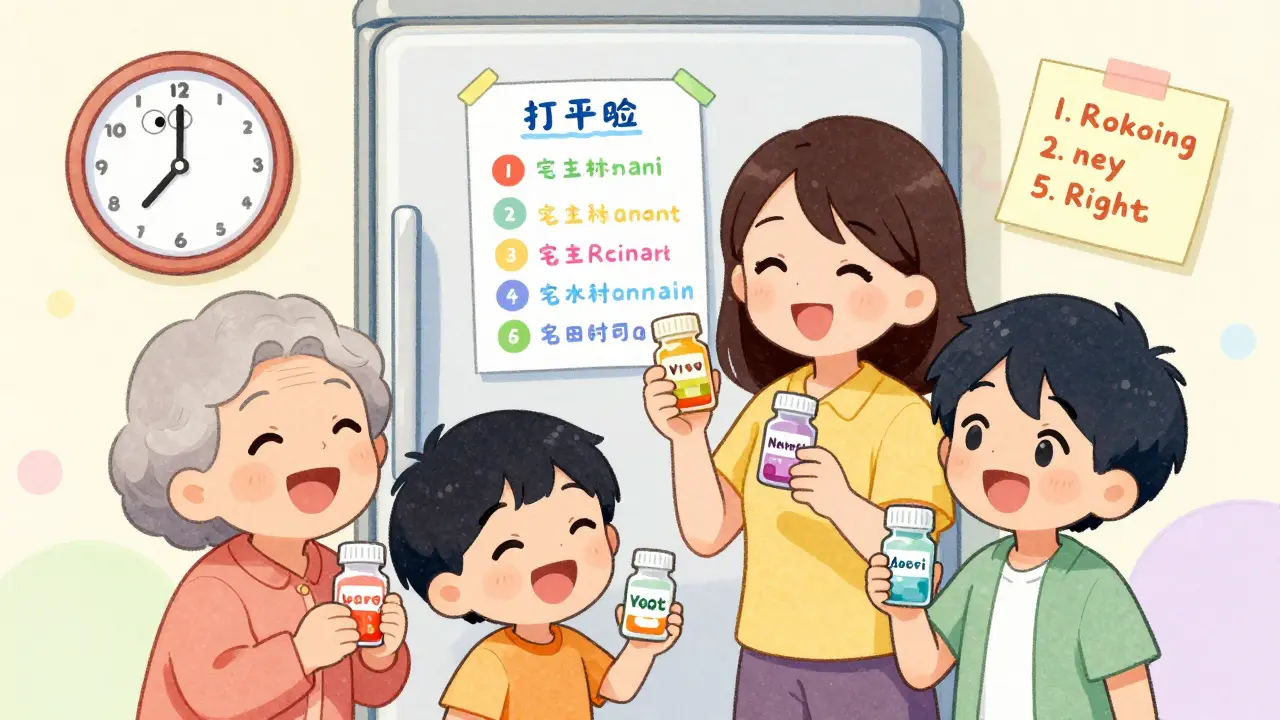
Most families don’t know what medicines everyone is taking. Not just prescriptions. Think vitamins, herbal supplements, pain relievers, allergy meds, and even topical creams. A 2023 AARP survey found that 73% of caregivers said managing medications was their most stressful job - and 42% admitted to making at least one mistake in the past year. One of the biggest causes? Not knowing what’s already being taken.
Create a master list. Include:
- Medication name (brand and generic)
- Dosage (e.g., 500 mg, 10 mL)
- Frequency (e.g., once daily, every 6 hours)
- Purpose (e.g., “for high blood pressure,” “for allergies”)
- Start date
- Prescribing doctor
- Any side effects you’ve noticed
Keep a printed copy on the fridge. Save a digital copy on your phone. Bring this list to every doctor visit - even if you think nothing’s changed. Pharmacists recommend doing a full “brown bag” review every six months: gather every bottle, pill, and patch you’re using and bring them to your pharmacist. They’ll spot duplicates, interactions, or drugs you no longer need. The American Geriatrics Society says 15% of hospital visits for seniors are caused by unnecessary or wrong medications. A simple review can prevent that.
Use Tools That Actually Work
There are a lot of gadgets out there - smart pill dispensers, app reminders, color-coded labels. But not all of them stick. A 2023 survey of caregivers found that 68% found 7-day pill organizers helpful. That’s the highest-rated tool. Why? Because it’s simple, visual, and doesn’t need Wi-Fi.
Try this: Use a pill organizer with morning, afternoon, evening, and nighttime slots. Fill it every Sunday. Then, if someone forgets a dose, you can look at the organizer and see if it’s missing. For families with multiple users, use painter’s tape to color-code containers. Red for one person, blue for another. One Reddit user said this cut their errors by 60%.
Apps like Medisafe work well for tech-savvy users, but 27% of older adults quit using them within three months because they’re too complicated. If someone in your home struggles with phones or screens, go analog. Set alarms on a basic clock radio. Tape a reminder to the bathroom mirror. Use a whiteboard on the fridge. The goal isn’t to be high-tech - it’s to be consistent.
Know What to Do When a Dose Is Missed
Everyone forgets sometimes. The panic that follows - “Did I give it already?” or “Should I double up?” - is normal. But there’s a right way to handle it.
HealthyChildren.org gives clear advice: If you miss a dose, give it as soon as you remember. Then, give the next dose at the regular time. Never give two doses at once unless your doctor says so. Doubling up can cause overdose, especially with painkillers or blood pressure meds.
For antibiotics, missing a dose can make the infection worse or lead to drug-resistant bacteria. If you miss more than one dose, call your doctor. Don’t guess. Keep the pharmacy’s number handy. And if you’re ever unsure - call Poison Control at 1-800-222-1222. It’s free, confidential, and available 24/7. Yet 60% of households don’t even know the number exists.
Dispose of Old or Unused Medications Properly
Don’t flush pills down the toilet. Don’t toss them in the trash where a kid or pet can get to them. Don’t leave them in an old pill bottle on the shelf. The safest way? Use a drug take-back program. Many pharmacies, hospitals, and police stations have drop boxes. Check with your local pharmacy or visit the DEA’s website for locations.
If no take-back is available, mix pills with something unappetizing - coffee grounds, cat litter, dirt - put them in a sealed bag, and throw them in the trash. Remove personal info from the bottle before recycling it. This prevents someone from finding your prescription history.
And don’t keep expired meds “just in case.” A 2023 study showed that 40% of households had expired painkillers or antibiotics in their medicine cabinet. Those pills lose potency. Some can become toxic. Get rid of them.
Make It a Family Habit
Safe medication routines aren’t one-time tasks. They’re habits. It takes 2-3 weeks to build one. Start small. Pick one area: storage. Lock the cabinet. Then add the master list. Then the pill organizer. Then the daily check.
Involve everyone. Teach older kids how to recognize their own meds. Show grandparents how to use the pill box. Ask teens to help refill the organizer. When the whole family understands the system, mistakes drop. One family in Ohio reported zero medication errors for 18 months after they started doing weekly “med check-ins” over dinner.
And if you ever feel overwhelmed - you’re not alone. Medication safety is hard. But it doesn’t have to be perfect. Just consistent. One less mistake. One more locked cabinet. One more person who knows the Poison Control number. That’s how you protect your family.
Emergency Plan: What to Do If Someone Gets Into Medicine
Even with the best system, accidents happen. If a child, pet, or adult swallows medicine they shouldn’t:
- Stay calm. Panic makes things worse.
- Call Poison Control at 1-800-222-1222 immediately. They’ll tell you what to do.
- Do NOT make the person vomit unless instructed. Some substances cause more damage coming back up.
- Have the medicine container ready. Tell them the name, dose, and time it was taken.
- If the person is unconscious, not breathing, or having seizures, call 911 right away.
Keep this number saved in your phone. Write it on the fridge. Tell your babysitter. It’s the most important number in your house.
How can I keep medicine away from toddlers?
Store all medications in a locked cabinet, out of reach and sight. Toddlers are climbers - they can reach high shelves, open cabinets, and pull down purses. Height alone isn’t enough. Use a lock or latch. Keep medicines in their original containers with child-resistant caps. Never leave pills on counters, nightstands, or in unlocked drawers. A 2022 CDC study showed locked storage reduced pediatric exposures by 34%.
Can I use a pill organizer for all medications?
Most pills can go in a pill organizer, but not all. Some medications need to stay in their original packaging - like insulin, liquid antibiotics, or pills that break down in air. Check with your pharmacist. Also, avoid using organizers for meds that need to be taken at very specific times (like blood thinners) unless you’re confident in your schedule. For those, a digital reminder or written chart may be safer.
Should I keep a list of all medications, even vitamins and supplements?
Yes. Vitamins, herbal remedies, and over-the-counter drugs can interact with prescriptions. A 2023 AARP survey found that 42% of caregivers made a medication error because they didn’t know what else was being taken. Include everything: fish oil, melatonin, magnesium, ibuprofen, eye drops. Your pharmacist can spot dangerous combinations you might miss.
What’s the safest way to give liquid medicine to a child?
Always use the oral syringe that comes with the medicine - never a kitchen spoon. A 2022 study in Pediatrics found syringes reduce dosing errors by 47%. Draw up the exact amount, place the tip inside the cheek, and slowly push the plunger. Avoid pouring directly into the mouth, as this can cause choking or inaccurate dosing.
How often should I review my family’s medications with a doctor?
At least once a year, or anytime a new doctor prescribes something. For seniors taking five or more medications, the American Geriatrics Society recommends a review every six months. Many older adults are on drugs they no longer need - these can increase fall risk by 50%. A pharmacist can help you “deprescribe” unnecessary meds.
What should I do if I think someone overdosed on medicine?
Call Poison Control at 1-800-222-1222 right away. Don’t wait for symptoms. If the person is unconscious, having trouble breathing, or seizing, call 911. Have the medicine container ready. Do not induce vomiting unless instructed. Keep naloxone (Narcan) on hand if opioids are in the house - it can reverse an overdose in minutes.
Are child-resistant caps really effective?
They help - but only if used correctly. The CDC reports only 55% of parents consistently close child-resistant caps after use. Kids can open them in seconds if left loose. Always snap the cap down firmly after each use. If you have a toddler who opens caps easily, consider adding a secondary lock to the cabinet. Caps are a backup, not a solution.
Can I use my phone to remind me when to give medicine?
Yes - if the person taking the medicine is comfortable with technology. Apps like Medisafe or MyTherapy can help. But 27% of older adults quit using them within three months because they’re confusing or require too much setup. For older adults or those with memory issues, a simple alarm clock, written chart on the fridge, or a caregiver buddy system often works better than apps.







niharika hardikar
December 24, 2025It is imperative to underscore the non-negotiable necessity of pharmaceutical stewardship within domestic environments. The conflation of medicinal substances with consumables constitutes a catastrophic failure of risk mitigation protocol. Lockable containment units, coupled with adherence to the Five Rights framework, are not merely best practices-they are bioethical imperatives.
Furthermore, the persistence of suboptimal storage modalities, such as bathroom cabinets, reflects a profound ignorance of pharmacokinetic degradation mechanisms. Humidity-induced hydrolysis compromises therapeutic integrity, rendering interventions not only ineffective but potentially hazardous.
It is also noteworthy that the reliance on digital reminder applications among geriatric populations is statistically unsustainable, with attrition rates exceeding 25% within the first trimester. Analog systems, though archaic in perception, exhibit superior compliance trajectories due to their low cognitive load and resistance to technological obsolescence.
Pharmacists must be integrated as frontline custodians of medication reconciliation. The brown-bag review, though underutilized, remains the single most effective intervention for polypharmacy-related adverse events. The American Geriatrics Society’s recommendation of biannual reviews is not excessive-it is minimally adequate.
Moreover, the normalization of expired pharmaceuticals in household cabinets represents a systemic failure of public health education. Potency decay, chemical decomposition, and toxic byproduct formation are not theoretical concerns-they are documented clinical realities.
The assertion that child-resistant caps are sufficient is dangerously misleading. The CDC’s finding that only 55% of caregivers consistently engage these mechanisms indicates that caps are a psychological placebo, not a physical barrier. Secondary locking mechanisms are not optional-they are mandatory.
Finally, the omission of naloxone accessibility in households with opioid use is a preventable liability. Its presence should be mandated by public policy, not left to individual discretion. This is not paranoia. This is pharmacovigilance.