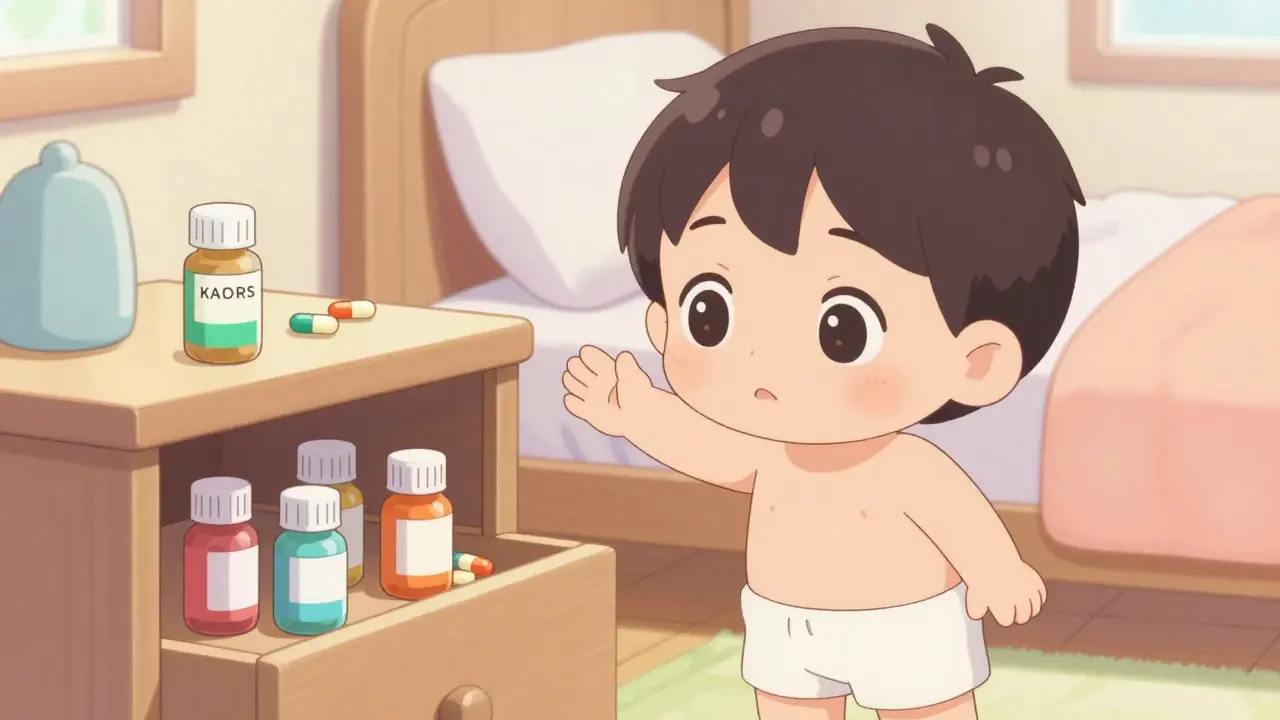
Imagine your three-year-old grandchild wandering into the bedroom while you’re making coffee. They spot a colorful bottle on the nightstand-your blood pressure pills or perhaps some sleep aids. To them, it looks like candy. In just seconds, they could swallow something life-threatening. This isn’t a hypothetical nightmare; it’s a reality for thousands of families. Pediatric medication safety is a critical public health focus involving the secure storage and administration of medicines to prevent accidental poisoning in children. With grandparents providing regular care for millions of children, understanding how to keep these medicines out of reach is no longer optional-it’s essential.
The Hidden Risk in Grandparents’ Homes
You might think that because you’ve raised your own children safely, you know all there is to know about keeping kids away from danger. But statistics tell a different story. According to data analyzed by the United States Consumer Product Safety Commission, grandparents are the source of medicine-related poisonings requiring emergency evaluation in 38% of pediatric cases. That means more than one-third of the time, a child ends up in the ER because they found medicine in a grandparent’s home.
Why does this happen? It often comes down to habit and environment. Older adults make up only 13% of the U.S. population but account for 34% of prescription medication use. Many grandparents take multiple prescriptions daily-a practice known as polypharmacy. The average caregiving grandparent takes 4.7 medications a day, compared to just 2.1 for parents aged 30-49. When you have that many bottles, it’s easy to let one slip onto a kitchen counter or into a purse. A 2023 National Poll on Healthy Aging revealed that 31% of grandparents keep medications in purses or handbags accessible to visiting grandchildren. Another 29% transfer their meds to non-childproof containers like weekly pill sorters, which look like little plastic candies to a toddler.
The risk is compounded by a common misconception: many grandparents believe child-resistant packaging is foolproof. Research shows that 62% of grandparents believe children cannot open these caps. However, testing protocols indicate that 30% of four-year-olds can defeat these mechanisms within five minutes. Children are curious, strong, and surprisingly dexterous. What feels secure to an adult with arthritis might be an easy puzzle to solve for a determined preschooler.
Understanding the 'Up & Away' Principle
To combat these risks, the Centers for Disease Control and Prevention (CDC) and the Consumer Healthcare Products Association launched the PROTECT Initiative. Their core message is simple: keep medicines "Up & Away and Out of Sight." This isn’t just about putting things in a drawer; it’s about creating physical barriers that a child cannot bypass.
Effective storage requires specific technical standards. Medicines should be stored at eye level or higher, ideally in cabinets with latches that require at least 15 pounds of force to open. This threshold exceeds the capability of 95% of children under five years old. Here is how you can apply this principle across your home:
- Bathroom Cabinets: These are high-risk zones because children often accompany adults here. Ensure the cabinet has a working latch. If it doesn’t, install a magnetic lock or move the medicine elsewhere.
- Kitchen Areas: Countertops are tempting spots for quick access, but they are dangerous. Move supplements and prescriptions to high shelves or locked pantries.
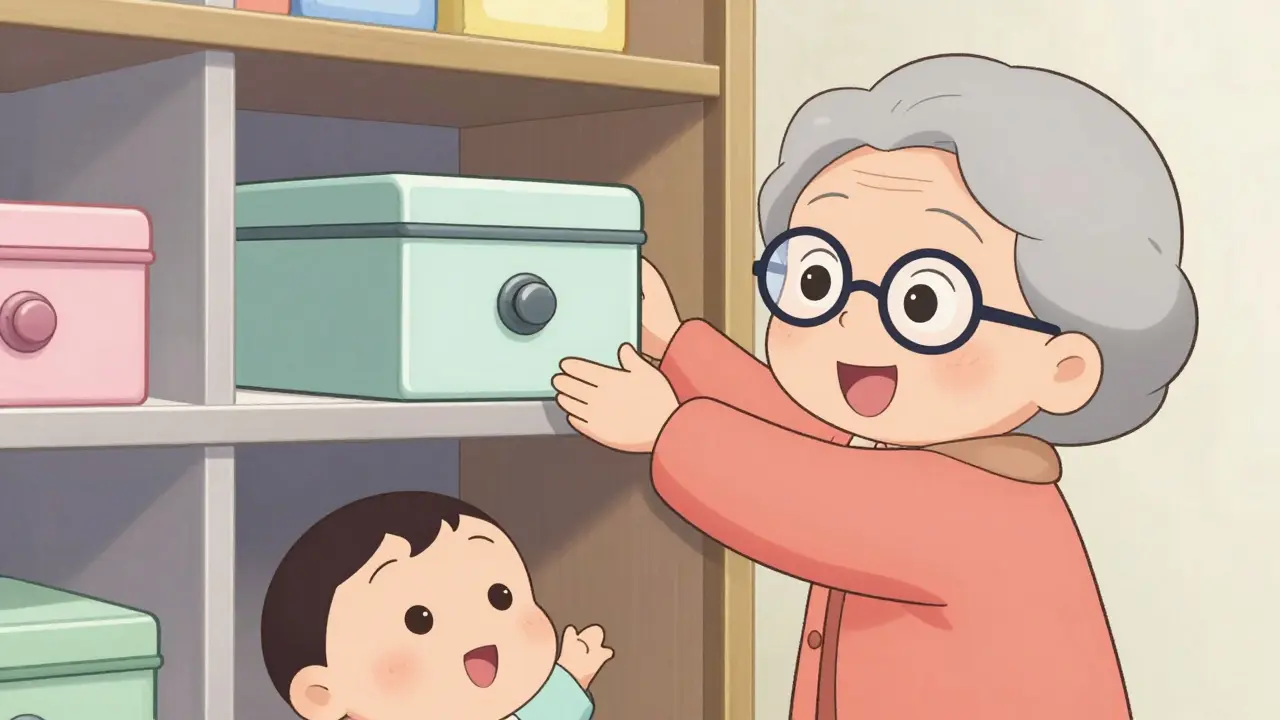
- Bedrooms: Nightstands are the most common location for near-miss incidents. Never leave daily medications within arm’s reach of the bed. Use a locked box placed high on a closet shelf.
- Purses and Bags: Treat your bag as a mobile medicine cabinet. If you carry emergency inhalers or nitroglycerin, keep them in a dedicated, zippered compartment that a child cannot unzip easily.
A study published in PMC (PMC5690368) demonstrated the power of this approach. After a single 15-minute educational session based on the PROTECT campaign, safe medication storage practices among grandparents improved from 39% to 78%. Bathroom storage specifically jumped from 45% to 71% compliance. This proves that small, targeted changes yield massive safety improvements.
Overcoming Barriers to Safe Storage
We know what we *should* do, but why don’t we always do it? Practical barriers play a huge role. For instance, 19% of grandparents report physical limitations, such as mobility issues or arthritis, that make proper storage difficult. Child-resistant caps can be incredibly hard to open for hands weakened by age or condition. Transferring pills to weekly sorters seems like a logical solution for convenience, but it removes the child-proof barrier entirely.
Another barrier is emotional resistance. Some grandparents feel insulted when advised to lock up their meds, interpreting it as a criticism of their caregiving abilities. One user on Reddit shared, "Tried to put my meds in a lockbox but my wife says it's insulting to suggest we're not careful." It’s crucial to reframe this conversation. Locking up medicine isn’t about admitting fault; it’s about respecting the natural curiosity of children. As Dr. Preeti Malani from the University of Michigan states, "No matter how old your grandchildren are, you need to think about medication safety."
If opening child-resistant caps is a struggle, ask your pharmacist for help. They can recommend adaptive devices or switch you to easier-to-open packaging where legally permissible. Alternatively, consider using a combination lock box that you can open quickly without fiddling with tiny tabs. The goal is consistency: if locking the box is too hard, you won’t do it. Choose a system that fits your physical capabilities.
Teaching Kids About Medicine Safety
Physical barriers are your first line of defense, but education is your second. You can’t watch your grandchild every second of every day. Teaching them basic rules creates a mental barrier that complements the physical one. The CDC recommends a simple "Safety Talk" consisting of three key messages:
- Medicine is not candy. Explain clearly that pills and liquids are for treating sickness, not for tasting or playing with.
- Only adults give medicine. Reinforce that no one else-not even a friendly neighbor or cousin-should give them medicine without a parent’s permission.
- If you find medicine, tell an adult immediately. Encourage them to shout for help rather than trying to hide the discovery or taste it to see what it is.
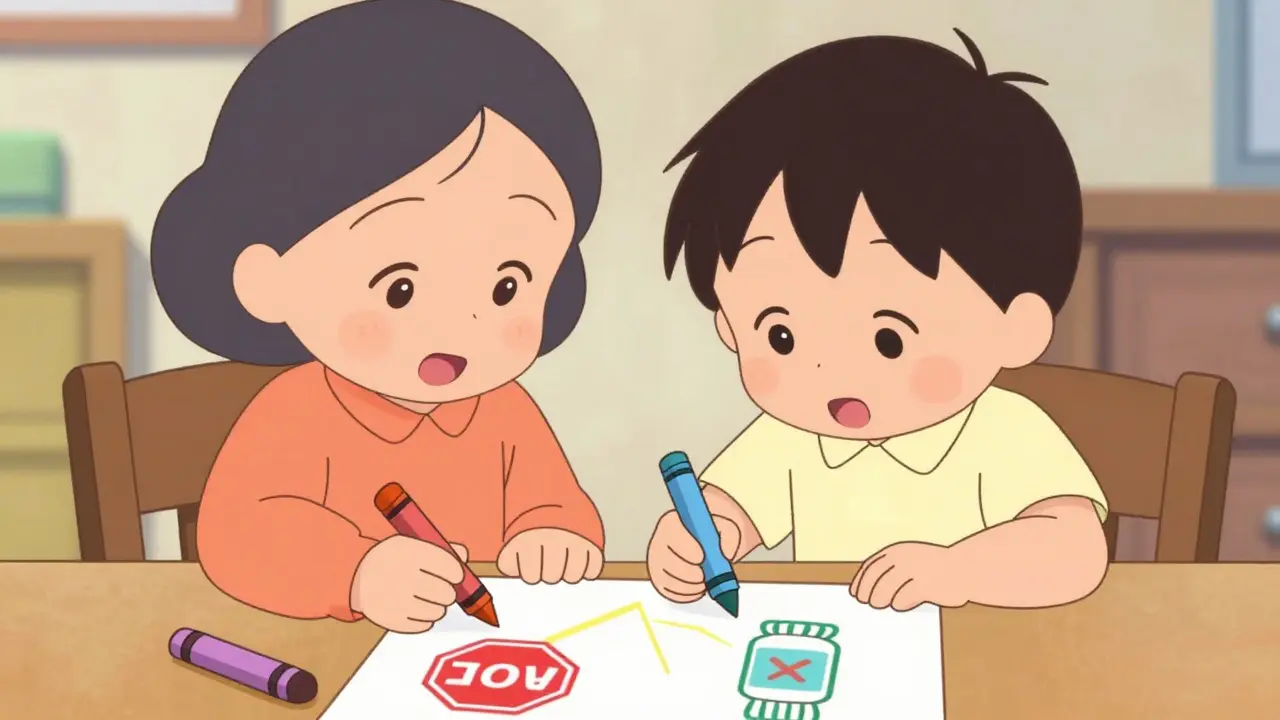
Making this interactive helps retention. Have your grandchild draw a "medicine safety" poster and hang it near the bathroom or kitchen. Role-play scenarios: "What would you do if you saw a red bottle on the floor?" These teachable moments turn abstract rules into concrete habits. Remember, children learn through repetition. Don’t expect one talk to stick. Weave these reminders into daily routines during visits.
Bridging the Gap Between Parents and Grandparents
Safety isn’t just the grandparent’s responsibility; it’s a family effort. Yet, only 38% of families consistently communicate about medication locations and emergency procedures. Miscommunication can lead to dangerous gaps. For example, a parent might assume the grandparent knows where the child’s asthma inhaler is kept, while the grandparent assumes the parent handles all dosing.
Establish clear protocols before your next visit. Create a shared checklist that includes:
- Location Map: Where are all adult medications stored? Where are the child’s medications kept?
- Emergency Contacts: Post the Poison Control number (1-800-222-1222 in the US) prominently in the kitchen and bathroom.
- Dosing Authority: Who decides when a child needs Tylenol or ibuprofen? Agree on weight-based dosing charts to avoid guesswork.
This collaboration reduces anxiety for everyone. When parents see that grandparents are taking proactive steps, trust increases. When grandparents feel supported rather than judged, they are more likely to maintain safe practices. Consider using digital tools like shared notes apps to update medication lists if either party’s prescriptions change.
Practical Steps to Start Today
You don’t need to overhaul your entire home overnight. Start with small, manageable actions that build momentum. Here is a step-by-step guide to getting started:
- Audit Your Home: Walk through each room looking for medicines. Check nightstands, bathroom counters, purses, and glove compartments in cars. Collect everything into one central, secure location.
- Invest in Storage: Purchase a sturdy lockbox or install cabinet locks. Spend $15-$20 on quality materials-it’s a small price for peace of mind. Many pharmacy chains offer free lockboxes to senior customers.
- Dispose of Expired Meds: Go through your stash and discard anything expired or unused. Use local drug take-back programs or follow FDA disposal guidelines to ensure they don’t end up in the trash where kids might dig.
- Have the Talk: Sit down with your grandchild and explain the rules. Use simple language and positive reinforcement.
- Share with Family: Send a text to your children sharing your new safety plan. Ask them to share any updates on their child’s medications.
Remember, perfection isn’t the goal; progress is. Every medicine moved to a locked cabinet is one less risk. Every conversation had is one more layer of protection. By taking these steps, you’re not just safeguarding your home-you’re modeling responsible behavior for the next generation.
Where is the safest place to store medications in a grandparent's home?
The safest place is a locked cabinet or box stored at eye level or higher, well above the reach of children. Avoid bathrooms, kitchens, and bedrooms unless the storage unit has a reliable latch requiring significant force to open. A dedicated lockbox in a closet is ideal.
Are weekly pill sorters safe for homes with young children?
No, weekly pill sorters are generally not safe for homes with young children. They lack child-resistant features and often resemble candy dispensers, which can attract toddlers. If you use a sorter, keep it in a locked container when not in immediate use.
What should I do if my grandchild swallows a pill?
Call Poison Control immediately at 1-800-222-1222 (in the US) or your local emergency number. Do not wait for symptoms to appear. Have the medication bottle ready to provide details on the substance, dosage, and time of ingestion. Follow the instructions given by the specialist precisely.
How can I help a grandparent with arthritis open child-resistant caps?
Consult a pharmacist for adaptive devices designed to assist with grip strength. Some pharmacies offer alternative packaging options that are easier to open while still maintaining safety standards. Additionally, pre-sorting medications into a locked box once a week can reduce the frequency of struggling with caps.
Is it necessary to lock up over-the-counter medicines?
Yes, absolutely. Over-the-counter medicines like pain relievers, cough syrups, and vitamins can be just as dangerous as prescription drugs if ingested in large quantities by children. All medicines should be treated with the same level of caution and stored securely.