
Every year, over 60,000 children in the U.S. end up in emergency rooms after accidentally swallowing medications. Dogs and cats aren’t safe either-thousands more are rushed to vets after chewing through pill bottles or snatching a dropped tablet off the floor. It’s not rare. It’s not an accident waiting to happen. It’s happening right now in homes that think they’re doing enough.
Most people think child-resistant caps are enough. They’re not. They’re a delay, not a barrier. A determined 3-year-old can figure out a twist-off cap in under a minute. A dog with a nose for treats can smell a gummy vitamin through three closed cabinets. And if you’ve ever left a pill on the counter while helping a child take theirs, you’ve already put them at risk.
Where You’re Probably Storing Medications (And Why It’s Dangerous)
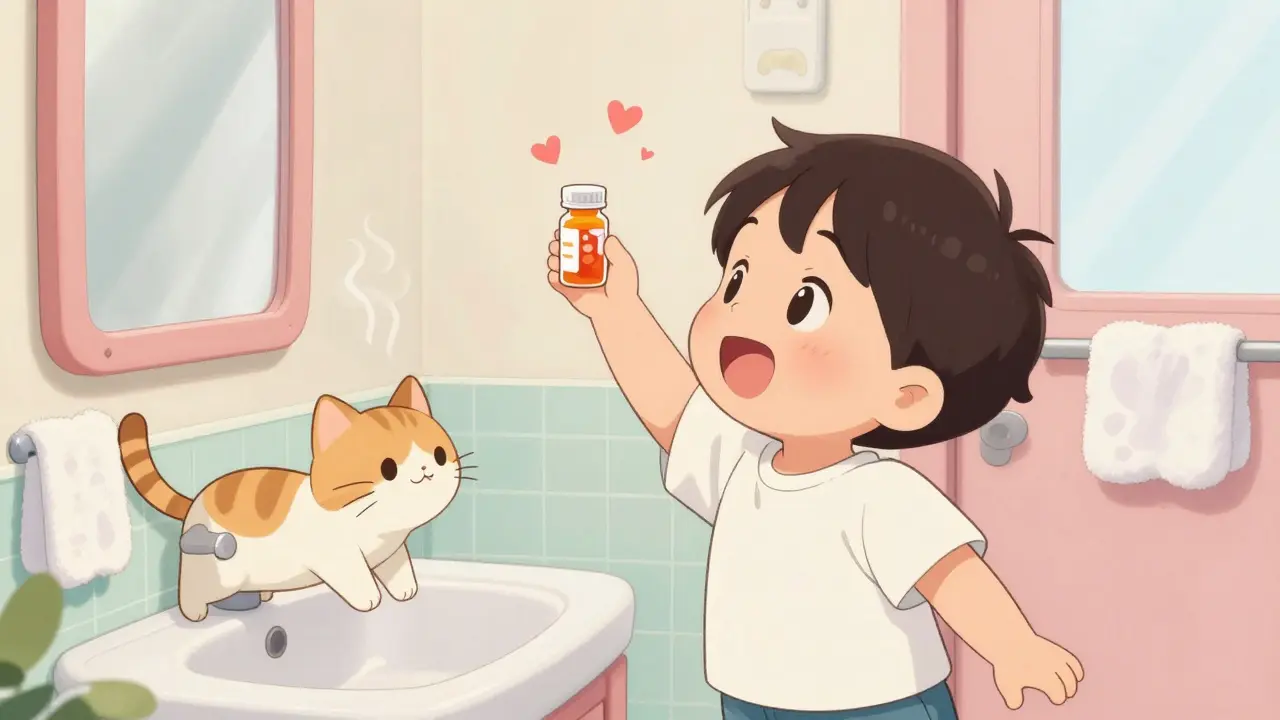
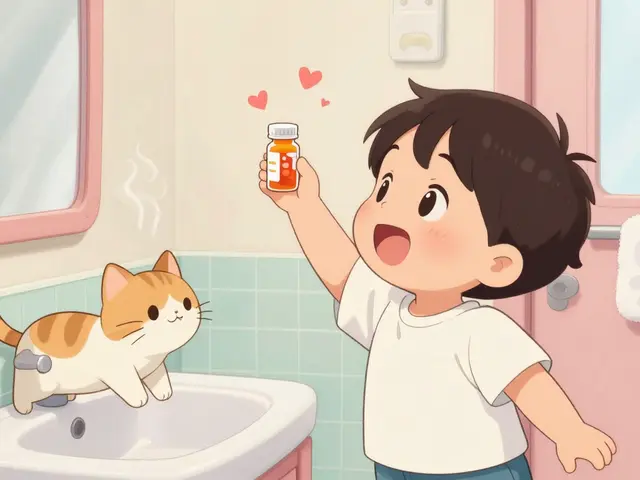
The bathroom cabinet is the most common spot. It’s convenient. It’s where the medicine has always been. But here’s the problem: humidity. Bathrooms average 60-80% moisture. That’s enough to degrade pills, weaken liquid antibiotics, and turn patches into sticky messes. More importantly, it’s at eye level for kids. A child standing on the toilet can reach it. A cat can jump onto the sink. A dog can knock over a small bottle.
Then there’s the kitchen counter. You grab your morning pill while making coffee. You leave the bottle there because you’ll take the next one in six hours. But that’s exactly when a pet wanders by, or a toddler climbs up to see what’s on the counter. Seattle Children’s Hospital found that 78% of pediatric medication poisonings happen because the medicine was left out during use-not because it was stored badly, but because it was never put away.
And don’t forget purses, backpacks, and nightstands. A child rummaging through a mom’s bag, or a dog pulling a pill bottle off a bedside table, is a common scenario. Children’s Mercy Hospital reports that 65% of childhood ingestions involve over-the-counter meds left in these places.
Where You Should Store Medications Instead
There’s one rule that matters more than any other: up and away. That means higher than 5 feet, out of sight, and locked.
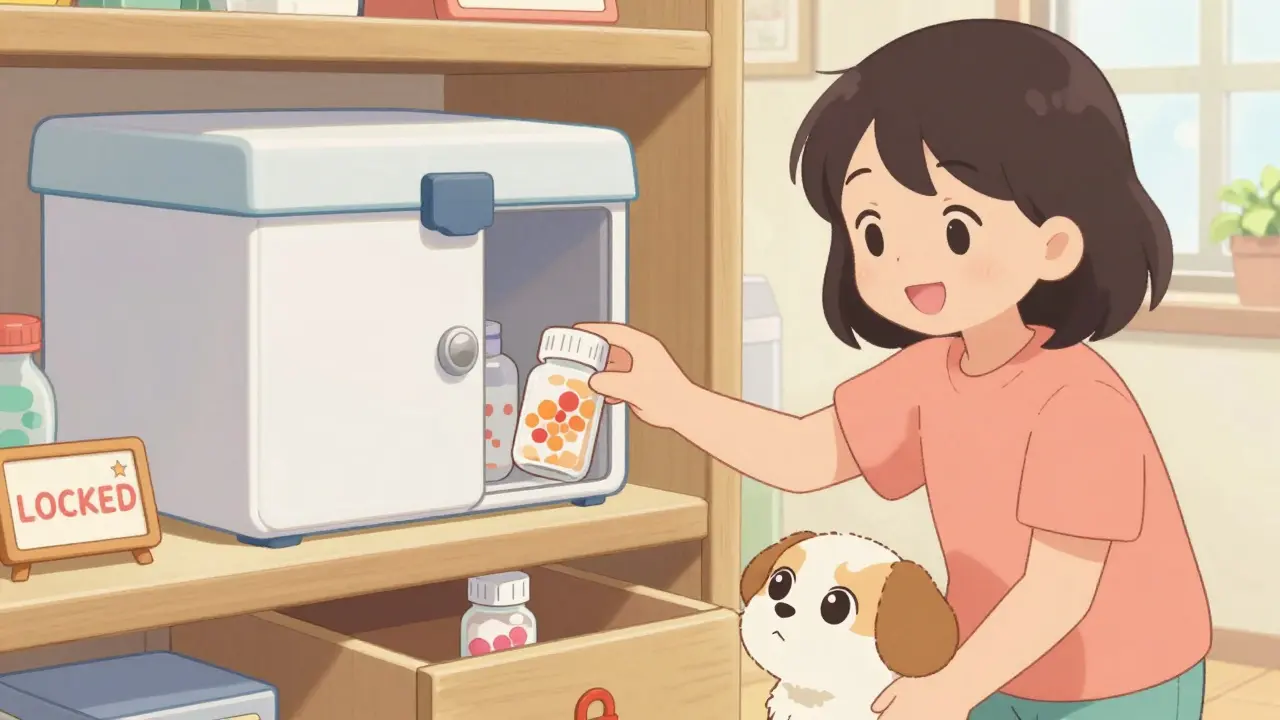
The best place? A high kitchen cabinet-preferably one with a child lock. Kitchens are drier (30-50% humidity), less accessible to pets, and usually have solid doors. A locked cabinet here is better than any unlocked drawer, no matter how high.
If you don’t have a high cabinet, use a lockable medication box. The VADIC Safe Storage Bag (11" x 6") is one example approved by health departments. It’s small, fits on a shelf, and has a combination lock. No keys to lose. No buttons to press. Just a twist and pull. These cost under $20 and are widely available online and through local health clinics.
For refrigerated meds-like insulin or certain antibiotics-use a lockable container inside the fridge. Don’t just stick it on the top shelf. Put it in a sealed plastic bin with a padlock. Pets can open fridge doors. Kids can climb on chairs. A locked bin adds the extra layer you need.
Separate Human and Pet Medications-No Exceptions
Here’s something most people don’t realize: your dog’s arthritis pill isn’t just for dogs. It can kill a cat. And your blood pressure medicine? It can make your dog sick-even if it’s the same brand as the vet’s.
The FDA warns that human medications like ibuprofen, acetaminophen, and heart drugs are especially toxic to pets. Meanwhile, pet meds often have flavors-chicken, beef, fish-that make them irresistible to animals. A dog will eat a flavored pill like candy. A cat might lick a topical cream off a human’s skin.
So store them separately. Not just in different drawers. Not just in different rooms. In completely different containers. One locked box for human meds. Another for pet meds. Label them clearly. Keep the pet meds in a closet or garage if possible. If you live in a small space, use color-coded locks: red for human, blue for pet. Make it impossible to mix them up.
Watch Out for Gummy Medicines and Supplements
Gummy vitamins, gummy melatonin, gummy probiotics-they look like candy. And that’s the problem.
The CDC says gummy supplements make up 30% of all childhood ingestions, even though they’re only 15% of the market. Why? Because they taste sweet. Because they’re colorful. Because parents think, “It’s just a vitamin.” But a 2-year-old doesn’t know the difference between a vitamin and a pill. And a dog? A dog will eat ten gummies in a row if they’re left on the counter.
Store gummy meds the same way you store pills: locked, up high, and out of sight. Don’t leave them in a bowl on the counter “for convenience.” That’s how accidents start.
Use the Two-Minute Rule
Here’s a simple habit that cuts risk in half: after every single time you give a medication-whether it’s to a child, a pet, or yourself-put it away immediately. No exceptions.
Children’s Mercy Hospital calls this the “two-minute rule.” You have two minutes to secure the medicine after use. If you don’t, you’re increasing the chance of an accident. Half of all childhood poisonings happen because someone left the bottle out for just a few minutes while they answered the door, checked their phone, or got distracted.
Make it automatic. After you pop a pill, lock the bottle. After you give your dog its medicine, snap the lid shut and put it back in the box. Do it before you walk away. Make it part of your routine, like washing your hands.
Dispose of Old or Unused Medications Properly
Don’t flush them. Don’t throw them in the trash unopened. Don’t leave them in a drawer “just in case.”
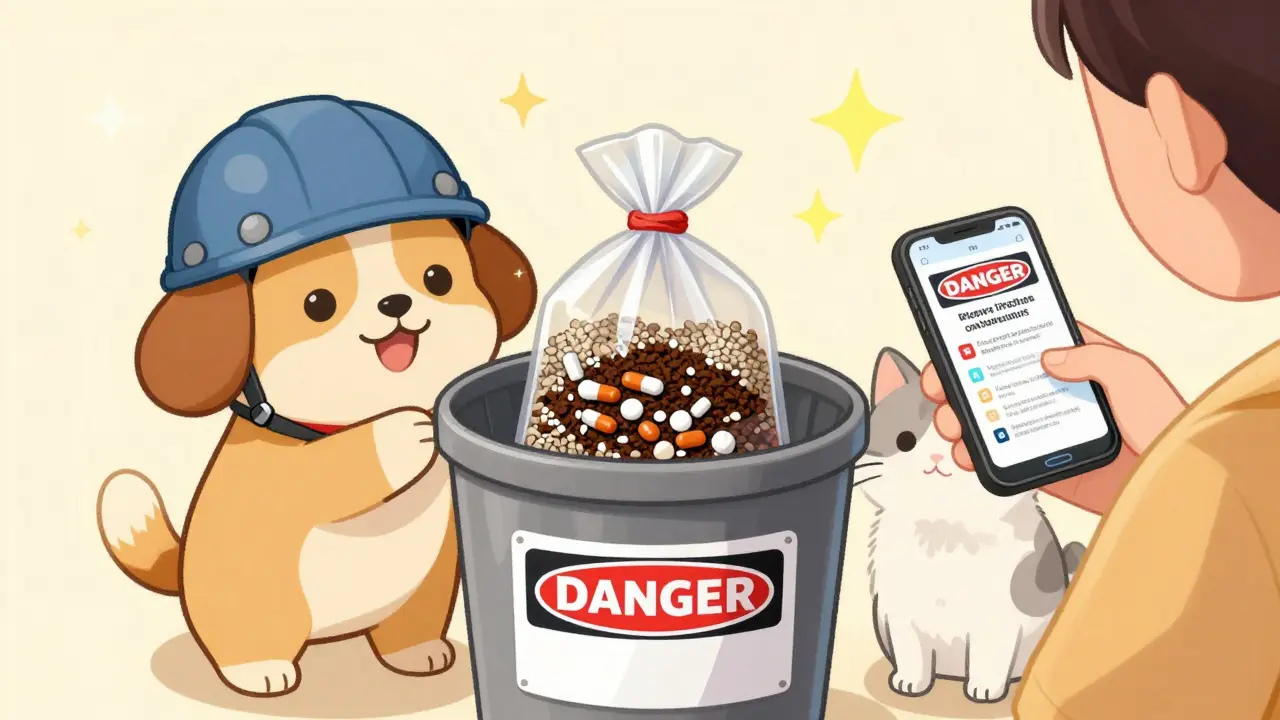
The EPA says the safest way to dispose of old meds is to mix them with something unappetizing-like used coffee grounds or cat litter. Use a 1:1 ratio. Pour the pills into a sealable plastic bag, add the grounds or litter, crush them a little with a spoon, then tie the bag shut. Put it in the regular trash.
Why? Because someone-or something-could dig through your trash and find pills. A dog can smell them. A teenager might think they’re harmless. This method makes them unappealing and unusable.
Some pharmacies and police stations offer take-back programs. Check with your local pharmacy or city website. But if that’s not an option, the coffee grounds method works. It’s simple. It’s effective. And it’s used by poison control centers nationwide.
What About Smart Locks and Tech Solutions?
There are Bluetooth-enabled medication safes now that send alerts to your phone when opened. They’re expensive-around $100-but they’re growing in popularity. In high-risk homes (with young kids, pets, or seniors with memory issues), they’re worth it.
They don’t replace the basics, though. You still need to lock them up, separate human and pet meds, and use the two-minute rule. Tech helps. It doesn’t replace behavior.
For most families, a $20 combination lock box and a high cabinet are all you need. The goal isn’t to buy the fanciest thing. It’s to make safety easy, automatic, and impossible to ignore.
What If Something Happens?
If you suspect a child or pet has swallowed medication, don’t wait. Don’t Google it. Don’t call a friend.
Call poison control immediately. In the U.S., it’s 1-800-222-1222. In the UK, call 111 or go to nhs.uk/emergency-advice. Have the pill bottle with you. Write down what was taken, how much, and when. That info saves lives.
For pets, call your vet or the ASPCA Animal Poison Control Center at 888-426-4435. Even if you’re not sure-call anyway. Time matters. The sooner you act, the better the outcome.
Don’t induce vomiting unless instructed. Don’t give milk or salt. Don’t guess. Just call.
It’s Not About Being Perfect. It’s About Being Consistent.
You don’t need a vault. You don’t need to lock everything 24/7. You just need to make sure that every time you use medicine, you put it back where it belongs-locked, up high, and away from curious hands and noses.
That’s the whole system. It’s not complicated. It’s not expensive. It’s just consistent.
Start today. Pick one spot in your home where you keep meds. Ask yourself: Could a 3-year-old reach it? Could a dog jump to it? Could a cat knock it over? If the answer is yes, change it. Now.
One locked box. One rule. One habit. That’s all it takes to keep your family-and your pets-safe.
Can child-resistant caps really keep kids from getting into medicine?
No. Child-resistant caps are designed to slow down kids, not stop them. Studies show that many children under age 5 can open them in under a minute. They’re a backup, not a solution. Locked storage is the only reliable protection.
Is it safe to store medicine in the bathroom?
No. Bathrooms are too humid, which can ruin pills and liquids. They’re also at child height. Even if the cabinet is locked, the humidity degrades the medicine, and the location is too easy to reach. Store meds in a dry, high cabinet instead-like in the kitchen or a bedroom closet.
Can pets get sick from human medications?
Yes. Common human drugs like ibuprofen, acetaminophen, and antidepressants can cause kidney failure, liver damage, or even death in dogs and cats. A single pill can be fatal. Always keep human and pet meds completely separate.
How do I dispose of old or expired medications safely?
Mix them with something unappealing-like used coffee grounds or cat litter-in a sealed plastic bag. Use a 1:1 ratio. Crush the pills slightly so they’re not recognizable. Then throw the bag in the trash. This prevents pets or people from digging them out. Some pharmacies offer take-back programs, but this method works everywhere.
What should I do if my child or pet swallows medicine by accident?
Call poison control immediately. In the U.S., dial 1-800-222-1222. In the UK, call 111. Have the medication bottle ready. Don’t wait for symptoms. Don’t try to make them vomit. Just call. Time is critical.
Are gummy vitamins safer than pills?
No. Gummy vitamins are actually more dangerous because they taste like candy. Kids and pets are more likely to eat them in large amounts. Store them just like pills: locked, up high, and out of sight. Never leave them on the counter.





Dusty Weeks
January 1, 2026lol i left my gummy vitamins on the counter for 2 mins and my dog ate 7 of them. he’s fine but i cried for an hour. never again. 🥲