
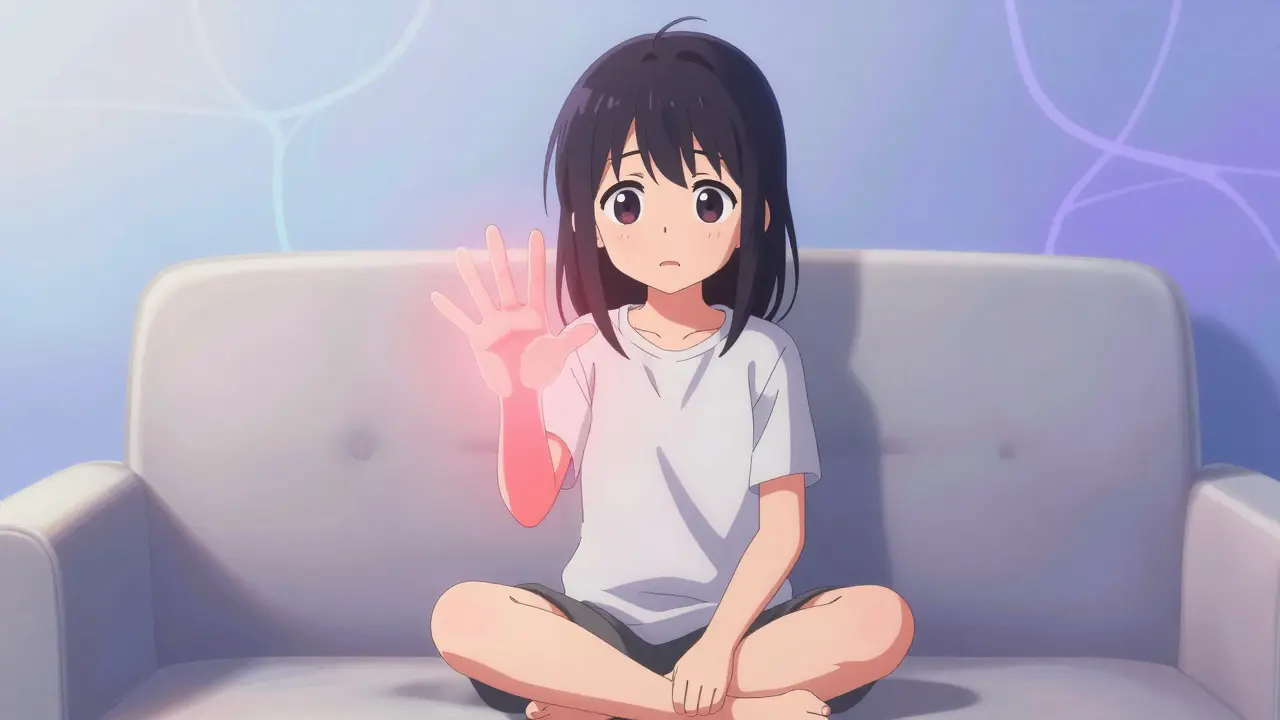
Imagine feeling a burning itch in your hand while staring at the empty space where your wrist used to be. It sounds impossible, yet for millions of people, this is daily life. This condition is called Phantom Limb Pain, described as pain or discomfort perceived in a missing limb, stemming from neurological signals rather than physical injury. It’s not in your head in the sense of being "fake"-your brain is literally lighting up like there is tissue there that needs attention. The science has shifted from thinking this was purely psychological to understanding it as a complex map error in your nervous system.
Understanding the Neural Misfire
To fix the problem, we first need to understand the glitch. When you lose a limb through amputation, your brain still expects input from nerves that aren't sending signals anymore. Research indicates that approximately 60% to 85% of amputee patients experience this pain. Some feel sharp stabs, others feel deep cramping or tingling. This happens because the part of your cortex (the brain's surface) responsible for your missing hand doesn't just go dark; it gets hijacked.
Sometimes, touching your face sends pain signals to your missing arm because the brain areas overlap. Studies using MRI scans show measurable activity in these specific regions during episodes. The National Center for Biotechnology Information notes that projections for limb loss are rising significantly. In the United States alone, numbers were at 1.6 million people back in 2005, but predictions suggest that could jump to 3.6 million by 2050. With more people facing amputation due to vascular disease and trauma, finding relief is becoming a critical public health priority.
The pain usually starts within the first six months after surgery. If you ignore it, hoping it fades, chances are slim. According to a 2023 clinical review, if the pain lasts longer than half a year, it likely won't disappear on its own without intervention. Triggers vary wildly between individuals. Weather changes, stress, fatigue, or even pressure on the residual limb can spark an episode. Understanding these triggers helps you prepare, but managing them requires specific tools like medication or sensory tricks.
Medication Strategies for Nerve Pain
Most doctors start with drugs because they are accessible. You need to tell your neurologist specifically that this is nerve pain, not typical musculoskeletal pain. Standard painkillers like ibuprofen might help slightly with inflammation around the stump, but they rarely touch the phantom sensation deep in the missing digit. The effective options fall into three main categories: antidepressants, anticonvulsants, and sometimes opioids.
Tricyclic antidepressants are often the first line of defense. Drugs like Amitriptyline (10-75 mg daily) and Nortriptyline work by calming nerve firing, even though they aren't treating depression here. They change how your spinal cord processes pain signals. However, they aren't magic wands. Patient reports from forums suggest about 60% of users get drowsy, which can interfere with daily tasks. But roughly 45% find moderate relief from the burning sensation after consistent dosing.
If antidepressants don't cut it, doctors switch to anticonvulsants. Gabapentin is a staple here. It typically starts at 300 mg daily and might be increased to 900-3600 mg depending on tolerance. A community analysis from January 2024 showed 72% of users found it helpful at higher doses, though almost 60% stopped eventually because of dizziness. Pregabalin is another option, ranging from 75 to 600 mg daily. Both work by stabilizing electrical activity in the brain. Weight gain is a real concern here, affecting about 40% of pregabalin users over time.
| Medication Type | Example Drug | Typical Dose | Key Side Effect |
|---|---|---|---|
| Tricyclic Antidepressant | Amitriptyline | 10-75 mg/day | Drowsiness |
| Anticonvulsant | Gabapentin | 300-3600 mg/day | Dizziness |
| NMDA Antagonist | Ketamine | 0.1-0.5 mg/kg IV | Psychological dissociation |
| Opioid | Oxycodone | 5-30 mg/4-6 hrs | Addiction risk |
In stubborn cases, specialists might try Ketamine. This is an NMDA receptor antagonist given intravenously. While effective, it carries risks of dissociation or hallucinations. Opioids like oxycodone or morphine remain controversial. Experts warn limiting them to avoid dependency. The American Pain Society suggests keeping morphine milligram equivalents below 30-50 daily. Despite this, about 35% of long-term users report dependence issues. Because of the risks, opioids are generally reserved for short-term severe flare-ups rather than maintenance.
Mirror Therapy: Retraining the Brain
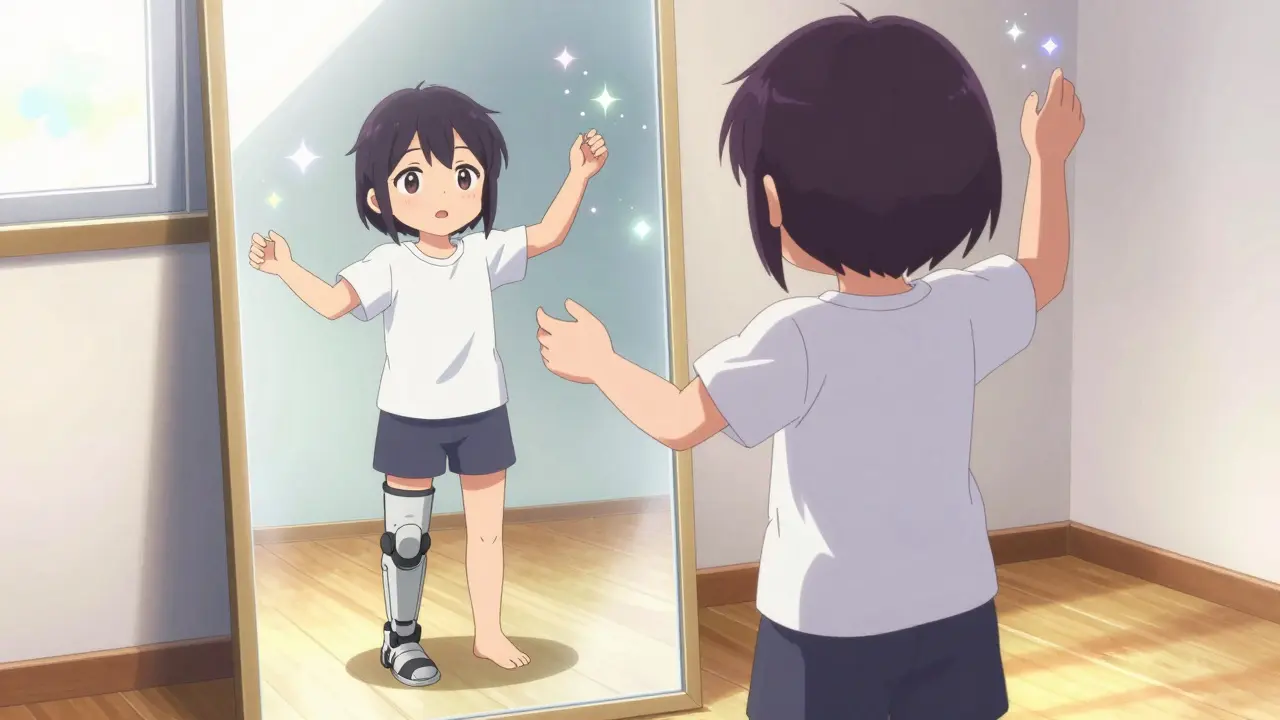
If you want to avoid heavy chemicals, Mirror Therapy uses visual feedback to trick the brain into believing the missing limb is present and moving normally. This technique relies on visual cortex plasticity. You place a vertical mirror between your body parts. You hide the stump behind the mirror and position your remaining limb so the reflection looks like a complete pair.
You perform gentle movements with your intact limb while watching the reflection. Your brain perceives the missing limb moving freely, without pain. Over weeks, this rewires the conflict between what your brain expects and what it receives. It addresses the root cause-the cortical remapping-rather than just masking the symptom. Physical Therapy journals note that adherence is tricky; about 40% of patients stop within eight weeks because it takes discipline.
For best results, sessions should last 15 to 30 minutes daily. You need a specialized box or a full-length mirror depending on whether you lost an arm or leg. The theory goes back to Dr. V.S. Ramachandran’s pioneering work, showing that neural pathways are fluid, not hardwired forever. Recent discussions suggest virtual reality versions of this therapy are emerging. By 2027, experts predict VR integration could boost adherence rates from 60% to 85%, making the practice less tedious than holding a mirror for an hour.
Advanced Interventions and Other Therapies
When pills and mirrors aren't enough, there are surgical and device-based options. Transcutaneous Electrical Nerve Stimulation (TENS) is a non-invasive method. It sends low-voltage currents through electrodes placed on your skin near the stump. About half of patients see moderate improvement, but it requires learning correct electrode placement and frequency settings (usually 2-150 Hz).
Botulinum toxin injections are gaining traction. Injecting 20-50 units directly into painful neuromas (scarred nerve endings) has shown case study success, dropping pain scores from 8/10 to 3/10 for several weeks. For those with extreme, chronic pain, implanted devices exist. Spinal cord stimulation or motor cortex stimulation involves surgically placing electrodes to interrupt pain signals before they reach your awareness. Response rates hover around 40-60% in refractory cases, according to surgical literature.
New technology is arriving fast. As of January 2024, the FDA approved closed-loop spinal cord systems like the Evoke device. Clinical trials showed 65% pain reduction for phantom pain patients. Another approach is targeted muscle reinnervation combined with osseointegration, where surgeons reroute nerves to remaining muscles. A Journal of Neurosurgery report from March 2024 noted 70% pain reduction in 24 patients using this combination. These procedures are expensive and invasive, but for 5-10% of severe cases documented in palliative care networks, they offer a lifeline.
Creating a Personalized Relief Plan
There is no single cure. Most successful recovery stories involve a mix of treatments. You might take Amitriptyline at night for sleep and mild suppression, while practicing mirror therapy in the morning to prevent the brain from reverting to pain loops. Timing matters. Starting treatment early yields better outcomes. Waiting until the pain becomes chronic reduces your success rate dramatically.
Support also plays a massive role. Joining groups like the Amputee Coalition connects you with peers who understand the weirdness of itching a missing finger. Peer support networks serve thousands annually and provide tips on prosthetic fitting, which affects pain levels. Ill-fitting limbs increase irritation and trigger flare-ups, creating a cycle harder to break. Keeping your residual limb healthy through desensitization techniques (rubbing, tapping) helps train the nerves to accept touch without triggering alarms.
Ultimately, your brain is the target. Whether using drugs to calm chemistry or mirrors to calm perception, the goal is to stop the confusion in your somatosensory cortex. By staying informed about options like ketamine infusions or biofeedback, you keep control over your rehabilitation journey.
Frequently Asked Questions
Does phantom limb pain ever go away on its own?
While some cases resolve spontaneously in the first few months, persistent pain lasting more than six months has a very slim chance of disappearing without medical intervention. Early treatment is key to preventing chronic issues.
Is mirror therapy safe for everyone?
Yes, it is generally safe and non-invasive. However, some patients find the visual mismatch confusing or inducing headaches initially. It requires consistency, as stopping practice for weeks may reverse benefits.
Can I combine medication with mirror therapy?
Absolutely. Multidisciplinary approaches often work best. Medications can reduce baseline pain intensity enough to allow you to perform mirror exercises effectively without excessive suffering.
What triggers worsen phantom pain?
Common triggers include stress, weather changes, fatigue, infection in the residual limb, and pressure from ill-fitting prosthetics. Identifying your specific triggers is vital for long-term management.
Are opioids recommended for long-term use?
Opioids are controversial and usually reserved for short-term severe cases due to high addiction risks. Guidelines recommend limiting daily morphine equivalents to prevent dependency and tolerance build-up.







Rachael Hammond
March 28, 2026i always felt like phantom pain was something psychological until learning about cortical remapping which totally explains the neurological signals firing without actual tissue present in the limb area and hearing about the burning itch description really resonates with people who have family members dealing with similar chronic conditions since we often assume invisible injuries are not legitimate health struggles in society today especially when the brain areas overlap in ways modern imaging shows clearly on MRI scans during active episodes of distress or confusion and understanding triggers like weather changes helps prepare for flare ups but managing them requires consistent tools rather than just ignoring the problem hoping it fades away like normal bruising does and knowing that sixty percent of amputees experience this changes how we view the necessity for intervention strategies early on in the recovery timeline after surgery procedures are completed and finished completely and standard painkillers barely touch the sensation so specialized drugs become the primary option for management alongside non invasive techniques like mirror therapy or virtual reality versions coming soon that promise better adherence rates overall plus the side effects of medications are real concerns that cannot be dismissed lightly by anyone seeking long term stability for their daily life routine and quality of existence moving forward through this difficult journey together as a community sharing support networks and resources effectively without judgment.