

Steroid Taper Calculator
Personalized Tapering Plan
Your Personalized Plan
Estimated Taper Timeline
When to Test
Taper Steps
Stress Dose Guidance
Why Steroid Tapers Can Be Dangerous Without Testing
If you’ve been on steroids for months or years, stopping them suddenly isn’t just uncomfortable-it can be life-threatening. Your body stops making its own cortisol because the pills do the job for you. When you cut the pills too fast, your adrenal glands don’t snap back to work. That’s when you risk an adrenal crisis: extreme fatigue, vomiting, low blood pressure, and even collapse. In fact, without proper tapering and testing, up to 8.5% of people on long-term steroids end up in the ER with this emergency. But there’s a better way.
What Is ACTH Stimulation Testing?
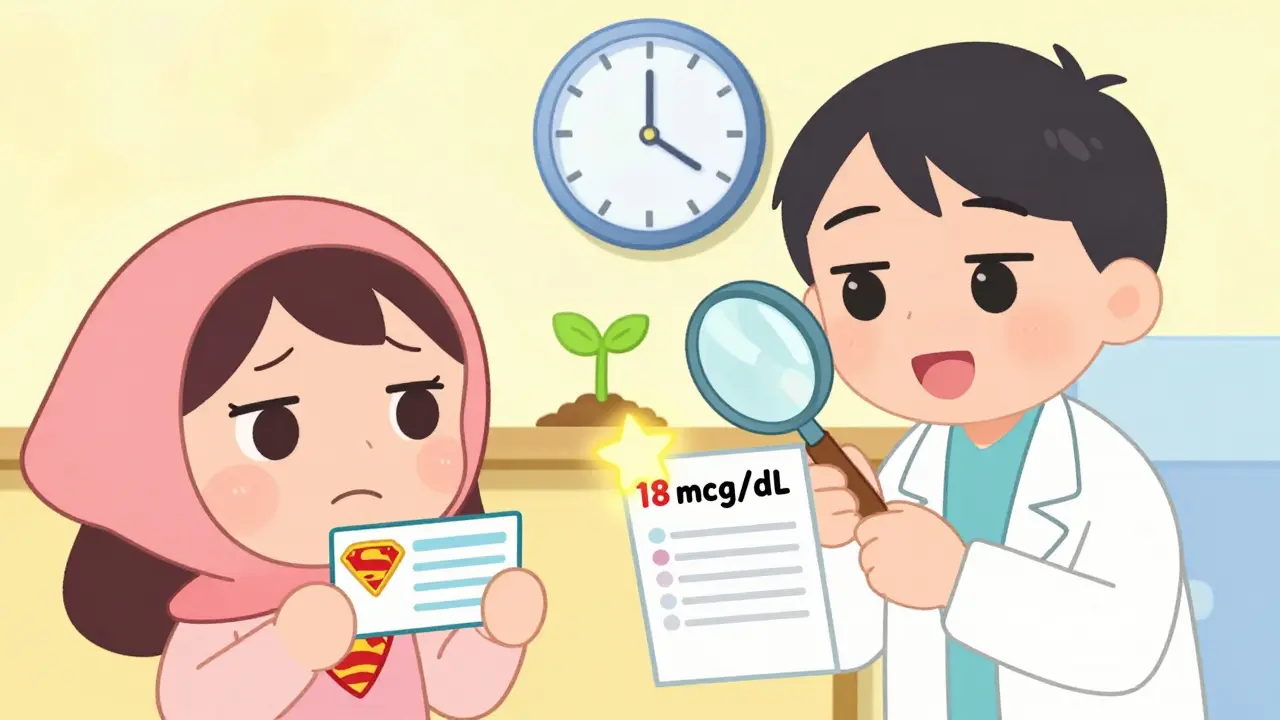
ACTH stimulation testing is the gold standard for checking if your adrenal glands are ready to restart cortisol production. It’s simple: you get a shot of synthetic ACTH (called cosyntropin), and then your blood is drawn at 0, 30, and 60 minutes to measure cortisol levels. If your peak cortisol hits 18-20 mcg/dL or higher, your adrenals are recovering. If it’s below 14 mcg/dL, you still need steroid support. This test doesn’t just guess-it tells you exactly where you stand.
When Should You Get Tested?
You don’t test right after starting the taper. You wait until you’re down to a physiologic dose-about 4-6 mg of prednisone per day, or the equivalent in hydrocortisone. That’s roughly what your body would make naturally. The 2024 joint guideline from the Endocrine Society and European Society of Endocrinology says testing should happen at this point, before you try to stop completely. For people on steroids longer than a year, this might take 9-12 months of gradual reductions. Rushing this step is the most common mistake.
How Tapers Differ Based on How Long You’ve Been on Steroids
- If you’ve been on steroids for 3-12 months: Reduce by 2.5-5 mg of prednisone every 1-2 weeks until you hit around 10-15 mg/day. Then cut by 20-25% each week. This is the PJ Nicholoff Protocol, widely used in neuromuscular conditions like Duchenne muscular dystrophy.
- If you’ve been on them longer than a year: Recovery takes about one month for every month of use. So if you were on steroids for 18 months, expect 18 months of careful tapering. Many people need to stay on a low replacement dose for over a year before testing shows recovery.
These aren’t arbitrary numbers. They’re based on how long it takes the adrenal glands to regrow and respond to natural signals again. Skipping steps increases your risk of adrenal crisis.
Why Some Doctors Skip Testing
Not every provider orders ACTH tests. Some rely on symptoms-fatigue, dizziness, nausea-to decide if you’re ready. But here’s the problem: up to 45% of people on tapers get withdrawal symptoms that look like adrenal insufficiency, even when their adrenals are fine. That’s called glucocorticoid withdrawal syndrome. It’s not the same thing. Without a test, you might stay on steroids longer than needed… or worse, stop too soon and end up in the hospital.
The Real-World Gap: Access and Follow-Through
Testing works-but only if you can get it. In rural areas, patients often drive three hours for a single blood draw. One primary care doctor on Reddit said, “I send patients for testing. Half never show up.” And when they don’t, they’re left guessing. A 2023 survey found that 61% of patients waited over four weeks for an appointment. Some ended up in the ER during that delay. The system isn’t broken-it’s under-resourced.
What You Can Do to Stay Safe
- Ask for an ACTH test when you reach your lowest dose (4-6 mg prednisone or equivalent).
- Carry a steroid alert card. All patients on long-term steroids should have one. It tells emergency staff you need extra steroids if you’re sick or injured.
- Know your stress dose rules. If you get the flu, have surgery, or get into an accident, you need more steroids-not less. The PJ Nicholoff Protocol has clear tables for this.
- Track your symptoms. Keep a journal: energy levels, nausea, dizziness, weight changes. Share it with your doctor at every visit.
- If testing is delayed, don’t stop steroids. Keep taking your dose until you’ve been tested and cleared.

What’s Changing in 2026?
The field is moving fast. The Endocrine Society is rolling out a mobile app this year to guide patients and doctors through tapering schedules. The NIH is funding a point-of-care ACTH test that could be done in a doctor’s office instead of a lab. And electronic health records like Epic are adding built-in tracking tools for HPA axis recovery. These tools won’t replace clinical judgment-but they’ll make it easier to follow the right path.
What Happens If Your Adrenals Never Recover?
For some people, especially those on high doses for over a year, the adrenal glands don’t fully bounce back. That’s permanent secondary adrenal insufficiency. It’s not your fault. It’s a biological consequence of long-term suppression. If your ACTH test shows you’re still deficient, you’ll need lifelong low-dose steroid replacement-usually 15-25 mg of hydrocortisone spread through the day to mimic natural rhythms. You’ll still need stress dosing and a medical alert card. But you can live normally. Many people do.
Final Thought: This Isn’t Just About Stopping Pills
Steroid tapers aren’t about quitting a drug. They’re about helping your body reclaim its own balance. The ACTH test is the only objective tool that tells you when that’s possible. Relying on how you feel isn’t enough. The data is clear: testing reduces adrenal crisis rates by 86%. That’s not a small win-it’s the difference between safe recovery and life-threatening risk. Don’t skip it. Ask for it. Push for it. Your body will thank you.
How long does it take for adrenal glands to recover after stopping steroids?
Recovery time depends on how long you were on steroids. For 3-12 months of use, it can take 6-12 months of gradual tapering before testing. For more than a year, expect one month of recovery for every month of steroid use-so up to 9-12 months or longer. The adrenal glands need time to regrow and respond to natural signals again.
Can you stop steroids cold turkey after long-term use?
No. Stopping steroids abruptly after long-term use can cause an adrenal crisis, which is life-threatening. Symptoms include severe fatigue, vomiting, low blood pressure, and loss of consciousness. Always taper under medical supervision with scheduled ACTH testing to confirm adrenal recovery.
What’s the difference between adrenal insufficiency and steroid withdrawal symptoms?
Adrenal insufficiency means your body can’t make enough cortisol. Steroid withdrawal symptoms-like fatigue, joint pain, and anxiety-are caused by your body adjusting to the absence of the drug, even if your adrenals are working. Only an ACTH stimulation test can tell the difference. Mistaking withdrawal for insufficiency can lead to unnecessary long-term steroid use.
Do you need ACTH testing if you were only on steroids for a few weeks?
No. If you were on steroids for less than 3-4 weeks, your adrenal glands usually recover on their own without testing. The 2024 Endocrine Society guideline recommends against formal tapering or testing for short courses. The risk of suppression is very low in this timeframe.
What should you do if you can’t get an ACTH test for months?
Don’t stop your steroids. Keep taking your current dose until you’re tested. If you feel unwell, increase your dose slightly to your last tolerated level and contact your doctor. Delayed testing is common, but stopping steroids without confirmation of adrenal recovery puts you at serious risk. Carry your steroid alert card and know your stress dose rules.
Is there a blood test other than ACTH stimulation that can check adrenal function?
Morning cortisol alone isn’t reliable during tapering because levels can fluctuate. ACTH stimulation testing is the only standardized, validated method to assess adrenal reserve after long-term steroid use. Salivary cortisol tests are being studied as a future alternative, but they’re not yet recommended for clinical decision-making in this context.
What’s a steroid alert card, and why do you need one?
A steroid alert card is a small card you carry that tells emergency staff you’re on or have been on long-term steroids and need extra doses if you’re ill, injured, or having surgery. Without it, you could be denied life-saving treatment. Over 90% of hospitals require it for patients with adrenal insufficiency. Get one from your doctor-it’s free and saves lives.





DHARMAN CHELLANI
January 29, 2026lol so u mean i gotta wait 18 months just bc i took prednisone for a year? my doc said just cut by 5mg every week n im fine. u guys are overthinkin this. adrenal crisis? more like adrenal drama.